
Vandaag of morgen in huis

Kwaliteit gegarandeerd

Welkomstaanbiedingen ontgrendelen: GRATIS bezorging | Tot 80% korting | Gratis 30 dagen JoyPlus-proefperiode
Download de app
A dog bed may seem like an easy purchase, but the difference between a cosy resting spot and a disappointment is often in the detail. A bed can look thick and plush in photos, yet the base might sag quickly, the cover could be hard to wash, or the size may not suit your dog’s sleeping style.
So don’t just focus on colour and a fluffy look. Pay close attention to the dimensions, the cushion construction and how you clean the bed. This buying guide helps you choose a dog or cat bed based on verifiable product specifications.
A soft dog bed feels nice, but a thick layer of plush says little about the support inside. In some models, the filling is mainly loose fibres. Over time these can shift or compress, especially if your dog lies in the same spot every day.
Look at the type of filling. The product descriptions of some FUNNYFUZZY models mention egg-crate foam. This is a shaped foam structure which, according to the product information, provides a supportive base. That makes such a model worth considering if you’re after an orthopaedic dog bed, but it doesn’t replace veterinary advice and it isn’t a medical treatment.
A dog bed is exposed to hair, sand, moisture and food residues. “Easy to clean” doesn’t always mean the entire bed can go in the washing machine. With many models, only the cover or the central cushion is removable.
Check the following:
A washable dog bed is especially handy if your pet spends a lot of time outdoors or sheds regularly.
A dog bed for small and medium-sized dogs shouldn’t just suit the breed. Measure your dog when fully stretched out and add extra space on all sides. A dog that likes to curl up may prefer a donut dog bed. A dog that stretches out needs more flat lying space.
With round models, also note the difference between the outer diameter and the actual sleeping area. A 70 cm bed has less space inside because of the raised rim.
Measure the length from nose to base of tail and add roughly 15 to 25 cm. For a dog that likes to rest its head on an edge, a dog bed with neck support can be a good fit. A raised rim provides a resting point, but it also takes up lying surface.
The round models from SONGMICS HOME and JOYFURNOS are, according to the product information, 70 cm in diameter and around 20 cm high. They’re designed for small to medium-sized dogs. The 90 cm model targets medium-sized dogs and offers more space to turn and stretch.
Plush, fleece and faux fur feel warm, but in a heated living room they may be less suitable if your pet overheats quickly. Also look at the base and seams. If your dog likes to chew, regular checks are important.
Many models use PP cotton as filling. This gives a soft, rounded shape. Other versions combine plush with egg-crate foam. According to the product description, that construction is intended to provide more structural support. Phrases such as “supports the joints” or “promotes spinal alignment” are brand product claims; don’t treat them as a medical guarantee.
A dog bed with a non-slip base is less likely to slide across smooth floors. That’s useful on laminate, vinyl or tiles. Do check that the underside makes full contact with the floor. A non-slip layer is less effective on uneven, wet or dusty surfaces.
The product descriptions of the models below mention non-slip fabric or rubberised dots. This reduces movement but doesn’t eliminate every risk of slipping. Always place the bed on a flat, stable surface.
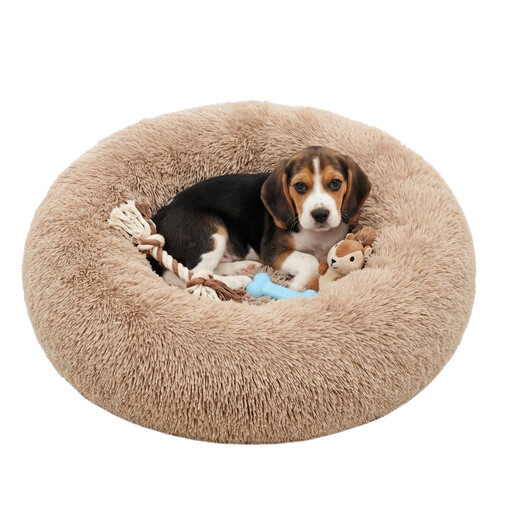
Why this suits the profile: The round shape and soft plush fabric provide a simple resting place for small and medium-sized dogs that like to curl up.
The product information mentions a removable central cushion and a base with rubberised dots. Before buying, do check the current washing instructions on the label.
70 cm diameter, PP cotton filling, removable central cushion and non-slip base.
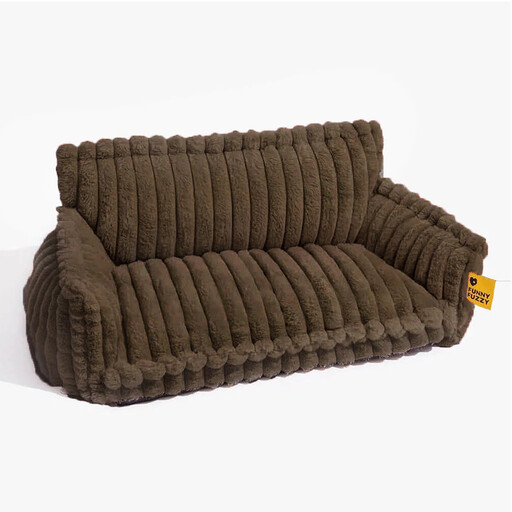
Why this suits the profile: According to the product description, this dog bed combines sherpa, faux fur, egg-crate foam and a raised headrest.
The construction isn’t based on soft fabric alone: the description also mentions a supportive foam layer and a removable cover.
Egg-crate foam, raised neck support, machine-washable cover and non-slip fabric.
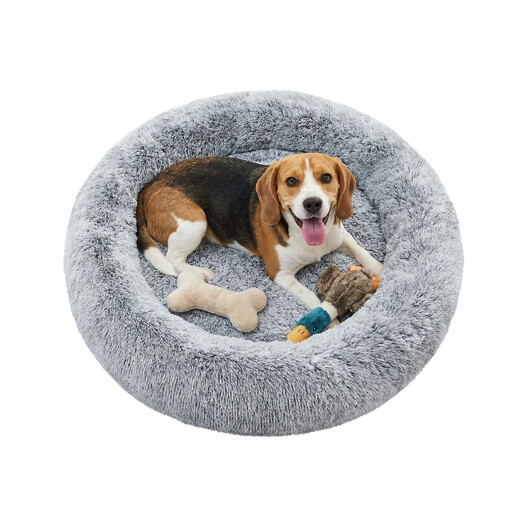
Why this suits the profile: The 90 cm diameter targets medium-sized dogs that need more space to turn or lie fully stretched out.
The dimensions are clearly stated. In addition, the product information says the central cushion can be removed for cleaning.
90 cm diameter, PP cotton filling, removable cover and rubber non-slip dots.
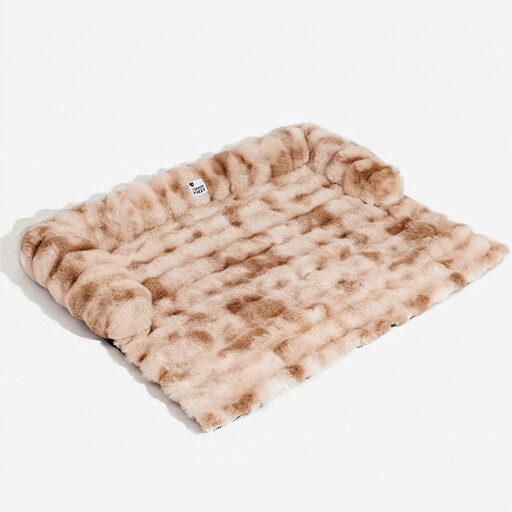
Why this suits the profile: According to the product information, this compact model suits both dogs and cats and fits in a smaller living room, bedroom or study.
The description lists a raised headrest, egg-crate foam and a removable machine-washable cover rather than just a soft outer layer.
Suitable for dogs and cats, compact size S, neck support and a non-slip base.
We’ve put together a complete, up-to-date list of products that fully meet these rigorous selection criteria and comply with current European safety regulations.
A bed that arrives vacuum-packed usually needs time to regain its original shape. Shake out the cushion and gently fluff it up before use. Place the dog bed on a dry, flat surface and help your pet settle in with a familiar blanket or toy.
Check regularly for:
Always follow the care label. Some models have covers that can go in the machine, while the inner cushion may only be aired or spot-cleaned. Don’t use bleach or harsh cleaners if they’re not permitted. A dog bed will last longer if you remove hair regularly and avoid storing the filling under heavy weight for extended periods.
Measure your dog when fully stretched out and add space to turn and move. Then compare the internal dimensions, not just the overall external size. For a small dog, 70 cm may be sufficient, while a medium-sized dog may need more room.
A model with a foam structure and neck support can meet the need for a more stable resting place. According to the brand’s own product information, some models are intended to support the neck, back or joints. This is not a medical claim or a substitute for advice from a vet.
Remove hair and dirt regularly. Wash the cover when it looks visibly dirty, starts to smell, or after contact with moisture. Check the care label first, as the cover and inner filling may have different maintenance instructions.
