
Vandaag of morgen in huis

Kwaliteit gegarandeerd

Welkomstaanbiedingen ontgrendelen: GRATIS bezorging | Tot 80% korting | Gratis 30 dagen JoyPlus-proefperiode
Download de app
A dog bed may seem like a simple purchase, but the wrong model can quickly become impractical. A bed that is too small restricts movement, a cover that is difficult to clean can retain unpleasant odours, and a slippery base may slide across the floor. Terms such as “orthopaedic”, “water-resistant” and “durable” only mean something when you check the technical details.
In this buying guide, you’ll learn what to look for when choosing a dog bed, from size and materials to care and stability. You’ll then find several popular options for different types of dogs and uses.
A dog bed with an external diameter of 70 cm does not automatically provide 70 cm of sleeping space. Raised edges take up room. Measure your dog while they are lying stretched out, then add a few centimetres all the way round. For dogs that like to sleep curled up, a donut dog bed with higher edges may be particularly comfortable.
With many models, only the cover is machine washable. The inner filling must then be removed separately or cleaned in specific areas. That is not a problem as long as the design has a zip and all the components can dry fully. Always check the care label and make sure the filling is actually suitable for machine washing.
A brand may state, based on its own research or product description, that a material offers extra support, comfort or durability. This is not an independent guarantee. Instead, look for verifiable features such as filling type, dimensions, material, zips, care instructions and non-slip base. If your dog likes biting or digging, supervision remains important, whatever fabric has been used.
Use these guidelines as a starting point:
A raised edge can give a dog a cosy, enclosed feeling. It is often practical for dogs that like to rest their head on something. For dogs that lie stretched out, a flatter sleeping surface may be more suitable.
A plush dog bed feels soft and is ideal for dogs that like to nest. Long plush fabric can, however, trap hair and dirt. Oxford fabric is smoother and is often described in product listings as water-resistant or easy to clean. According to FUNNYFUZZY’s product information, the Oxford fabric is water-resistant and scratch-resistant; this is a manufacturer’s claim and not a guarantee against every type of damage.
PP cotton and polyester fibre are lightweight filling materials. Check whether the filling can be removed, whether the cover closes with a sturdy zip and whether the seams can be inspected regularly. An “orthopaedic dog bed” should primarily be assessed based on its actual construction: the thickness, support provided by the sleeping surface and stability of the edge. The term itself does not indicate how the bed will feel for your dog.
A washable dog bed is more practical when the cover can be removed completely. Look for:
A dog bed with a non-slip base helps limit movement on a smooth floor. Rubber dots alone do not replace a stable surface, however. Place the bed somewhere dry and level, and check that the underside is in full contact with the floor.
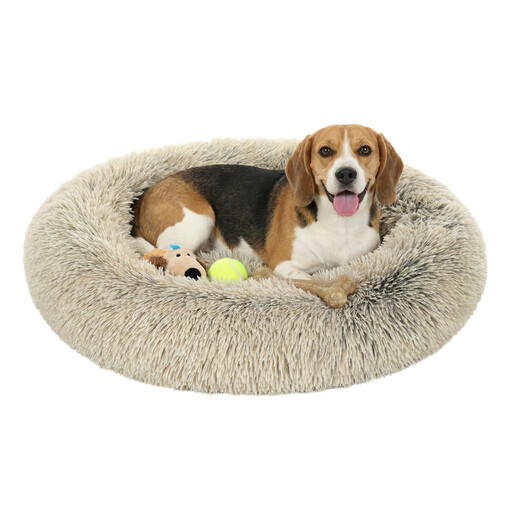
Why it suits this profile: The round size is designed for small and medium-sized dogs, while the neutral colour fits easily into a range of living spaces.
The central cushion cover can be removed with a zip and is machine washable according to the product description. Always check the exact care instructions before purchasing.
70 cm diameter, plush fabric, PP filling and a raised donut-shaped edge.
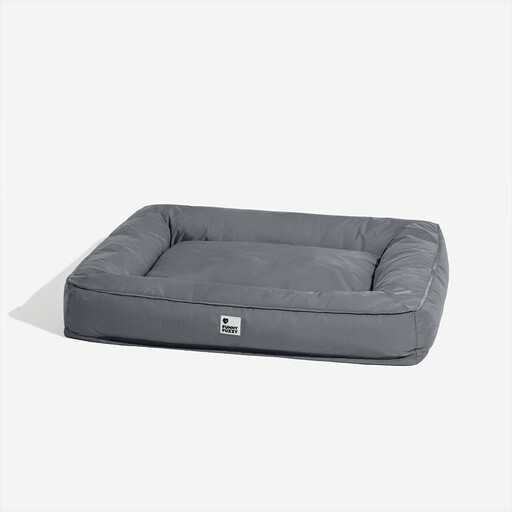
Why it suits this profile: This model is designed for large dogs and everyday use, where easy cleaning and sturdy construction are important.
The product description mentions water-resistant Oxford material, a removable cover and an inner cushion that can be cleaned separately. Check the exact dimensions on the product page.
Raised edges all the way round, Oxford fabric, polyester fibre filling and model FF-ORTHO-L-GY.

Why it suits this profile: The larger round size is suitable for medium-sized dogs that like to curl up or use a soft, enclosed resting place.
The rubber dots on the underside help limit movement. The cover is removable; according to the product information, the inner cushion is suitable for spot cleaning only.
90 cm diameter, 20 cm height, plush covering, PP cotton filling and non-slip base.
We’ve put together a complete, up-to-date list of products that fully meet these strict selection criteria and the applicable European safety regulations.
Shake a vacuum-packed dog bed thoroughly after unpacking it and give it time to regain its shape. Then place it on a dry, level surface. Wash the cover according to the label and allow all the components to dry completely before putting them back together.
Check at least once a week for:
Stop using the bed if you notice visible damage to the plush fabric, seams or filling. This is particularly important for dogs that chew their bed. A dog bed is also no substitute for supervision, crate training or a safe resting place in the home.
Measure your dog from the nose to the base of the tail while they are lying stretched out. Then add around 15 to 30 cm, depending on how much room you want the bed to provide. With a donut dog bed, remember to account for the raised edge: the inner space is smaller than the external diameter.
This depends on shedding, mud, accidents and how intensively the bed is used. Wash the cover as soon as it is visibly dirty or starts retaining odours. A removable cover makes regular care easier. Allow the filling and cover to dry completely before your dog uses the bed again.
The name refers to a design that, according to the product description, aims to provide extra support, often with a thicker sleeping surface or surrounding edge. The effect varies from dog to dog. Compare the dimensions, firmness and construction instead of relying solely on the word “orthopaedic”.
