
Vandaag of morgen in huis

Kwaliteit gegarandeerd

Welkomstaanbiedingen ontgrendelen: GRATIS bezorging | Tot 80% korting | Gratis 30 dagen JoyPlus-proefperiode
Download de app
A dog bed may seem simple, but you often only notice you have made the wrong choice after a few weeks. A cover that is difficult to clean, filling that quickly goes flat or a bed that slides across the floor can make it less practical than the product photo suggests. With soft, fluffy models and an orthopaedic dog bed in particular, it is important to look beyond colour and appearance.
The outer dimensions do not always tell you how much space is left for lying down. With a donut dog bed, the raised edges take up part of the surface. Measure your dog when lying fully stretched out and add some extra room. A dog bed for small dogs does not have to be cramped, while a dog bed for large dogs should provide enough support without leaving your dog half outside the edge.
Also check the weight the bed is designed for. For example, a 70 cm model may be described in the product information as suitable for small to medium-sized dogs, while a 100 cm version may be listed as suitable for medium to large dogs weighing up to around 30 kg.
Check exactly which parts can go in the washing machine. With some models, only the cover is removable. With other beds, the central section can also be taken out, while the filling may only be aired or spot-cleaned.
A dog bed with a removable cover is useful for muddy paws, shedding or accidents in the home. Also check:
A soft dog bed or fluffy dog bed feels pleasant, but softness alone says little about stability and durability. A smooth underside can cause the bed to move when your dog lies down or gets up. Look instead for an anti-slip dog bed with rubber studs or an anti-slip layer.
Also check the seams, zips and underside regularly. Dogs that like chewing or digging may swallow loose filling. Product information therefore generally warns against continuing to use damaged beds and recommends keeping a close eye on pets that chew, especially at first.
A dog that likes curling up may benefit from a round bed with raised edges. That nest-like feeling is what makes a donut dog bed appealing. Dogs that lie fully stretched out need a rectangular or sofa-style bed with plenty of open mattress space.
Do not just measure from the nose to the tail. Also consider:
A smaller donut model may be suitable for a cat, particularly if it likes resting against a soft edge. Cat beds and dog beds are not always very different in terms of materials, but size and weight capacity remain important.
An orthopaedic dog bed often contains foam, fibre filling or a combination of the two. The product descriptions of various FUNNYFUZZY models mention egg-crate foam. According to the brand description, this is intended to provide a supportive structure. It does not offer a medical effect and does not replace advice from a vet in the event of joint problems.
For older dogs or dogs that struggle to get up, a firm sleeping surface with a low step-in may be more practical than a very deep, soft bed. When choosing a dog bed for joint support, you can therefore look for:
Plush, sherpa and faux fur feel warm, but may be less breathable in summer. A breathable pet mat may then be more practical. Water-resistant Oxford material is a good option for dogs that get dirty quickly or use a bed in a crate.
Always place the bed on a flat, dry surface, away from heat sources and naked flames. Allow a vacuum-packed bed to regain its full shape according to the instructions. Some models take 24 to 48 hours. Fluffing the filling regularly can help the bed retain its shape, but always follow the care label for the specific product.
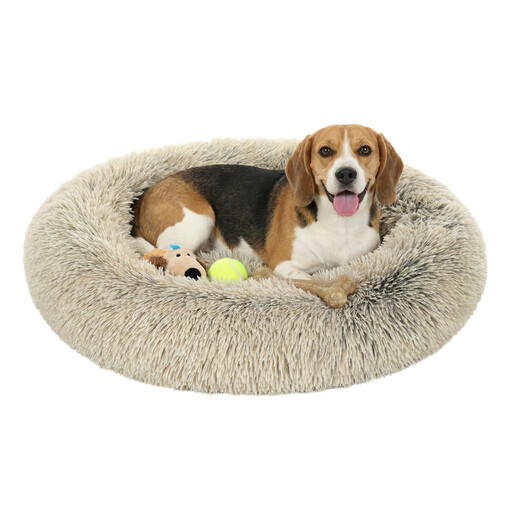
Why it suits this profile: A straightforward model for small to medium-sized dogs that like curling up. The round shape creates a defined resting place without complicated assembly.
The product information states that the central cushion is removable and washable. However, check the care label and inner dimensions before ordering.
70 cm diameter, soft plush fabric, PP filling and a raised edge. The central cover is removable according to the description.

Why it suits this profile: Ideal for households that want to combine comfort with a sofa-style shape, a removable cover and a stable underside.
The description mentions a removable, machine-washable cover and anti-slip fabric. According to the instructions, the inner core must not be washed.
Sherpa and plush fabric, egg-crate foam according to the product description, raised head support and an anti-slip layer.
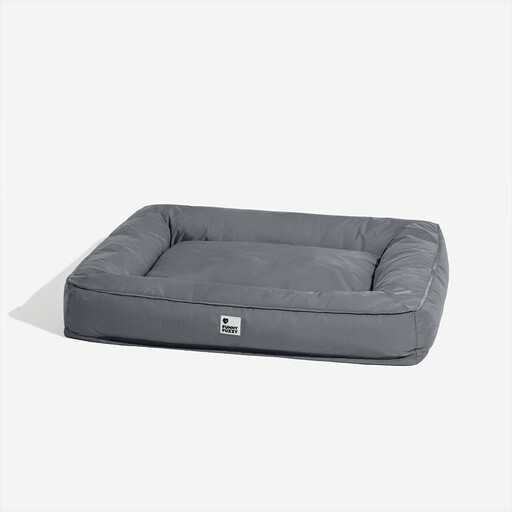
Why it suits this profile: A practical option for larger dogs, frequent daily use or placement in a crate, hallway or another area where dirt is more likely to build up.
The product information mentions water-resistant Oxford material and a removable cover. The inner mat must be cleaned separately and according to the instructions.
Raised edges all the way around, Oxford fabric, polyester filling and a design described as suitable for large dogs.

Why it suits this profile: The 60 cm diameter is intended for cats and small dogs that like curling up in a soft, round sleeping space.
The product description mentions a removable central section and rubber anti-slip studs. Measure your pet beforehand to avoid choosing a sleeping space that is too small.
60 cm diameter, long-pile plush, PP filling, a washable cover and an anti-slip base according to the product information.
We have put together a complete, up-to-date list of products that fully meet these strict selection criteria and the applicable European safety regulations.
Measure your dog while it is lying fully stretched out and add extra space all around. With a donut model, allow for the raised edge, as this reduces the usable sleeping area. Also check the recommended weight range in the product information.
First remove the cover or central cushion if possible. Wash according to the label, use a mild detergent and allow all parts to dry completely before putting them back together. The inner filling cannot be machine-washed with many models. In between washes, vacuuming, using a lint roller and airing the bed regularly can help.
Its lifespan depends on the material, your dog’s weight, how often it is washed and whether your dog chews it. Fluff up the filling regularly, avoid heavy pressure during storage and check the seams, zips and anti-slip layer. Replace the bed when the filling becomes visible or the sleeping surface remains permanently deformed.
