
Vandaag of morgen in huis

Kwaliteit gegarandeerd

Welkomstaanbiedingen ontgrendelen: GRATIS bezorging | Tot 80% korting | Gratis 30 dagen JoyPlus-proefperiode
Download de app
A dog bed may seem easy to choose at first. But after buying one, many owners run into the same problems: the bed is smaller than expected, the cover is difficult to wash or the filling quickly loses its shape. Terms such as ‘orthopaedic’ and ‘calming’ are not very informative on their own if the product details are unclear.
Use these checks to compare dog beds based on verifiable features. That way, you can find a suitable bed for a small, medium or large dog without relying solely on marketing claims.
A dog bed with a diameter of 70 cm does not necessarily offer 70 cm of usable sleeping space. The raised edge takes up some of the surface area. So measure your dog both when stretched out and when curled up asleep. Add around 15 to 20 cm to their longest measurement.
For larger breeds, a large dog bed measuring 120 or 140 cm is often more practical. Also check that it will fit in the room, crate or kennel.
With some models, only the cover is washable. The inner filling or mattress then needs to be wiped with a damp cloth and left to dry completely in the air. That is not necessarily a problem, but you should know before you order.
A dog bed with a washable cover is particularly useful for dogs that shed a lot, bring mud indoors or regularly sleep on their bed. Always check the care label, drying instructions and zip position.
A fluffy dog bed feels cosy, but a slippery underside can cause it to move when your dog gets in or out. A dog bed with a non-slip base helps reduce this risk, but it is no substitute for a flat, stable surface.
Also check the seams, zips and loose fibres regularly. Dogs that like to chew need extra supervision when they first start using their bed.
Do not choose based on breed or weight alone. A dog that likes to curl up may be comfortable in a donut dog bed with a raised edge. A dog that sleeps stretched out will be better suited to a flat mattress or sofa-style bed.
A practical guide:
An orthopaedic dog bed can have several different designs, such as egg-crate foam, a separate supportive cushion or firm polyester or PP filling. According to FUNNYFUZZY’s product description, the egg-crate foam in certain models is designed to provide a supportive structure. This is a product feature, not a medical treatment or a guarantee that joint problems will improve.
For older dogs or dogs that prefer a firm surface, the bed’s height, resilience and ability to retain its shape are particularly important. If you are specifically looking for a dog bed for joint support, it is worth checking the mattress construction in full rather than relying on the ‘orthopaedic’ label alone.
Check these details:
According to FUNNYFUZZY’s product information, a water-repellent dog bed made from Oxford fabric is designed to slow moisture penetration and make cleaning easier. After washing, always check that every part is completely dry before using the bed again.

Why it suits this profile: This model is designed for small and medium-sized dogs, with a round shape and raised edge. At 70 cm, it is a manageable size for a first dog bed in the living room.
The product information lists a removable central cushion, a washable cover and rubber anti-slip dots. This makes it easy to check the care requirements and stability before buying.
70 cm diameter, PP filling, soft plush fabric and a removable central cushion.

Why it suits this profile: This sofa-style bed combines a soft covering with egg-crate foam, a raised headrest and a removable cover. It is a good fit for owners who want to combine support with a stylish interior.
The construction specifically includes egg-crate foam, a machine-washable cover and an anti-slip layer. So you do not have to rely on the word ‘orthopaedic’ alone.
Egg-crate foam, raised headrest, soft faux fur and a machine-washable cover.
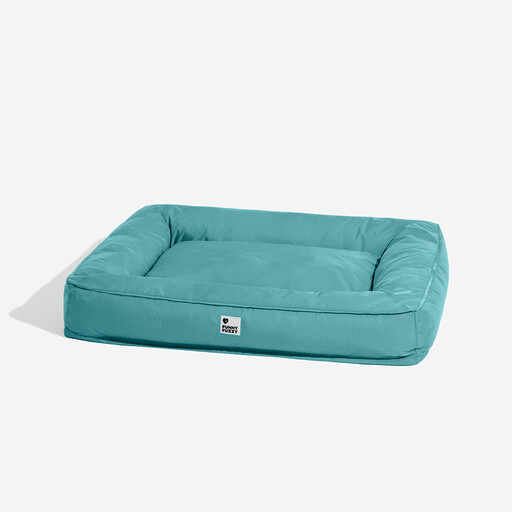
Why it suits this profile: This bed is designed for dogs whose owners prioritise easy cleaning, a firm edge and more durable fabric. The Oxford fabric and raised edge all the way round make it practical for everyday use.
According to the product information, the Oxford fabric, removable parts and washable design are intended to make care easier. The raised edge also provides a clear area of support.
Water-repellent Oxford fabric, scratch-resistant design, support all around and removable parts.
Place the dog bed on a dry, flat surface, ideally in a quiet spot where your dog already likes to rest. Keep it away from draughts, heat sources and high or unstable surfaces. If a new donut dog bed has been vacuum-packed, fluff up the filling thoroughly and give the bed time to regain its shape.
Wash the cover according to the care label and avoid harsh bleach. Let all parts dry completely before putting them back together. Check at least once a month for tears, loose seams and exposed filling. If the bed is badly damaged, replacing it is a better option than repairing it.
We’ve put together a complete, up-to-date list of products that meet these strict selection criteria and the applicable European safety regulations.
Measure your dog from nose to the base of the tail while they are lying down, then add around 15 to 20 cm. If your dog sleeps in different positions, choose a size that gives them enough room to stretch out too. For a basket-style bed, also check the internal dimensions, as the raised edges take up space.
That depends on the materials, how often it is used and your dog’s behaviour. Washing it regularly according to the care instructions and checking for minor damage promptly can help extend its lifespan. A dog that digs or chews a lot puts greater demands on the seams and covering.
Not always. A fluffy dog bed is best suited to dogs that like a soft place to curl up. Product descriptions suggest that a raised donut edge can create a sense of security, but it is not a guaranteed solution for anxiety or other behavioural issues. Always choose a quiet spot too, and supervise your dog if they chew the fabric or filling.
