
Vandaag of morgen in huis

Kwaliteit gegarandeerd

Welkomstaanbiedingen ontgrendelen: GRATIS bezorging | Tot 80% korting | Gratis 30 dagen JoyPlus-proefperiode
Download de app
A dog bed might seem like a straightforward purchase at first glance. However, it's only after a few weeks or months that you'll truly know whether the bed suits your dog, your home and your cleaning routine. A bed that's too small, a slippery base or filling that quickly goes flat can soon lead to disappointment.
With a donut dog bed or a soft dog bed, it's wise to look beyond the colour and first impressions. Below, you'll discover which features really matter, which marketing claims you should take with a pinch of salt, and which models suit different situations.
A dog bed with thick, raised edges gives a cosy, sheltered look, but it also takes up some of the surface area. So, measure your dog when they're lying stretched out and also when they're curled up asleep. Then add a bit of extra room for turning and stretching.
A round bed measuring 60 or 70 cm is mainly intended for cats and small to medium-sized dogs. For larger dogs, a diameter of 80 or 100 cm makes more sense, depending on their body length and sleeping position.
Check exactly what can go in the washing machine. On some models, only the central cushion is removable. That's handy for regular maintenance, but the outer rim can then only be wiped down locally. Also check the care label and avoid bleach or harsh cleaning products.
A washable dog bed helps with upkeep, but check beforehand whether the cover can actually be removed and how large the individual parts are.
Plush and fleece feel lovely, but a dog bed can still slide around on laminate, tiles or a smooth PVC floor. So, look for a non-slip dog bed with rubber studs or another grippy base. Also check the seams, zips and loose filling regularly. Dogs that like to chew should never be left unsupervised on a damaged bed.
Choose the size based on the actual lying area, not just the product name. A raised edge is handy for dogs that like to rest their head or snuggle up against something. A flat mattress suits dogs that prefer to stretch out fully.
For a dog bed for small and medium-sized dogs, round models of 60 to 70 cm are often practical. A model of 80 cm can offer more room to move. According to the product information, a diameter of 100 cm is intended for medium to large dogs up to around 30 kg, but always check the individual sizing.
PP cotton filling, also known as PP filling, is light and resilient. That doesn't automatically mean the bed will keep its shape for years. When delivered in vacuum packaging, the bed first needs to be shaken and fluffed up. Some models need 24 to 48 hours to fully expand.
Pay attention to the manufacturer's warning: inspect the bed regularly and replace it when the cover tears or the filling becomes visible. This prevents your pet from swallowing fibres or filling material.
Place the dog bed in a dry, level spot where your dog likes to rest. A non-slip base only works properly when it's in full contact with the floor. Don't put a plush bed near a heat source, and let washed parts dry completely before putting them back.
A calming dog bed is often named that way because of its round edge and soft fabric. According to the product descriptions from the relevant brands, these features are intended to provide a sheltered, nest-like resting place. That's no guarantee of specific behaviour; just see whether your dog likes to lie against an edge.
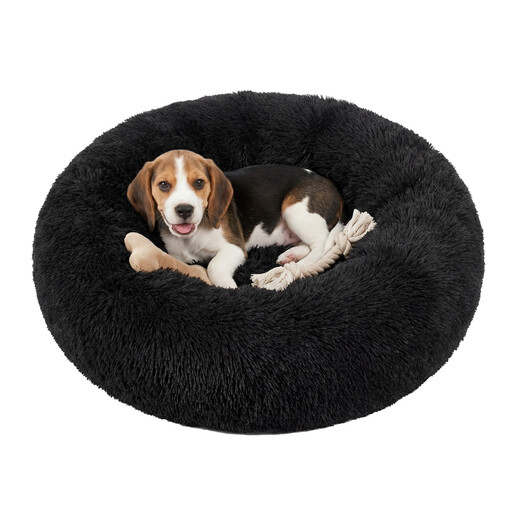
Why this fits the profile: According to the product information, this round model is aimed at small to medium-sized dogs and has a diameter of 70 cm. The removable central cushion construction makes maintenance straightforward.
The product description mentions a removable central cushion, rubber non-slip studs and a clear size indication for small and medium-sized dogs.
70 cm diameter, soft plush fabric, PP filling and a removable central cushion.
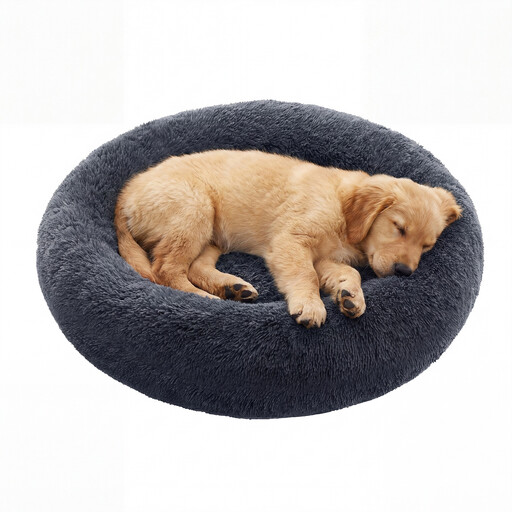
Why this fits the profile: The 100 cm diameter offers more lying surface for medium to large dogs. The raised edge suits dogs that like to sleep curled up or rest their head.
According to the product information, the cover is removable and machine washable. The stated suitability for dogs up to around 30 kg helps you make a more targeted size choice.
100 cm diameter, raised edge, plush polyester and removable cover with zip.
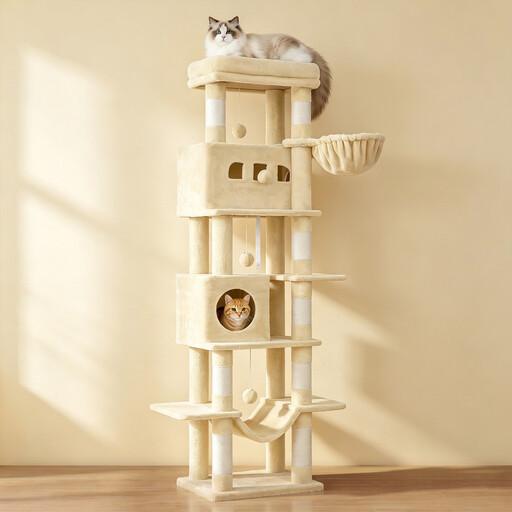
Why this fits the profile: For multi-cat households, a resting and play area with multiple levels is more practical than a single cat bed. The product information mentions six levels, two cat houses, a hammock and eight sisal poles.
The described double base, anti-tip lock and 17 thickened poles provide concrete checkpoints. However, do check the connections yourself regularly after assembly.
212.5 cm high, two cat houses, a hammock, two washable cushions and eight replaceable play balls.
We've put together a full, up-to-date list of products that fully meet these strict selection criteria and comply with current European safety regulations.
A cat bed or cat basket is usually more compact and can have an enclosed shape. Cats often appreciate height, privacy and multiple resting spots. A cat tree combines these functions with climbing and scratching. For multiple cats, a scratching post for multiple cats with different levels can help limit conflicts over a single resting place, although the available space in your home remains the deciding factor.
An igloo bed like the TRIXIE Silas is, according to the product information, suitable for cats and small dogs and has a non-slip base. A wicker cat basket with a door, such as the Jollypaw by TRIXIE, is mainly aimed at providing a sheltered spot and portability. Never use a door as a substitute for supervision or appropriate housing.
Measure your dog from nose to the base of the tail and add room for turning and stretching. With round models, look at the inner space between the raised edges. If in doubt, a slightly roomier model is often more practical, as long as your dog feels safe in it.
First, remove hairs with a vacuum cleaner or brush. If the bed has a zip, take out the central cushion or cover and follow the care label. Use a mild detergent, not bleach, and let everything dry completely before using it again.
The lifespan depends on use, weight, washing and chewing behaviour. Check the seams, zips, non-slip layer and filling regularly. Replace the bed when the material tears, the support significantly decreases or filling material comes loose.
