
Vandaag of morgen in huis

Kwaliteit gegarandeerd

Welkomstaanbiedingen ontgrendelen: GRATIS bezorging | Tot 80% korting | Gratis 30 dagen JoyPlus-proefperiode
Download de app
A dog bed needs to do more than look soft. It should suit your pet’s sleeping position, size and habits. Practical considerations matter in a busy home, too: muddy paws after a walk, fur on the upholstery and limited space in the living room.
Marketing copy often uses terms such as “orthopaedic”, “extra durable” or “stress-relieving”. On their own, these words tell you very little. Instead, look for verifiable details such as dimensions, materials, filling, washing instructions and base construction.
A dog bed with high sides can look large from the outside, while the usable space inside is much smaller. Measure your dog when they’re lying stretched out, and allow enough room for them to turn around and stretch. If your dog likes to curl up, a donut dog bed with raised sides may be just the thing.
Check whether only the cover can go in the washing machine or whether the inner filling can be washed too. With many models, you’ll need to remove the inner cushion and air it separately or spot-clean it. A dog bed with a removable cover is often more practical than one that has to fit in the washing machine as a whole.
Also check the recommended temperature, detergent and drying method. Don’t put a cover back over the filling until it’s completely dry. Always follow the care label.
A fluffy dog bed may feel comfortable, but it can slide around on a smooth floor. That can make it awkward for your dog to get in and out. An anti-slip dog bed with rubber dots or anti-slip fabric on the base will usually stay in place better. Place the bed on a flat, dry surface and check the seams regularly.
Use this practical measuring method:
A dog bed for large dogs needs plenty of sleeping space and a sturdy side that won’t collapse straight away. For a small dog or cat, a dog bed for small dogs with a compact, round shape may offer more of a sense of shelter. Some models can also be used as a cat bed, especially if your pet likes to snuggle up against a soft edge.
Different types of filling feel different:
The term orthopaedic dog bed refers to the product’s positioning or construction; it isn’t a medical assessment. According to the product descriptions, the FUNNYFUZZY models provide support with a wraparound edge and a filled inner cushion. Don’t rely on claims like these instead of seeking veterinary advice if your dog is in pain, feels stiff or has difficulty moving.
Look for a well-protected zip, a removable cover and clear care instructions. A washable dog bed is especially useful if your dog often goes outdoors or sheds a lot. An anti-slip base helps prevent the bed from sliding, but it doesn’t guarantee that it will stay completely still on every type of floor.
After washing, check the fabric, zips and seams. If you find loose threads, tears or exposed filling, stop using the bed, especially if your dog likes to chew fabric.

Why it suits this profile: The round shape and 70 cm diameter make this a straightforward choice for small to medium-sized dogs that like to curl up.
The product description mentions a removable centre cushion with a zip and rubber dots on the base. So you don’t have to judge it by appearance alone.
Plush fabric, PP filling, removable centre cushion and a stated diameter of 70 cm.
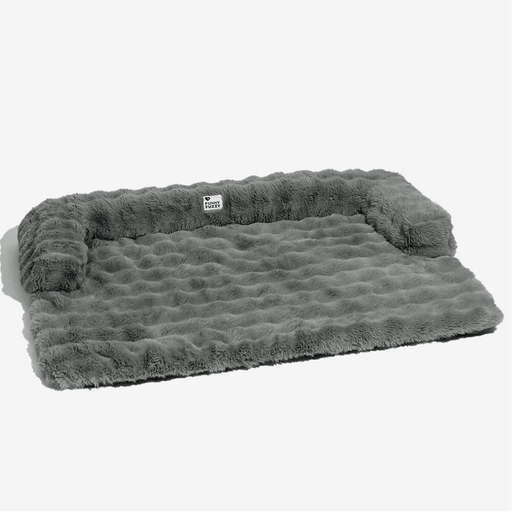
Why it suits this profile: This sofa-style bed combines soft faux-fur fabric with a raised headrest and a removable cover.
The description specifies egg-box foam, an anti-slip base and a machine-washable cover. The inner cushion needs to be cared for separately.
Soft faux fur, raised sides, egg-box foam and a removable, machine-washable cover.
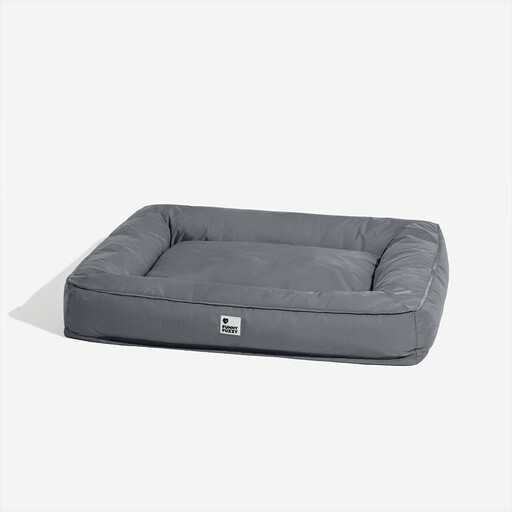
Why it suits this profile: This bed is designed for large dogs and, according to the product description, features Oxford fabric, a wraparound edge and a separate inner cushion.
The water-repellent Oxford fabric is easy to wipe clean, according to the description. The cover can be removed, while the inner cushion is designed for spot cleaning.
Oxford fabric, wraparound edge, polyester filling and a design made for large dogs.
We’ve put together a complete, up-to-date list of products that meet these strict selection criteria and the applicable European safety requirements.
Measure your dog while they’re lying down and compare the measurements with the actual sleeping area. Allow extra room for turning around and stretching out. If the bed has raised sides, check that there’s still enough space inside.
First, remove the cover and inner cushion if the design allows. Wash the cover according to the label, using a mild detergent. Spot-clean any non-washable filling and let all parts dry completely before using the bed again.
How long it lasts depends on your dog’s weight, scratching, chewing, washing and everyday use. Check the zips, seams, base and filling regularly. Replace the bed if the material starts to come loose or the filling becomes visible.
