
Vandaag of morgen in huis

Kwaliteit gegarandeerd

Welkomstaanbiedingen ontgrendelen: GRATIS bezorging | Tot 80% korting | Gratis 30 dagen JoyPlus-proefperiode
Download de app
A dog bed might seem like a straightforward purchase, but you’ll soon notice if you choose the wrong one. It could be too small, slide across the floor or be difficult to clean. Marketing terms such as “orthopaedic” or “waterproof” don’t always tell you enough about how a bed is made, either.
This buying guide will help you focus on the features that really matter in your home: size, support, washability, stability and your dog’s behaviour.
A dog bed with a raised edge can look spacious, even though the sleeping area is smaller than you expect. So measure your dog, but also check the inside dimensions or usable sleeping area. Make sure your dog can lie fully stretched out, with a few extra centimetres to spare.
A round 70 cm donut dog bed may suit small dogs. Medium and large dogs usually need a longer, wider sleeping area. Also consider the height of the edge: a high edge isn’t practical for every dog when getting in and out.
The term orthopaedic dog bed doesn’t tell you by itself how much support the bed provides. Check the materials and construction. Egg-crate foam, a firm inner cushion or a supportive edge tells you more than the label alone.
According to FUNNYFUZZY’s product descriptions, several models feature egg-crate foam, a raised headrest and a removable cover. These are specific product features you can check. They aren’t a medical treatment and don’t replace advice from a vet if your dog has joint or mobility problems.
A soft dog bed may look comfortable, but hair, mud and accidents can soon build up. Check whether the cover is removable and whether it can be machine-washed according to the care label. A fully washable model can be handy for puppies, older dogs or pets that spend a lot of time outdoors.
A waterproof dog bed, or one made with water-resistant Oxford fabric, may be easier to wipe clean. Water-resistant doesn’t automatically mean that every part is fully waterproof. Check which layer provides protection and whether the inner cushion needs to be cleaned separately.
Use this practical checklist:
A dog bed for small dogs is often compact, with a snug, raised edge. A dog bed for medium-sized dogs should offer enough sleeping space without the cushion getting squashed flat too quickly. For a dog bed for large dogs, a sturdy base, strong seams and a suitable weight capacity are especially important.
A soft dog bed with plush or sherpa fabric feels cosy, but softness alone doesn’t tell you whether it will provide lasting support. PP cotton is lightweight and springy. Foam constructions often provide a firmer base. Also check whether the filling can be removed and whether it needs to be plumped up again after use.
A low entry can be practical for older dogs. An edge can be a welcome feature for dogs that like to rest their head on something or curl up in a corner. Choose a shape that suits your dog’s sleeping habits, not just the look of the bed.
A non-slip dog bed is less likely to move on laminate, tiles or smooth PVC flooring. Check whether the underside has rubber dots, non-slip fabric or another type of grip. The floor should be flat, dry and stable. Even a bed with a non-slip layer can slide if the floor is dusty or damp.
It’s best to place the bed somewhere quiet, away from draughts and not right next to a radiator or open fire. Check the seams, zips and underside regularly, especially if your dog likes to chew fabric.

Why it suits this profile: This round bed is designed for small and medium-sized dogs and has a soft plush cover. The central cushion cover is removable, making it a handy choice if you’re buying a dog bed for the first time.
The 70 cm diameter is clearly stated. The product description also mentions a removable central section and rubber dots on the underside.
70 cm diameter; plush fabric; PP filling; removable central cushion cover; non-slip underside.

Why it suits this profile: If you want to pay closer attention to the materials and construction, this bed features sherpa, faux fur, egg-crate foam and a raised supportive edge.
The description lists specific materials and a removable, machine-washable cover. This makes it easier to choose based on the details, rather than relying on general claims such as “extra comfortable”.
Egg-crate foam; raised headrest; removable, washable cover; non-slip layer; suitable for dogs and cats.
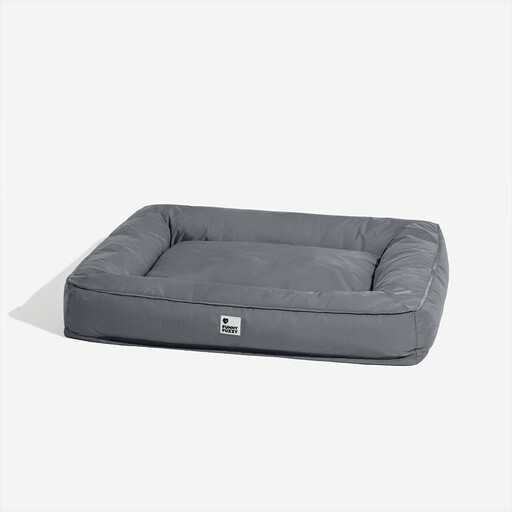
Why it suits this profile: This model is designed for large dogs and households where the bed will get plenty of use. The Oxford fabric is water-resistant, and the raised edge runs all the way round.
The product information specifies water-resistant Oxford fabric, a fully removable design and checks of the seams and material. This makes maintenance and inspection more straightforward.
Water-resistant Oxford fabric; raised edge all the way round; suitable for large dogs; washable cover; scratch-resistant construction, according to the product description.
We’ve put together a complete, up-to-date list of products that meet these strict selection criteria and the applicable European safety regulations.
Measure your dog from nose to the base of the tail while they’re lying down, then add around 15 to 25 cm. For a dog bed or donut bed, check the inside area too. The stated outside diameter isn’t always the same as the available sleeping space.
Start by removing hair with a vacuum cleaner or lint roller. Then wash the removable cover according to the care label. Let the cover and inner cushion dry completely before putting them back together. Don’t use bleach or harsh cleaning products if the manufacturer advises against it.
Its lifespan depends on your dog’s weight, scratching and chewing habits, the filling and how well you maintain it. Check the seams, zips, non-slip layer and any loose filling regularly. Replace the bed if the material is damaged or the support has noticeably deteriorated.
