
Vandaag of morgen in huis

Kwaliteit gegarandeerd

Welkomstaanbiedingen ontgrendelen: GRATIS bezorging | Tot 80% korting | Gratis 30 dagen JoyPlus-proefperiode
Download de app
A dog bed needs to do more than look soft. Your pet uses it every day, so the wrong size, difficult maintenance or a slippery underside can quickly become frustrating. If you focus only on the colour or an appealing product photo, you could end up with a flat, dirty or displaced bed after just a few weeks.
As a Joybuy Product Recommendation Officer, I filter the most important product information according to practical considerations. This helps you compare dog beds by size, material, washability and stability, without automatically treating marketing claims as facts.
A plush dog bed may feel comfortable when you first unpack it, but thin filling can quickly become compressed. This is particularly important for larger or older dogs, so look at the filling, shape retention and construction. A high rim can be useful for dogs that like to rest their head on something, but it also reduces the available sleeping space.
Products with egg-crate foam are often marketed as orthopaedic dog beds in product descriptions. This says something about the construction, but does not constitute a medical guarantee. Check whether the product specifically mentions a foam layer, raised rim or supportive cushion.
For many models, only the cover is washable. The inner filling or foam may not be suitable for machine washing. That is not a problem as long as you know this in advance and the cover can be removed easily. A dog bed with a removable cover is generally more practical when dealing with muddy paws, hair or accidents.
Pay attention to the difference between:
Always follow the care label. Do not use bleach or harsh cleaning products, and allow all parts to dry completely before using the bed again.
An anti-slip dog bed is particularly useful on laminate, tiles or a smooth wooden floor. A base with rubber studs or anti-slip fabric can help limit movement. Even so, the bed should be placed on a flat, dry and stable surface. Check the seams, zips and loose parts regularly too. Dogs that like to chew may swallow filling or small components.
Measure your dog from nose to the base of the tail while they are lying down in a relaxed position. Then look at the bed’s external dimensions as well as the space between the edges. According to the product information, a 70 cm donut dog bed is intended for small to medium-sized dogs, while a 100 cm model is suitable for medium to large dogs weighing up to approximately 30 kg. These are guidelines; body shape and sleeping position remain the deciding factors.
For a large dog, an oblong dog bed for large dogs may be more practical than a round basket. A dog that likes to curl up may appreciate the enclosed edge of a dog basket or donut model. For a small dog, an overly large bed is not always practical, as the raised edge then takes up a relatively large amount of sleeping space.
Many of the soft dog beds in this selection use polyester plush, sherpa, faux fur or PP cotton filling. These materials feel soft and are relatively lightweight. A bed with egg-crate foam has a different construction from a fully filled plush model and may feel firmer.
Pay attention to these points:
According to the brands’ own product information, some models are intended to provide a calm or secure feeling. This is a product claim made by the brand, not an established effect on anxiety or behaviour. In cases of persistent anxiety or physical complaints, a vet or animal behaviourist is the right person to consult.
Choose a washable dog bed that fits your cleaning routine. A removable cover with a zip is practical, but check whether the inner cushion needs to be aired separately or may only be spot-cleaned. With vacuum-packed models, it is normal for you to need to fluff up the bed and allow it to expand after delivery.
Place the bed in a quiet spot, perhaps with a familiar blanket or toy. Do not use a dog bed as a replacement for a crate, carrier or restraint. Keep it away from open flames, radiators and other sources of heat.
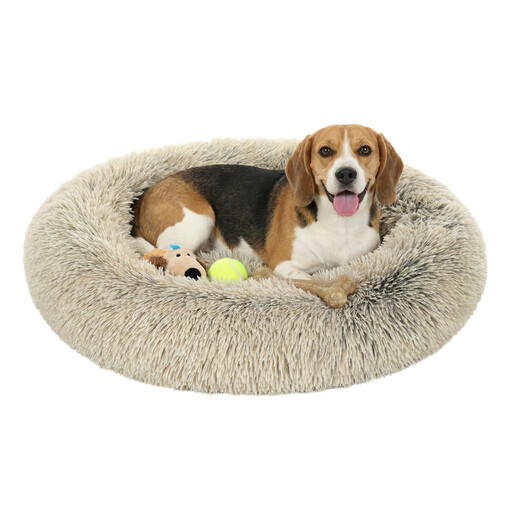
Why it suits this profile: This round model is intended for small to medium-sized dogs and has a soft plush surface with a raised edge.
The product information mentions a removable central cushion, washability and an anti-slip base. Check the exact care instructions on the label before buying.
70 cm diameter, PP filling, plush material and a round, enclosed shape.

Why it suits this profile: The sofa shape combines faux fur, egg-crate foam, a raised headrest and a removable cover for everyday use at home.
The product description specifically mentions a removable, machine-washable cover and anti-slip fabric, rather than simply saying “easy to clean”.
Egg-crate foam, raised headrest, machine-washable cover and suitable for dogs and cats.
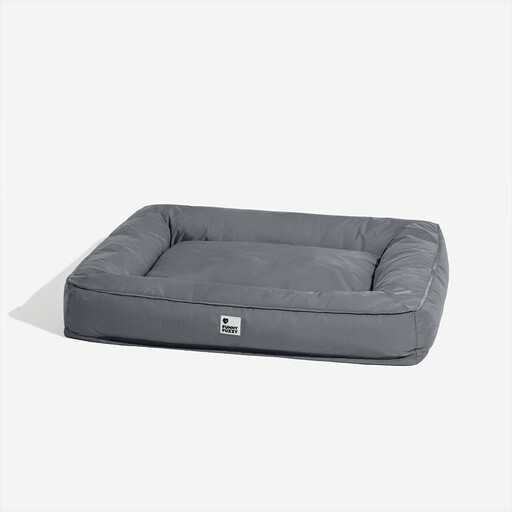
Why it suits this profile: Oxford fabric and an all-round edge are practical for dogs that dig, scratch or often come inside with muddy paws.
According to the product information, the water-resistant Oxford fabric is easy to wipe clean. The cover and inner filling must be cleaned separately and allowed to dry completely.
Water-resistant Oxford fabric, all-round support, raised edge and a design that can be taken apart.
We have put together a complete, up-to-date list of products that fully meet these strict selection criteria and the applicable European safety regulations.
Measure your dog while they are lying fully stretched out and compare this measurement with the bed’s internal sleeping area. For a dog basket or donut model, pay extra attention to the raised edge, as this reduces the usable sleeping space. If you are unsure, a slightly more spacious model is more practical than a bed in which your dog cannot stretch out.
This depends on how it is used. Remove hair regularly with a hoover or lint roller, and wash the cover when it is visibly dirty or starts to smell unpleasant. Dogs that spend a lot of time outdoors may need more frequent washing. Only machine-wash parts for which the care label specifies machine washing.
A soft surface may feel comfortable, but you should also consider firmness and the step-in height. Models with foam, supportive filling or low access may be more practical. An orthopaedic dog bed is not a substitute for veterinary advice; if your dog is in pain, stiff or clearly having difficulty moving, it is best to consult a vet first.
