
Vandaag of morgen in huis

Kwaliteit gegarandeerd

Welkomstaanbiedingen ontgrendelen: GRATIS bezorging | Tot 80% korting | Gratis 30 dagen JoyPlus-proefperiode
Download de app
A dog bed needs to do more than look soft. It should suit your dog’s build, sleeping position and habits. Ease of care, grip on the floor and the quality of the filling also determine whether your purchase is still comfortable to use after a few months.
Many pet owners in the Netherlands face the same problems: a bed that turns out to be too small, a cover that’s difficult to wash or soft filling that quickly goes flat. Use the checks below to avoid a disappointing purchase.
A dog bed with a raised edge has less usable sleeping space than a flat mattress. So, measure your dog from nose to tail, but also allow for the raised edge. A dog that likes to stretch out needs more room inside the bed than one that usually curls up.
Check the product specifications:
With some models, only the cover can go in the washing machine. The inner filling then needs to be shaken out or spot-cleaned. That’s not necessarily a problem, as long as the product information makes it clear.
A washable dog bed is especially practical when the cover can be removed with a zip. Also check:
Wet filling must be completely dry before your pet uses the bed again.
A fluffy or soft dog bed feels comfortable, but a thick layer of plush fabric doesn’t automatically mean good support. The construction matters more than the outer material alone, particularly for older dogs or pets that spend a lot of time lying down.
An orthopaedic dog bed might, for example, have a foam layer, egg-crate foam structure or firm fibre filling. According to FUNNYFUZZY’s product description, egg-crate foam is designed to provide a supportive structure; this is a product feature, not a medical benefit. If your dog already has joint problems, it’s still best to seek advice from a vet.
A dog bed with a raised edge suits dogs that like to lean against something or rest their head. A donut dog bed has a raised edge all the way round and is particularly suitable for pets that like to curl up. A compact cat bed or round basket may be enough for cats and small dogs.
If your dog often changes position, a flat, sofa-style mat may be more practical. Beds around 70 to 90 cm are often worth considering for medium-sized pets, but the right choice depends on the usable space inside the bed and your pet’s measurements.
Check the material listed. PP cotton feels soft and springy. Egg-crate foam or a thicker foam structure offers different support from loose fibre filling. A raised edge can provide extra support for your dog’s neck and head, but it shouldn’t be so high that getting in and out is difficult.
When choosing a dog bed for medium-sized dogs, it’s worth considering your dog’s weight, length and sleeping position together. Dogs of the same weight can still need different amounts of space because of their build.
A non-slip dog bed or one with rubber grips will generally stay more stable on a smooth floor. However, the base still needs to be placed on a flat, safe surface. Check that the non-slip layer is suitable for your floor and remains intact after washing.
A water-resistant dog bed made with Oxford fabric is useful for muddy paws or little accidents. Water-resistant doesn’t mean fully waterproof, so check which parts are protected and how the fabric should be cleaned.
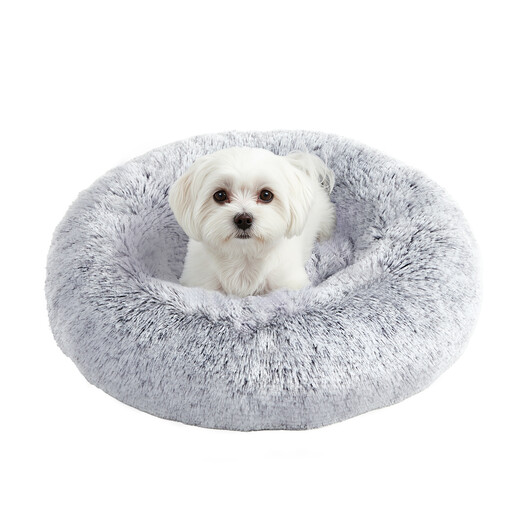
Why it suits this type of buyer: Its round shape, soft plush fabric and removable central cushion make it a simple starting point for small and medium-sized dogs.
The product information gives the overall diameter as 70 cm and recommends the bed for small to medium-sized dogs. This makes it easier to compare the size with your needs before buying.
70 cm diameter, PP filling, removable central cushion and rubber non-slip grips on the base.

Why it suits this type of buyer: This model combines plush and sherpa fabric with egg-crate foam, a raised headrest and a removable cover for everyday use at home.
The product description specifically mentions egg-crate foam, a machine-washable cover and non-slip fabric. This gives you a clearer idea of what it’s made from than a general claim of “extra comfort”.
Egg-crate foam, raised headrest, removable machine-washable cover and non-slip base; suitable for dogs and cats.
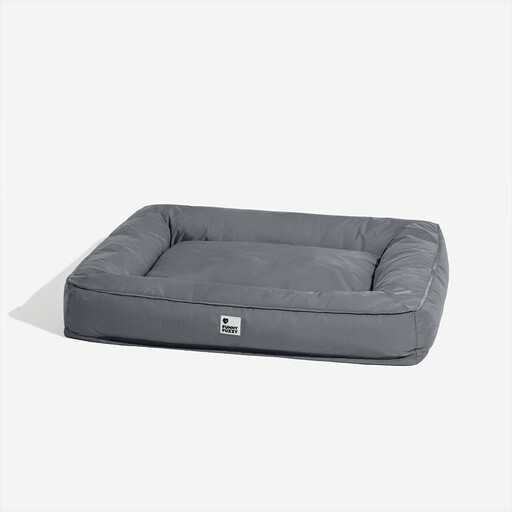
Why it suits this type of buyer: This dog bed for large dogs is designed with a sturdy, wraparound construction and easy care in mind, making it suitable for frequent everyday use.
The product information distinguishes between the washable cover and the inner cushion, which needs to be spot-cleaned. It also describes the Oxford fabric as water-resistant and scratch-resistant.
Oxford fabric, raised edges all the way round, polyester fibre filling, removable components and a design for large dogs.
We’ve put together a full, up-to-date list of products that meet these strict selection criteria and comply with the applicable European safety regulations.
Place the dog bed on a flat, dry surface, ideally in a quiet spot away from draughts. Allow vacuum-packed models to expand fully and shake them out according to the product instructions. Check regularly for:
Dogs that like chewing fabric need extra supervision. A dog bed is not a means of transport, a cage or a restraint. Keep plush materials away from naked flames and direct sources of heat.
Measure your dog from nose to tail and allow extra room for turning and stretching. For a dog bed with a raised edge, consider the usable space inside the bed, not just its overall diameter. Size L isn’t automatically big enough for a large dog, so always compare the measurements with your dog’s lying length.
It depends on your dog’s coat, outdoor activities and any accidents. Wash the cover as soon as it smells dirty or is visibly soiled, and always follow the care label. Vacuuming or wiping it down between washes helps remove hair and dirt. Let all washed parts dry completely.
Its lifespan depends on the material, your dog’s weight and whether they chew or dig. Check the bed regularly for loose seams, tears and flattened filling. Replace it if the structure is damaged or the inner filling is visible.
