
Vandaag of morgen in huis

Kwaliteit gegarandeerd

Welkomstaanbiedingen ontgrendelen: GRATIS bezorging | Tot 80% korting | Gratis 30 dagen JoyPlus-proefperiode
Download de app
A dog bed may seem like a simple purchase, but the differences between models often come down to the details. A bed may feel soft in the shop yet quickly lose its shape, slide around on a smooth floor or prove difficult to clean. Size is also often underestimated: your dog needs room not only to lie down, but also to stretch out and turn around.
Use this practical checklist to focus on the features that make the biggest difference in a UK home: size, support, washability and stability.
A fluffy dog bed with long plush fibres looks inviting. But the outer fabric tells you little about the construction inside. Thin filling can compress over time, especially under larger or heavier dogs.
So check the filling and base construction. Egg-crate foam, PP cotton or a separate inner cushion tell you more than a general claim such as “extra comfortable”. Some product descriptions say that the filling is designed to provide a supportive structure. This is a product specification, not a guarantee of a medical benefit.
With a washable dog bed, it’s often only the cover that can be washed. The inner filling or central cushion may need to be cleaned by hand. So check:
A dog bed with a removable cover is usually more practical for households where mud, hair or accidents are a regular occurrence. Let all the parts dry thoroughly after washing before your pet uses the bed again.
A dog bed with a non-slip base may be less likely to slide around, but the base is no substitute for a flat, stable surface. The bed may still move on a smooth tiled floor when your dog jumps in or out enthusiastically.
Place the dog bed on a dry floor and check regularly that the non-slip layer is still intact. If your dog chews fabric, zips or filling, you’ll need to keep a closer eye on them. Damaged seams or exposed filling are reasons to stop using the bed.
Measure your dog from nose to the base of the tail, then allow extra room. Also consider how they like to sleep:
For round models, check the inside measurements. A diameter of 70 cm doesn’t mean you get 70 cm of usable sleeping space, as the raised sides take up some of it.
An orthopaedic dog bed usually refers to a design with supportive foam, a firm inner cushion or raised sides. Treat the term as a description of the design, not a medical promise.
Product descriptions sometimes mention support for joints, backs or necks. According to the brands’ own information, these claims refer to the intended function of the product. How suitable a bed is will vary from pet to pet. If your pet has existing joint problems or persistent discomfort, it’s wiser to seek advice from a vet than to rely solely on the bed description.
Plush and sherpa feel soft, but can trap hair. Oxford fabric is generally easier to wipe clean and is better suited to dogs that dig or spend a lot of time outdoors. Check the zip too: a concealed zip reduces contact with your pet, but it still needs to be checked for wear.
A practical care routine:
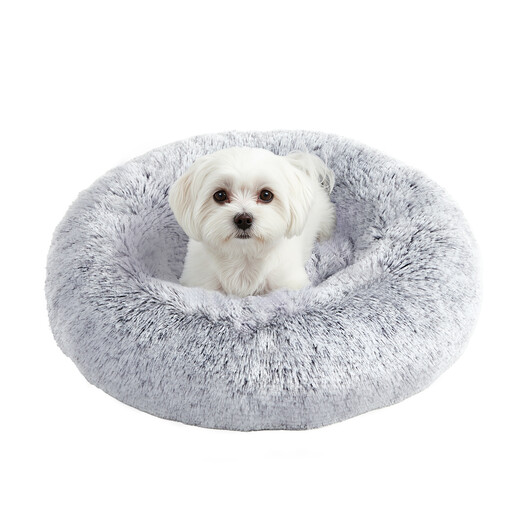
Why it suits this type of buyer: The round shape suits small to medium-sized dogs that like to curl up. With a diameter of 70 cm, it’s a manageable option for a first dog bed.
According to the product information, the central cushion can be removed. This means you can take out the inner cushion separately and wash the cover according to the care label.
70 cm diameter, PP filling and rubber non-slip dots. The bed is delivered vacuum-packed, so it needs to be shaken out and left to expand before first use.

Why it suits this type of buyer: This sofa-style bed combines soft faux fur and sherpa with a raised headrest. It’s designed for dogs and cats that like support around their neck and paws as they lie down.
The product description lists egg-crate foam, a removable machine-washable cover and a non-slip base. This clearly sets out the key features to check.
Sherpa and soft plush fabric, egg-crate foam, a raised headrest and a removable cover. Before buying, check that size M is suitable for your pet’s sleeping length.
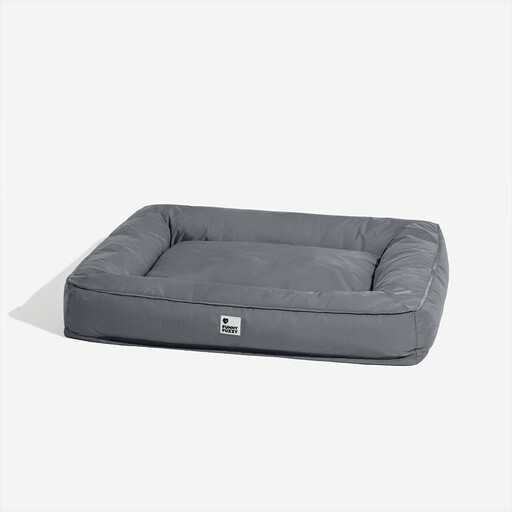
Why it suits this type of buyer: The water-resistant Oxford fabric and larger size make this bed a good fit for large dogs, crates or households where the bed gets frequent use.
According to the product information, the Oxford outer fabric is water-resistant and can be wiped clean. The inner cushion needs to be cleaned separately, making it clear which parts are machine-washable.
Water-resistant Oxford fabric, raised sides all around and a separate inner cushion. Check the product page or packaging for the exact measurements of size L.
We’ve put together a complete, up-to-date list of products that meet these strict selection criteria and the applicable European safety regulations.
Measure your dog while they’re lying stretched out and allow extra room to turn around. With a doughnut-shaped dog bed, don’t count the raised sides as sleeping space. Always check both the inside measurements and the recommended weight range.
It depends on how often it’s used. Remove hair between washes and wash the cover as soon as it looks dirty or starts to smell. Follow the care label and only wash parts that are suitable for it. A removable cover makes this easier.
A soft exterior can feel comfortable, but pay particular attention to the support underneath and the height of the entrance. A bed that’s too high may be difficult for a pet with limited mobility to get into. If your dog has joint problems, you can discuss the design with a vet; a product claim about support is not a medical assessment.
