
Vandaag of morgen in huis

Kwaliteit gegarandeerd

Welkomstaanbiedingen ontgrendelen: GRATIS bezorging | Tot 80% korting | Gratis 30 dagen JoyPlus-proefperiode
Download de app
A dog bed needs to do more than look soft. It should suit your dog’s sleeping position, body length and daily habits. Cats can also use a suitable dog bed or comfortable pet bed as a regular place to rest.
Many buyers focus mainly on colour and appearance. As a result, they sometimes come home with a bed that quickly goes flat, is difficult to wash or does not stay stable on the floor. These practical checks will help you avoid making the wrong purchase.
The diameter or external dimensions do not always indicate how much lying space remains. With a dog bed featuring raised edges, the edges take up part of the surface. Measure your dog while they are lying fully stretched out, then allow some extra space all around.
A dog bed for large dogs should not only be wide enough, but also provide sufficient support when your dog turns or stretches out. For small dogs, a bed that is too large may feel less cosy and secure.
Check whether only the cover, the central cushion or the entire bed can go in the washing machine. With many models, the filling is not machine washable. That is not a problem as long as you know this in advance and the cover can be removed easily.
Also look for a well-protected zip and washing instructions that specify a gentle cycle. A washable dog bed makes regular maintenance easier, but incorrect washing can damage its shape or filling.
A fluffy dog bed or soft dog bed feels comfortable, but very loose filling can compress after use. Therefore, look at the construction: for example, PP filling, a foam structure or a separate cushion. According to the product descriptions of some brands, an egg-carton foam structure is intended to provide even support. This is a product feature, not a guarantee of any medical benefit.
For older animals or dogs that have difficulty standing up, a stable base and a low entry are often more important than extra-thick plush edges.
Use this simple guideline:
According to the product information, a round 60 or 70 cm donut dog bed is mainly intended for cats and small to medium-sized dogs. Models measuring 100, 120 or 140 cm offer more room and are more suitable for medium to large dogs, depending on their sleeping position.
Plush, sherpa and long-pile fabrics feel warm and soft. Oxford fabric is more practical if you prioritise a water-repellent surface and easy wiping. Also check whether the filling is described in full.
For example, an orthopaedic dog bed may have an egg-carton foam core, a separate cushion or an all-round edge. Use the term “orthopaedic” to describe the product’s construction; it does not replace advice from a vet in the case of joint or back problems.
Pay attention to these points:
A dog bed with an anti-slip base is particularly practical on laminate, tiles or smooth wooden flooring. Anti-slip rubber reduces movement, but always place the bed on a flat, stable surface.
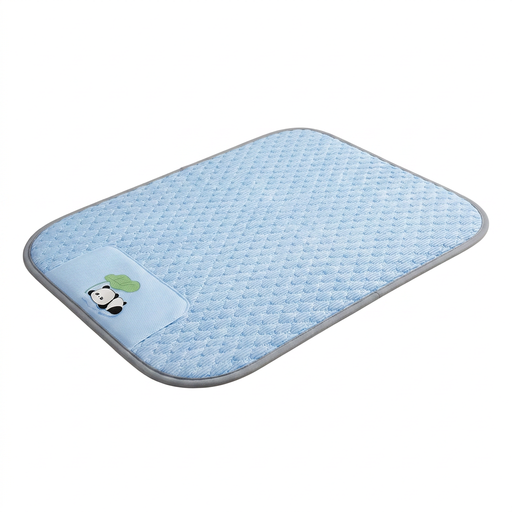
Why it suits this profile: This mat is suitable as a simple resting place on the floor, in a crate or on the sofa. The product description mentions breathable fabric, resilient filling and machine washability.
The mat has no high edge that takes up a lot of lying space. Check the dimensions for your dog beforehand.
Machine washable, suitable for different resting places and fitted with a soft, breathable cover according to the product information.

Why it suits this profile: The combination of sherpa, plush, egg-carton foam, a raised headrest and removable cover suits owners who want to combine several specifications.
The product description lists both a supportive core and an anti-slip layer. The cover is removable; according to the instructions, the core must not be washed.
Egg-carton foam, raised edge and machine-washable cover; intended for dogs and cats according to the product specification.
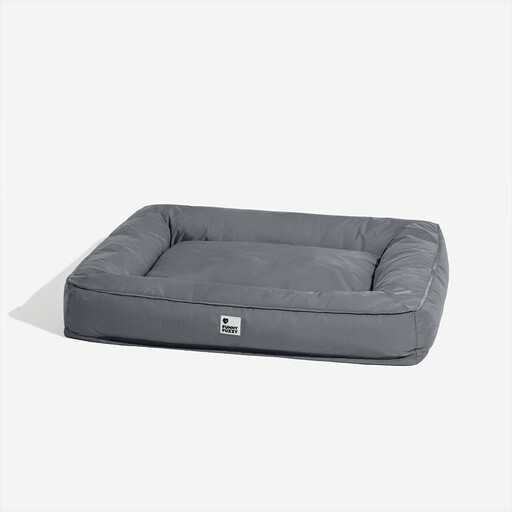
Why it suits this profile: This model is designed for large dogs and daily use. According to the product information, the Oxford fabric is water-repellent and the cover is removable.
A water-repellent outer fabric is more practical than long-pile plush alone when dealing with muddy paws. The inner filling must be spot-cleaned.
All-round edge, Oxford fabric and a model designed for large dogs. Check the sizing on the product page before ordering.
We have compiled a complete, up-to-date list of products that fully meet these strict selection criteria and the applicable European safety regulations.
Allow a vacuum-packed dog bed to expand fully first. Gently shake out the bed and give the filling time to regain its shape. Then place it in a dry, flat spot where your dog likes to rest.
Wash covers according to the label and do not use bleach unless this is permitted. Allow all parts to dry completely before putting them back together. Check the seams, zips and anti-slip base regularly. If you notice loose threads, tears or exposed filling, replacing the bed is safer than continuing to use it, especially if your dog likes chewing fabric.
Measure your dog from the nose to the base of the tail while they are lying fully stretched out. Add enough space for turning around. With a dog basket or donut bed, check the internal dimensions because the raised edge takes up space.
The lifespan depends on the filling, how often it is washed, your dog’s nails and their chewing habits. Regular airing, removing hair and cleaning the cover according to the care label will help it retain its shape for longer. Replace the bed as soon as the filling remains permanently flat or becomes damaged.
That depends on the entry height, stability and support. A soft surface can feel comfortable, but filling that is too deep or unstable can make standing up more difficult. Choose a model with a firm base, plenty of lying space and, if possible, a lower entry. If problems persist, it is advisable to consult a vet.
