
Vandaag of morgen in huis

Kwaliteit gegarandeerd

Welkomstaanbiedingen ontgrendelen: GRATIS bezorging | Tot 80% korting | Gratis 30 dagen JoyPlus-proefperiode
Download de app
A dog bed may seem simple to buy, but differences in size, filling, cover and washability can make a big difference to how practical it is. A bed that’s too small can soon be ignored, while a lovely soft model without a sturdy base may slide around or be difficult to clean.
Look out for these three common pitfalls:
Measure your dog from nose to the base of their tail, then allow enough room for them to turn around. A dog bed for small dogs can be compact, while a dog bed for large dogs will often need a sturdy edge and a spacious sleeping area. Don’t just look at the outside dimensions: with a dog bed that has raised sides, the usable inner area is smaller.
Round models of around 80 to 90 cm often suit medium-sized dogs, but weight, sleeping position and the thickness of the sides are still important. So always check the product dimensions and the recommended dog size.
A soft plush dog bed feels cosy for dogs who like to curl up. However, plush can hold on to more hair and dirt. A removable cover and a zip make cleaning easier.
For accidents, muddy paws or a busy household, a water-resistant dog bed made from Oxford fabric is a practical choice. Bear in mind the difference between water-resistant and fully waterproof. Also check whether only the outside has been treated, and whether the inner cushion is not machine washable.
A non-slip dog bed will generally stay in place better on a smooth floor, but the surface should be flat and dry. Rubber dots help reduce movement; they won’t stop a bed moving altogether.
A bed with sturdy sides can be comfortable for dogs who like to rest their head on an edge or feel sheltered. For an anxious dog, an enclosed design may, according to the product description, provide a more sheltered place to rest. It isn’t a substitute for support if your dog’s anxiety persists.
If you’re looking for an orthopaedic dog bed, it’s worth checking the filling construction, cushion height and how the weight is distributed. The word “orthopaedic” on its own is no guarantee of a particular effect. For older dogs or those with joint problems, it may be worth speaking to a vet if discomfort persists.
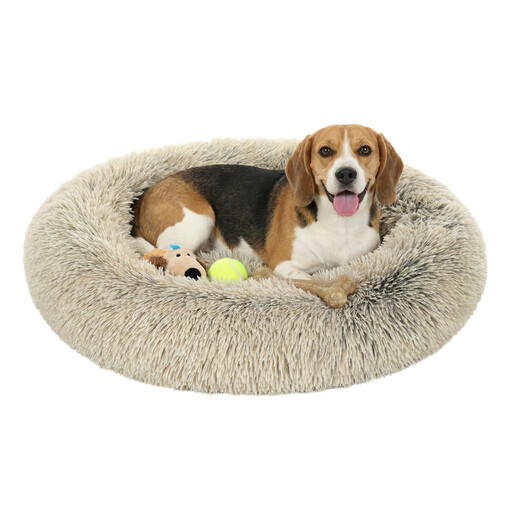
Why it suits this profile: This round model is designed for small to medium-sized dogs weighing up to around 15 kg, and fits easily in a living room or quiet corner.
The dimensions and recommended weight are listed. The central cushion cover is removable and, according to the product information, machine washable.
Round donut design, polyester plush, PP filling and a removable cover. Leave the bed to regain its shape for 24 to 48 hours after unpacking.
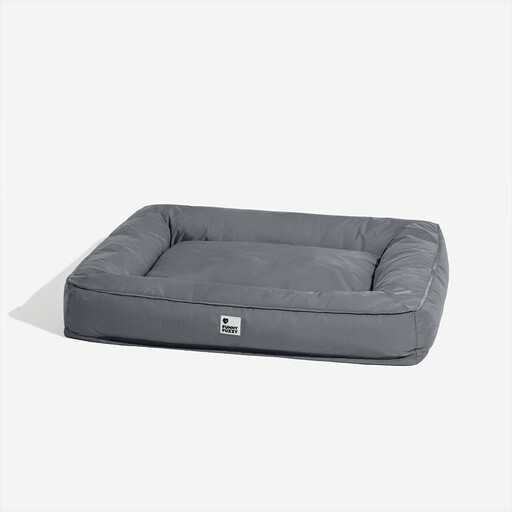
Why it suits this profile: This model is designed for large dogs and households where easy care and sturdy sides are important.
The product description lists Oxford fabric, a water-resistant outer layer, a removable construction and a fully washable design. Check the exact size on the packaging before buying.
Oxford fabric, polyester filling, raised sides all the way round and a construction that, according to the product information, is resistant to scratching.

Why it suits this profile: An option for medium-sized dogs and use as a dog crate bed, provided the outside dimensions fit inside the crate.
The underside has rubber non-slip dots. The cover is removable; according to the care information, the inner cushion can only be spot-cleaned.
90 cm diameter, 20 cm height, plush fabric and PP filling. Check the seams and zip regularly if your dog likes chewing their bed.
Place the dog bed somewhere flat and dry, away from draughts. In a crate, the bed shouldn’t block the door, and your dog should still be able to turn around comfortably. You could place a familiar blanket in the bed to help them settle in.
Wash a removable cover according to the care label and avoid harsh bleach. Let all the parts dry completely before putting them back together. Damp filling can smell unpleasant and wear out more quickly. Plump up plush beds regularly to distribute the filling evenly.
The bed’s lifespan depends on your dog’s weight, scratching, chewing, washing, and the quality of the seams and zips. Check regularly for loose threads, tears and exposed filling. Stop using the bed if your dog could swallow any of its materials.
We’ve put together a complete, up-to-date list of products that meet these strict selection criteria and the applicable European safety regulations.
First, measure the inside of the crate and compare it with the outside dimensions of the bed. A dog bed for a crate shouldn’t get wedged against the door. A thinner crate mattress may be more practical than a model with very high sides.
It depends on how often it’s used and how dirty it gets. Wash the cover when it’s visibly dirty or smells unpleasant. Between washes, you can remove hair and spot-clean small stains. Always follow the care label.
Not always. A donut dog bed is best suited to dogs who like to curl up or sleep against an edge. Dogs who stretch out may be more comfortable on a rectangular model with a larger open sleeping area. So consider both your dog’s sleeping position and the inner dimensions, not just the appealing round shape.
