
Vandaag of morgen in huis

Kwaliteit gegarandeerd

Welkomstaanbiedingen ontgrendelen: GRATIS bezorging | Tot 80% korting | Gratis 30 dagen JoyPlus-proefperiode
Download de app
A dog bed needs to do more than look soft. It should suit your dog’s build, stay securely in place and be easy to clean. Yet many purchases are based on photos, vague marketing claims or the wrong size.
The most common pitfalls:
Use the points below to compare dog beds based on practical features, not just appearance.
Measure your dog when they’re lying stretched out, then allow extra room for turning around. For a round doughnut dog bed, check the usable inner space, not just the overall diameter. The raised edge takes up some of the surface area.
As a guide:
Always check the weight and breed guidance in the product information. For example, the supplied product details describe a 70 cm dog bed as suitable for small to medium-sized dogs, while 100 cm models are intended for medium to large dogs weighing up to around 30 kg.
A soft dog bed with plush fabric feels comfortable, but the construction beneath the cover determines how the bed performs. PP cotton filling is used in several models to create a soft, resilient shape. According to the product description, a model with egg-crate foam has a more structured base layer.
For older dogs or pets that appreciate extra support, an ‘orthopaedic’ dog bed with a foam structure and neck support may be worth considering. Here, the term ‘orthopaedic’ describes the product’s positioning and construction; it isn’t a medical treatment. If your dog has ongoing joint or back problems, seek advice from a vet.
Also look out for:
A washable dog bed is most practical when the cover comes off easily. Check whether it has a removable cover, a removable central cushion or whether it can only be spot-cleaned. Always follow the care label; materials can shrink or lose their shape if washed on a programme that’s too hot.
A dog bed with a non-slip base works most reliably on a dry, level surface. The product information for several models mentions rubber grips or non-slip fabric on the underside. These help prevent the bed from sliding, but don’t replace the need to position it securely. Check the seams, zips and filling regularly. If your dog tends to chew, supervise them the first time they use the bed.

Why it suits this profile: According to the product information, this round model is designed for small and medium-sized dogs. At 70 cm in diameter, it’s a manageable size for a living room, bedroom or crate.
The central cushion insert can be removed using a zip, so you don’t have to wash the whole bed every time.
Plush fabric, PP filling, a non-slip base with rubber grips and a 70 cm diameter.

Why it suits this profile: The combination of sherpa fabric, soft faux fur, egg-crate foam and a raised headrest is ideal for pets that like to rest on a sofa-style bed.
The product description specifies a removable, machine-washable cover and a non-slip base layer. Check the care label for the exact wash programme.
Egg-crate foam, neck support, a machine-washable cover and non-slip fabric; suitable for dogs and cats.
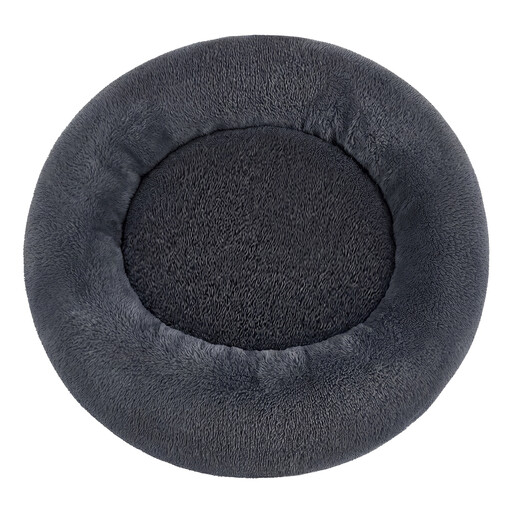
Why it suits this profile: According to the product details, this large doughnut bed is designed for large adult dogs. Its 120 cm diameter gives them more room to stretch out, or space for several small pets.
The removable cover and central cushion insert make it easier to clean regularly than a model with fixed components.
120 cm diameter, PP filling, soft plush fabric and rubber non-slip grips.
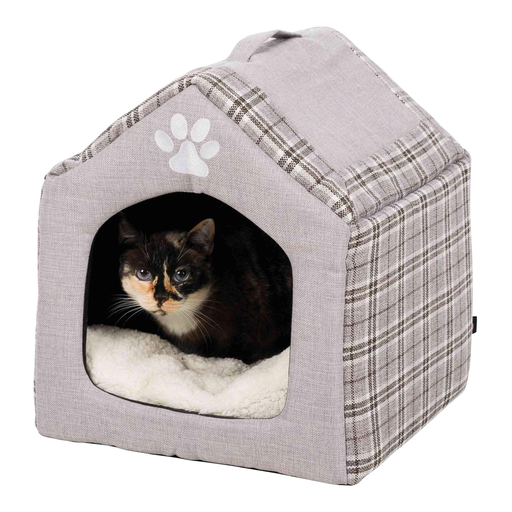
Why it suits this profile: Measuring 40 × 33 × 40 cm, this igloo-style bed is suitable for cats and small dogs that prefer a sheltered place to sleep.
The dimensions and suitable pets are clearly listed, so you’re less likely to choose this model by mistake for a medium or large dog.
Igloo shape, plush lining and a non-slip base for stability.
We’ve put together a full, up-to-date list of products that meet these strict selection criteria and the applicable European safety regulations.
First, remove any hair with a vacuum cleaner or lint roller. If the bed has a removable cover, follow the care label and use a mild detergent. Let all the components dry completely before putting them back together. A fixed edge or inner filling can often only be spot-cleaned.
It depends on the materials, how often it’s used and your dog’s behaviour. Check the seams, zips, non-slip layer and any exposed filling regularly. Replace the bed if it’s badly misshapen or if your dog can pull off and swallow any parts.
Look for easy access, plenty of lying space and a supportive base. A model with egg-crate foam, a raised edge or neck support may be suitable, based on the product specifications. If your dog is in pain or having difficulty moving, this isn’t a substitute for veterinary advice.
