
Vandaag of morgen in huis

Kwaliteit gegarandeerd

Welkomstaanbiedingen ontgrendelen: GRATIS bezorging | Tot 80% korting | Gratis 30 dagen JoyPlus-proefperiode
Download de app
A dog bed may seem like a simple product, but there are big differences in size, filling and maintenance. A bed that looks spacious online may turn out to be too small at home. A soft exterior also tells you little about the support it offers or how long it will last. And if the cover isn’t easy to remove, cleaning can quickly become a recurring problem.
So watch out for these three common pitfalls:
Below, you’ll find out which features matter in practice and which dog bed suits different situations.
Measure your dog while they’re lying stretched out, then allow a little extra room. A dog that likes to curl up may be comfortable in a round donut dog bed. A dog that often sleeps stretched out will need a more spacious, rectangular sleeping area.
Keep these points in mind:
According to the product information, the 60 cm bed is designed for cats and small dogs. The 70 cm round models are intended for small and medium-sized dogs. The 100 cm version is suitable for medium-sized to larger dogs, depending on their sleeping position and body weight.
A soft dog bed with plush or sherpa feels comfortable, but take a look inside, too. PP cotton provides a soft, springy filling. A construction with egg-crate foam, as found in certain FUNNYFUZZY models, offers a different kind of support from a donut bed filled entirely with fibres.
An orthopaedic dog bed may be a good option for older pets or animals that prefer to lie on a firmer surface. Treat “orthopaedic” as a product description and check the specific details: foam type, thickness, shape retention and any raised support for the head and neck. A dog bed isn’t a substitute for veterinary advice if your pet has joint or mobility problems.
A raised rim is especially practical for dogs and cats that like to rest their heads on something. On a donut bed, the wide rim also creates a cosy, enclosed feel. According to the relevant brands’ product descriptions, this may help create a restful place to lie, but the effect varies from pet to pet.
A washable dog bed is practical when dealing with muddy paws, shedding or little accidents. Check exactly which parts can be washed:
A dog bed with a non-slip base stays more stable on a smooth floor, such as laminate, PVC or tiles. Non-slip rubber or fabric only helps when the base is in full contact with a flat, dry surface. Check the layer regularly for wear.

Why it suits this profile: This round bed is a straightforward choice for small and medium-sized dogs. With a diameter of 70 cm and soft plush fabric, it’s well suited to dogs that like to curl up.
The product information lists the diameter, height and recommended pet size. The central cushion insert can be removed using a zip, so you know exactly what can be washed before you buy.
70 cm diameter, PP cotton filling, soft plush fabric, removable central cushion and non-slip rubber dots on the base.

Why it suits this profile: This dog bed is a good choice for owners who want more than softness, and are also looking for a supportive structure, a raised rim and a removable cover. According to the product description, it’s suitable for dogs and cats of all ages.
The construction is described in detail, including egg-crate foam, a raised headrest section and a non-slip layer. The product information says the cover is removable and machine washable.
Plush and sherpa fabric, egg-crate foam, raised rim, machine-washable cover and non-slip fabric. The inner core should not be washed, according to the instructions.
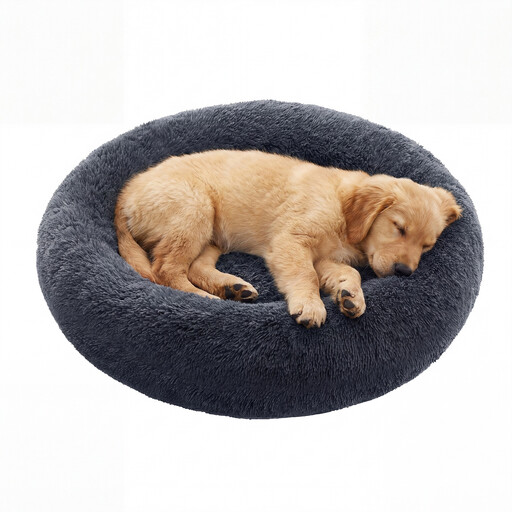
Why it suits this profile: The 100 cm diameter gives medium-sized and larger dogs more room. The high, rounded rim is ideal for dogs that like to rest against a soft boundary.
The generous diameter means you don’t have to rely on the product photo alone. The cover can be removed using a concealed zip, and the product information includes care instructions and advice on checking for loose seams.
100 cm diameter, long-pile plush fabric, PP cotton filling, removable washable cover and a raised donut rim. Also suitable for cats that like to feel snug.
We’ve put together a complete, up-to-date list of products that meet these strict selection criteria and the applicable European safety regulations.
Your dog bed will last longer if you check it regularly. Look out for loose seams, a damaged zip, tears in the cover or any filling that’s starting to show. Pets that like to chew need extra supervision at first.
Always follow the care label. Don’t use bleach or harsh cleaners if the product information advises against them. Let the cover dry completely after washing before using the bed again. Place the bed on a flat surface, away from radiators and other heat sources. For vacuum-packed models, shake and fluff the bed first; it may take a little while to regain its original shape.
Measure your dog lying stretched out from nose to the base of the tail, then add around 15 to 25 cm. Check the internal dimensions, too. With round beds, the raised rim takes up some of the overall diameter.
It can be, as long as the entrance isn’t too high and your dog can turn around and get up comfortably. If they need extra support, look at the filling and construction, such as egg-crate foam. A dog bed isn’t a medical treatment; if symptoms persist, it’s best to speak to a vet.
It depends on shedding, dirt and how often the bed is used. Remove hair between washes with a vacuum cleaner or lint roller, and wash the cover when it looks dirty or starts to smell. Check first whether only the removable cushion or the entire cover can go in the washing machine.
