
Vandaag of morgen in huis

Kwaliteit gegarandeerd

Welkomstaanbiedingen ontgrendelen: GRATIS bezorging | Tot 80% korting | Gratis 30 dagen JoyPlus-proefperiode
Download de app
A dog bed needs to do more than look cosy. In practice, its size, filling, cleaning options and stability are what determine whether your dog uses it every day. The same applies if you’re looking for a cat bed, a donut dog bed or a bed for a small or large dog.
Product descriptions may use terms such as “calming”, “orthopaedic” or “joint-supporting”. Don’t automatically take these to mean the bed has a medical effect. According to the brands’ own product information, these descriptions refer to the bed’s shape, filling and comfort. If your pet has ongoing pain or mobility problems, advice from a vet is still important.
A soft dog bed with a long-pile plush cover feels comfortable, but a thick outer layer says little about the support inside. Check what filling is used and whether the base springs back after being pressed. Egg-crate foam has a wave-like structure which, according to FUNNYFUZZY’s product description, provides support. Donut beds often use PP cotton. This gives a soft, padded feel, but it’s different from foam.
For some models, only the cover is washable. The inner filling then needs to be aired or spot-cleaned. That’s still practical, but it’s not the same as a fully washable dog bed. Check:
A cover that can’t be removed makes it harder to get rid of hair, mud and accidents.
A dog that likes to curl up may find an enveloping donut dog bed comfortable. A dog that sleeps stretched out needs more room to lie down. Measure your dog from nose to the base of the tail and allow extra space to turn around and stretch out. Check the internal dimensions, not just the external measurements including the raised sides.
Different things matter when choosing a dog bed for a small or large dog. A 60 or 70 cm model may be big enough for a small dog or cat. Models measuring 80 or 90 cm may be more suitable for medium-sized dogs. A 100 or 120 cm bed is intended for larger dogs or several small pets, depending on the product specifications.
A high side gives your pet a cosy, enclosed feeling, but shouldn’t make it unnecessarily difficult to get in. For older dogs, a lower entrance or a firm mattress is often more practical.
A soft dog bed with plush or sherpa fabric is suitable for pets that like to nestle in. An orthopaedic dog bed with egg-crate foam or a firm, supportive core may be a better fit for dogs that need more support when lying down. Here, “orthopaedic” describes the design and materials; it’s not a substitute for treatment.
A dog bed with raised sides may suit dogs that like to rest their head higher up. Check the height and firmness of the sides. Sides that are too soft will quickly sag, while ones that are too firm may be less comfortable.
A washable dog bed is especially handy for puppies, dogs that spend a lot of time outdoors and households with several pets. A dog bed with a non-slip base stays in place more easily on laminate, PVC or tiles. Still, check whether the whole base makes contact with the floor. Non-slip material reduces movement, but won’t prevent every risk of slipping on a wet or uneven surface.
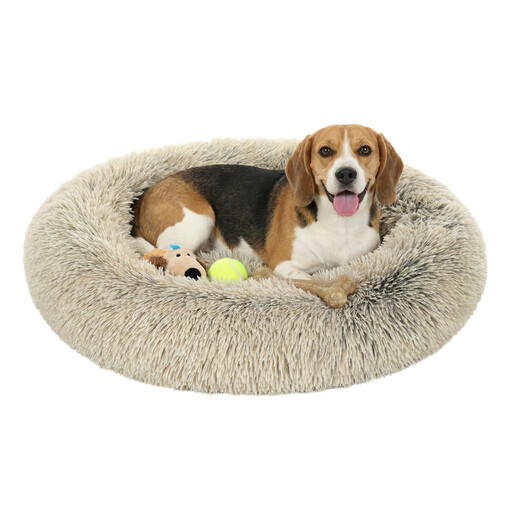
Why it suits this profile: The round shape is suitable for small to medium-sized dogs that like to curl up when they sleep. The removable cover on the central cushion makes regular cleaning straightforward.
The 70 cm diameter and recommended types of pet are specified. This makes it easier to choose the right size than with a product described only in general terms such as small or medium.
Plush fabric, PP filling, removable central cushion cover and rubber non-slip dots on the base.

Why it suits this profile: This model combines soft sherpa and plush fabric with egg-crate foam and a raised headrest. It’s a good fit for dogs that like to rest in a cosy, supportive spot.
The product information names the specific materials, removable cover and non-slip base. So you don’t have to rely solely on the photo or the term “orthopaedic”.
Egg-crate foam, raised headrest, machine-washable cover and non-slip material on the base.
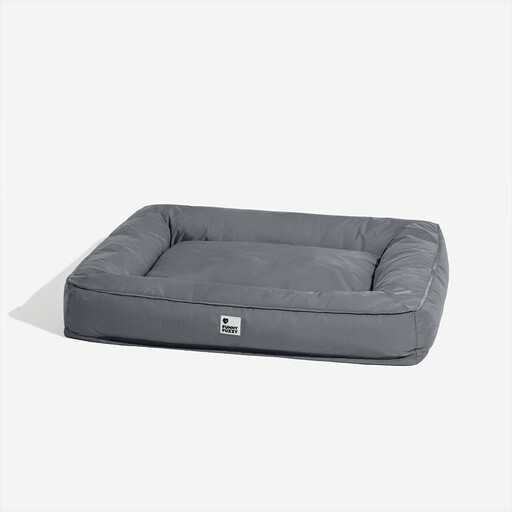
Why it suits this profile: The Oxford fabric and wraparound sides are practical for large dogs, dogs that dig, or households where the bed gets a lot of use.
The water-resistant fabric is described more specifically than a general claim that the bed is easy to care for. The inner cushion needs to be removed separately and spot-cleaned.
Water-resistant Oxford fabric, wraparound sides, scratch-resistant construction and fully removable components.
We’ve put together a complete, up-to-date list of products that meet these strict selection criteria and the applicable European safety regulations.
Measure your dog when they’re lying stretched out and allow extra room to turn around. Compare this with the bed’s internal dimensions. A donut bed may suit a dog that likes to curl up, while a flatter sleeping surface is more practical for dogs that stretch out.
It depends on how often it’s used, your dog’s coat and whether there have been any accidents. Vacuum or roll away loose hair regularly, and wash the cover when it smells or has visible stains. Always follow the care label. With some models, only the cover can go in the washing machine, while the inner filling needs to be aired.
According to some brands’ product descriptions, a high, soft side can create a cosy, enclosed feeling. This may suit dogs that like to lie against a side, but it’s not a guaranteed solution for anxiety. Put the bed in a quiet, stable spot and see whether your dog chooses to use it.
