
Vandaag of morgen in huis

Kwaliteit gegarandeerd

Welkomstaanbiedingen ontgrendelen: GRATIS bezorging | Tot 80% korting | Gratis 30 dagen JoyPlus-proefperiode
Download de app
A dog bed needs to do more than look soft. It should suit your dog’s sleeping position, body length and daily habits. The type of flooring in your home, how much hair your dog sheds and whether the bed can be washed also matter.
Marketing copy often uses terms such as “orthopaedic”, “calming” or “extra durable”. On their own, these words say very little. Instead, focus on verifiable details such as dimensions, materials, filling, washing instructions and the underside.
A dog bed with a diameter of 70 cm does not provide 70 cm of lying space throughout. The raised edge takes up part of the surface. Measure your dog when lying stretched out and add some extra space. A donut dog bed may suit a dog that likes curling up, while a dog that stretches out will benefit more from a flat dog bed or dog sofa.
Check which parts can go in the washing machine. With many models, only the cover or central cushion can be removed. The inner filling may not be washable. This is particularly important for puppies, dogs that spend a lot of time outdoors and households with several pets.
Also pay attention to the drying instructions. Some covers need to air-dry and should not be put in the tumble dryer or left in direct sunlight for long periods.
A fluffy dog bed feels comfortable, but a thick plush layer alone says nothing about how supportive it is. An orthopaedic dog bed often uses foam or another supportive filling. According to FUNNYFUZZY’s product description, some models contain egg-crate foam and a raised headrest. These are product specifications, not a guarantee of any medical effect.
For an older dog or one that struggles to get up, a stable sleeping surface that is not too low is practical. If you have concerns about joint problems or pain, seek advice from a vet; a dog bed is not a substitute for treatment.
Use this simple checklist:
A dog bed for small dogs often has a diameter of around 60 to 70 cm. Models measuring 90 to 100 cm are common for medium-sized dogs. Large dogs may need 120 to 140 cm, depending on how they sleep.
A donut dog bed with a high edge suits dogs that like sleeping curled up or resting their head against a raised rim. For dogs that like to stretch out, a flatter model may be more practical.
Pay attention to the difference between PP cotton, foam and egg-crate foam. PP filling feels soft and springy, but may shift over time. A foam core usually provides a more even supporting surface. Also check whether the cushion returns to its original shape after you press it.
A raised edge can support your dog’s head while resting, but it also reduces the actual sleeping area. With an orthopaedic dog bed, check both the overall dimensions and the flat central section.
A washable dog bed is only practical if the cover can be removed without too much effort. Check:
A non-slip dog bed will generally stay more stable on laminate, PVC or tiles. The underside does not replace a level and safe position. Do not place the bed on a high, unstable surface, and keep plush materials away from heaters and naked flames.
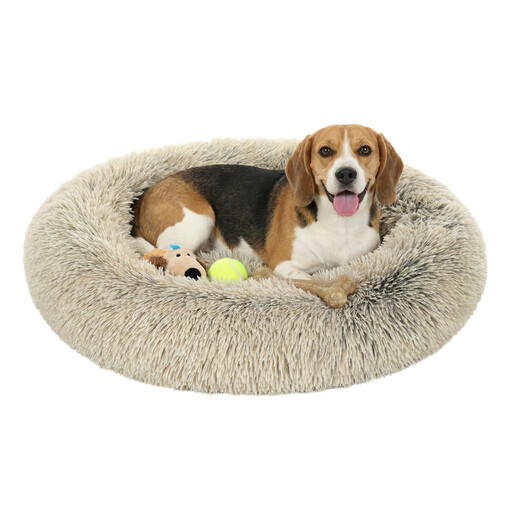
Why it suits this profile: According to the product description, the round size is intended for small to medium-sized dogs. The design is easy to move and suits many Dutch living rooms.
The 70 cm diameter and removable central cushion design are clearly stated. However, check that the remaining sleeping area is large enough.
Plush fabric, PP filling, removable central cushion and rubber non-slip dots.

Why it suits this profile: This model combines a soft sherpa and plush finish with egg-crate foam, a raised headrest and a removable cover. It is suitable for dogs and cats.
The product description specifically mentions the type of foam, the cover and the non-slip fabric. According to the instructions, the inner core must not be washed.
Egg-crate foam, raised headrest, machine-washable cover and non-slip base.
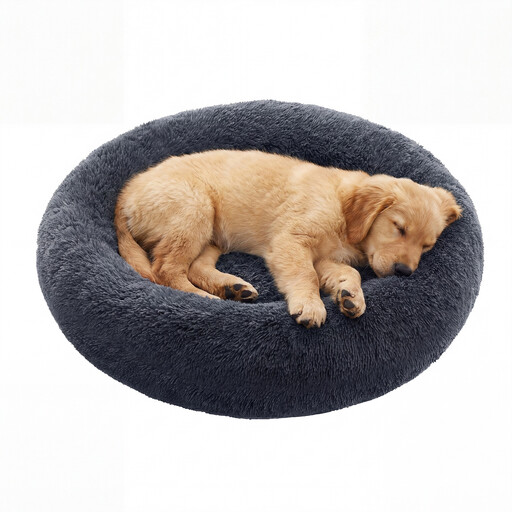
Why it suits this profile: According to the product specifications, the 100 cm diameter is intended for medium to large dogs. The raised edge suits dogs that like to lie against a soft rim.
The size, material and washable cover are listed separately. Bear in mind that the bed is vacuum-packed and allow it time to regain its shape.
100 cm diameter, plush fabric, PP filling, removable cover and rubber non-slip underside.
We have put together a complete, up-to-date list of products that fully meet these strict selection criteria and the applicable European safety regulations.
Clean the cover according to the washing label and do not use bleach or harsh cleaning products. Allow washed parts to dry completely before putting them back in place. Shake out a vacuum-packed dog bed after delivery and give the filling time to regain its loft.
Vacuum plush surfaces regularly using a suitable attachment. Also check the zips, seams, non-slip material and loose filling. If there are tears or exposed filling, it is best to stop using the bed temporarily, particularly if your dog likes chewing fabric.
Measure your dog when lying stretched out and add 15 to 25 cm. With a dog basket or donut dog bed, also check the internal dimensions, as the raised edge takes up space. A dog bed for small dogs is often 60 to 70 cm, while medium-sized and large dogs generally need more room.
That depends on how it is used. Wash the cover when it is visibly dirty or smells unpleasant, and remove hair in between washes with a vacuum cleaner or lint roller. A spare cover can be useful if the cover needs time to dry.
Its lifespan depends on the filling, your dog’s weight, washing and chewing habits. Check regularly that the bed is retaining its shape and that the seams and zips are intact. A bed that becomes flat, shifts around or gets damaged may no longer be suitable for safe everyday use.
