
Vandaag of morgen in huis

Kwaliteit gegarandeerd

Welkomstaanbiedingen ontgrendelen: GRATIS bezorging | Tot 80% korting | Gratis 30 dagen JoyPlus-proefperiode
Download de app
A dog bed may seem like a straightforward purchase, but the differences in size, filling, upholstery and washability can be significant. A bed that looks spacious in the product photo may be too small in reality. And a soft cover is of little practical use if it cannot be removed or takes a long time to dry.
In this guide from the Joybuy Product Recommendation Officer, you’ll learn what to look for when choosing a dog bed, dog basket or cat bed. The recommendations are based on verifiable product information, including dimensions, materials, fastenings and care instructions.
The stated diameter or length is often the outer measurement. With a donut dog bed, the raised sides take up part of the available sleeping space. Therefore, measure your pet while fully stretched out and add extra room for turning and stretching.
Pay particular attention to the difference between:
According to the product descriptions of various brands, washable often means that only the cover or centre cushion can be machine-washed. The foam core or PP filling may not be washable.
Therefore, check:
A washable dog bed with a zip is generally more practical when dealing with muddy paws, hair or accidents, but always follow the care label.
Terms such as “orthopaedic”, “calming” or “water-resistant” do not, by themselves, indicate how a bed will perform in your situation. A brand’s own research may suggest that a particular shape can promote relaxation or support, but this is not an established medical effect.
Instead, look for concrete information:
An orthopaedic dog bed may feature egg-crate foam, a firm inner cushion or a raised edge. The FUNNYFUZZY product description refers to egg-crate foam as a supportive structure. This makes it relevant for owners looking for a firmer sleeping surface, for example for an older pet.
However, do not treat the term as a substitute for veterinary advice. A dog bed does not treat joint or back problems.
A soft dog bed with generous PP filling feels comfortable and is suitable for pets that like to sink into their bed or curl up. For larger or heavier dogs, it is sensible to check whether the filling remains sufficiently stable and whether the base is likely to flatten quickly.
A donut dog bed has a raised edge all the way around. This can be comfortable for dogs that like to rest their head against an edge or feel enclosed. A sofa-style model usually has a more clearly defined entrance and a raised headrest.
A flat bed is easier to get in and out of and often takes up less visual space. Also consider where it will be placed in your home: a round basket can work well in a quiet corner, while a rectangular bed is often more convenient inside a crate or beside the sofa.
A dog bed with a non-slip base can prevent the bed from shifting when your pet gets in or stands up. Rubber dots or a non-slip fabric are verifiable features, but they work effectively only on a flat, suitable floor.
For a damp hallway or a pet that spends a lot of time outdoors, a water-resistant dog bed made with Oxford fabric can be a practical choice. Water-resistant does not automatically mean fully waterproof. After cleaning, allow the bed to dry completely before using it again.
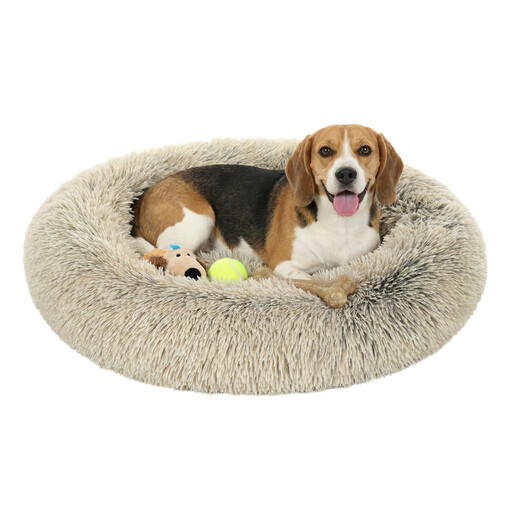
Why it’s a good fit: The round shape is designed for small to medium-sized dogs and cats that enjoy sleeping curled up. The 70 cm diameter is easy to accommodate in a living room or bedroom.
The product information lists a removable centre cushion and a non-slip base. Before buying, however, check the inner dimensions and care label.
70 cm diameter, soft plush fabric, PP filling and a removable centre cushion, according to the product description.
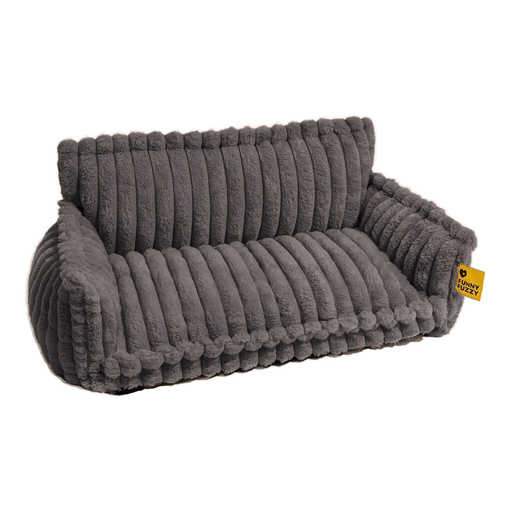
Why it’s a good fit: This sofa-style model is designed for dogs and cats that enjoy a soft surface and like to rest their head against a raised edge.
According to the product description, the cover is removable and machine-washable. The inner core should be kept dry and out of the washing machine, in accordance with the instructions.
Egg-crate foam, Sherpa fabric, a raised headrest and non-slip fabric are listed as product specifications.
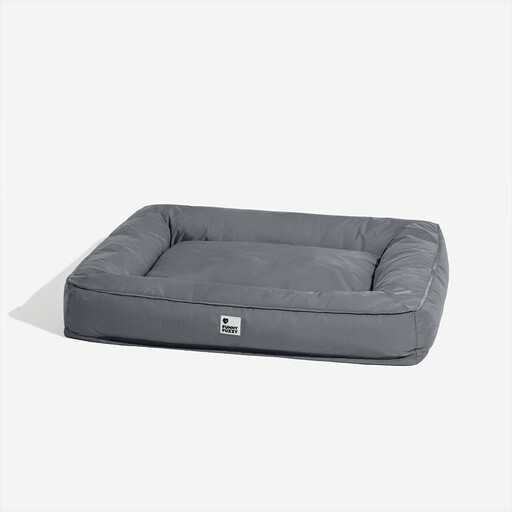
Why it’s a good fit: According to the product description, the Oxford fabric and full-surround edge are designed for large dogs and households where the bed is more likely to get dirty.
The water-resistant outer fabric is a practical choice, but make sure every component is completely dry. Also check that size L matches your dog’s actual lying length.
Oxford fabric, a product description highlighting scratch resistance, a full-surround edge and separately cleanable components.
Place the dog bed on a flat, stable surface, preferably in a quiet, draught-free area. A non-slip layer is less effective on a smooth or uneven floor. With a new bed, consider placing a familiar blanket or toy inside to make the transition easier.
With vacuum-packed models, it is normal for the bed to need shaking and fluffing before use. Some product instructions recommend allowing 24 to 48 hours for the bed to regain its original shape.
Check regularly for:
Stop using the bed if damage makes the filling or small components accessible. A dog bed is not a crate, restraint or substitute for professional veterinary care.
Explore a current selection of pet beds in various sizes, materials, shapes and care specifications.
Measure your dog from the nose to the base of the tail while fully stretched out. Add approximately 20 to 30 cm. With a donut dog bed, also take into account the space occupied by the raised edge.
That depends on how it is used. Wash the cover as soon as it is visibly dirty or develops an unpleasant odour, and use a vacuum cleaner or lint roller between washes. Always check first whether only the cover, the centre cushion or the entire bed may be washed.
Not necessarily. A firmer surface, egg-crate foam or a low entrance may be practical options, but the right bed depends on your dog’s preferences and physical condition. If your dog has ongoing issues, it is best to ask a vet for advice.
