
Vandaag of morgen in huis

Kwaliteit gegarandeerd

Welkomstaanbiedingen ontgrendelen: GRATIS bezorging | Tot 80% korting | Gratis 30 dagen JoyPlus-proefperiode
Download de app
When shopping for dog and cat food, you’ll quickly come across terms such as ‘natural’, ‘premium’, ‘grain-free’ and ‘with chicken’. On their own, these words say little about whether a product is suitable for your pet. An active adult dog has different nutritional needs from a puppy or senior dog. And a moisture-rich treat is no substitute for a complete meal.
Use these practical checks to compare dry dog food, dry cat food, wet food and treats based on verifiable information.
Dog food with chicken or cat food with chicken may sound appealing, but first check whether it is complete food or complementary food. Complete dog food is intended as a daily diet when fed according to the instructions on the packaging. Products such as INABA Churu, broth and many dog treats are complementary. They can be given as a reward or topping, but not as a meal replacement.
Grain-free dog food may suit a particular preference or dietary choice, but ‘grain-free’ is not a complete assessment of quality. Also check the overall ingredients, protein and fat content, energy content and suitability for your pet’s life stage. If your pet has a known food sensitivity, it’s wiser to speak to a vet than to rely on a single claim.
A large bag of dry dog food or a cat food multipack may seem like good value, but the right amount depends on your pet’s weight, activity level and condition. An opened bag kept somewhere warm and damp for months will also lose quality more quickly. Check the best-before date, seal the packaging properly and compare the price per kilogram or per meal.
Look for the terms complete pet food or complementary pet food on the label. The reference products clearly illustrate the difference:
Treats count towards your pet’s daily energy intake. Always make sure your dog or cat has access to fresh drinking water alongside treats.
Choose puppy food for a puppy and senior dog food for an older dog when the packaging is specifically intended for that life stage. Also consider your dog’s size. For example, Eukanuba Life Care dog puppy medium chicken 3 kg is aimed at medium-sized puppies, while the senior version is formulated for small dogs according to the product information.
The same distinction applies to cat food: check whether it is intended for adult cats or another life stage. Also check the recommended amount in grams for your pet’s body weight. The feeding guide on the packaging is a starting point; your pet’s activity level and body condition may mean you need to adjust it.
Wet dog food and wet cat food generally contain a lot of moisture. For example, the product information supplied lists a moisture content of 81% for Cesar Classic and 93% for INABA broth products. This makes them suitable as moisture-rich additions, but not automatically as complete food.
For dry food, relevant details include crude protein, crude fat, crude fibre and energy content. Purina ONE Adult Chicken, for example, lists 34% protein and 14% fat. Compare figures like these only between similar product types, as dry and wet food have very different moisture contents.
After opening, wet food and soft treats should be sealed and stored in the fridge according to the relevant product information, and should usually be used within 24 to 48 hours. Always follow the product label.
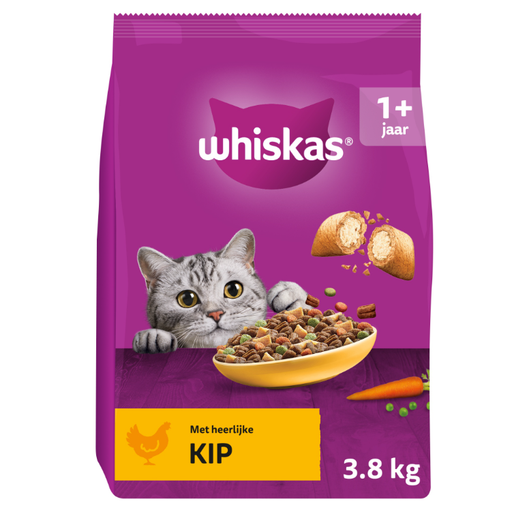
Why it suits this profile: A 3.8 kg bag is practical if you feed adult cats dry food every day and want a familiar chicken variety.
The product information describes it as complete daily food for cats aged 1 year and over. Check the current packaging for the full ingredients and feeding amount.
Dry food in a larger pack; chicken variety; described as complete and balanced for adult cats.
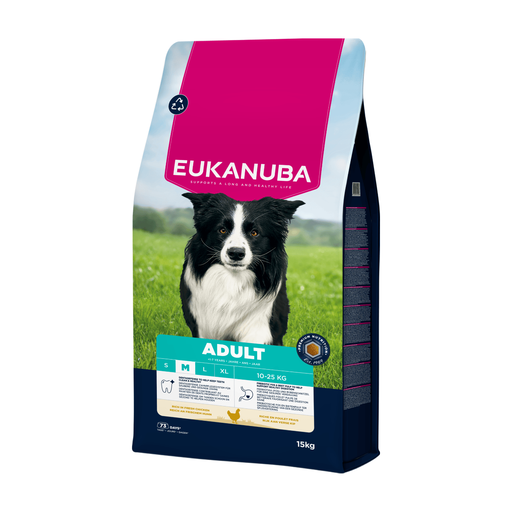
Why it suits this profile: A good choice for owners of medium-sized adult dogs looking for a large pack of complete dry dog food.
The product description specifies its intended audience: medium-sized adult dogs aged 1 to 7 years. This helps you avoid choosing food based on the chicken claim alone.
15 kg pack; fresh chicken according to the product information; described as 100% complete food for medium-sized adult dogs.
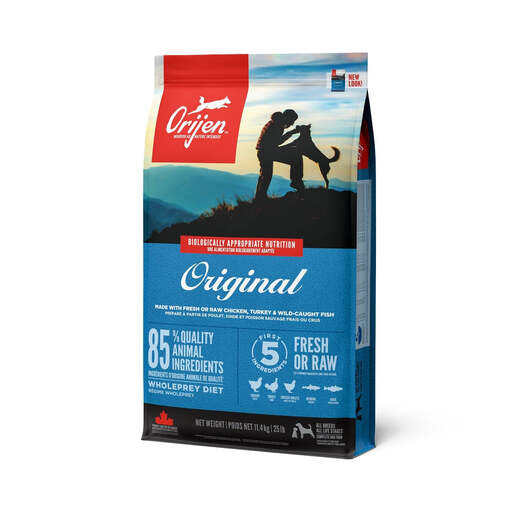
Why it suits this profile: For dog owners considering a grain-free formula with several animal-based ingredients and clearly stated analytical values.
The ingredients list names individual ingredients and analytical values, including 38% crude protein and 18% crude fat. This gives you more concrete information to assess when choosing food.
11.4 kg pack; chicken, turkey, fish and egg in the ingredients list; described in the product information as complete food for all life stages, with a stated exception for Great Dane puppies under 14 weeks.
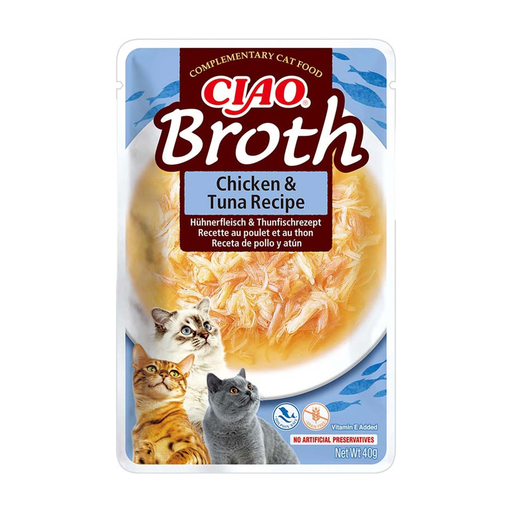
Why it suits this profile: A complementary broth for cats that enjoy a moisture-rich treat alongside their usual cat food.
The product is clearly labelled as complementary food. With 93% moisture, it is not a substitute for complete cat food.
40 g per pack; chicken broth, chicken and tuna; product information lists 93% moisture and a feeding guide based on body weight.
We’ve put together a complete, up-to-date list of products that meet these strict selection criteria and the applicable European safety regulations.
Not necessarily. Wet food generally contains more moisture, while dry dog food is easy to portion and store. Focus on whether the product is complete, suits your dog’s life stage and meets their energy needs. Feeding a combination can be practical, as long as you keep track of the total daily amount.
Use the feeding guide on the packaging and take your dog’s weight, activity level and condition into account. Products such as INABA Churu Dog and MeatyWay Chicken Thin Tenders are complementary foods. Give them as a reward or topping, and reduce the amount of their main food if needed.
Cover opened wet food and keep it in the fridge. Storage times vary by product; for the INABA broth products mentioned, the stated limit is 24 hours after opening. Allow the food to reach a suitable temperature before serving, and follow the instructions on the packaging.
