For the occasional loose handout, a mobile sheet-fed scanner is a good fit. If you regularly scan stacks of double-sided sheets, a compact model with an ADF and duplex scanning is more practical. For bound or delicate pages, a flatbed or overhead scanner is a better choice. With any type, check how much desk space it needs when in use and whether the OCR software works with your computer.
Which type of scanner is right for you?
Student with a small desk
Do you scan loose handouts now and then and want to put the scanner away afterwards? Pay particular attention to the space needed for paper input and output while scanning. Brother Netherlands describes the DS-740D as having a U-shaped paper path that needs less space behind the scanner.
Student with weekly stacks of handouts
If you regularly scan several double-sided sheets in a row, an ADF can save you from feeding in each sheet individually. Canon Netherlands and Brother Netherlands list a 20-sheet input capacity for the imageFORMULA R10 and ADS-1300 respectively. Also check how much room is needed when the tray is open.
Student with bound or delicate material
If you also scan book pages or originals that aren’t suitable for a standard sheet feeder, compare a flatbed with an overhead setup. Plustek describes a flatbed with a hinged lid, while CZUR positions its ET series as an overhead scanner for books and bound material.
What should you look for when choosing?
Mobile sheet-fed scanner without an ADF
Best for: loose A4 sheets that you scan one at a time occasionally, then put the scanner away.
Keep in mind: a stack will need to be fed in manually. Check how much space the paper path needs in front of or behind the device. Brother Netherlands says the DS-640 scans single-sided, while the DS-740D feeds paper back through a U-shaped path.
Compact scanner with ADF and duplex scanning
Best for: regular stacks of loose, double-sided handouts. Canon Netherlands and Brother Netherlands each list an ADF capacity of 20 sheets for the R10 and ADS-1300.
Keep in mind: the open input and output trays need extra space. Canon Netherlands lists separate dimensions for the R10 with the tray closed and open, so measure your available desk space while scanning.
Flatbed or overhead scanner
Best for: bound or delicate pages that you don’t want to feed in as loose sheets. Plustek describes an A4 flatbed, while CZUR positions its ET series for books and other bound material.
Keep in mind: you place pages on the scanner one at a time and need a clear scanning area. Plustek lists dimensions of 378 × 257 × 33 mm for the OpticSlim 2610 Plus; also check how much space an overhead setup takes up.
| What to consider |
What to check before buying |
Who is this important for? |
| Space needed while scanning |
The paper path and dimensions with the tray open; measure the available space in front of and behind the scanner. |
If I need to put the scanner away after use, I want to know whether its paper path will fit on my desk. Around 36% of consumers prioritise having enough workspace while scanning. |
| Double-sided stacks |
Check that the model lists both duplex scanning and a physical ADF; an automatic scanning mode isn’t the same as a sheet feeder. |
When I scan several double-sided handouts in a row, I want to spend less time feeding in or turning over sheets by hand. Around 29% of consumers prioritise handling stacks. |
| Bound or delicate pages |
Compare a flatbed with an overhead setup, and measure the usable scanning area. |
If a book page or delicate sheet isn’t suitable for a feeder, I want to be able to scan the original properly. Around 21% of consumers prioritise handling bound or delicate originals. |
| OCR and flexible working |
Check for OCR, searchable PDF output and support for your operating system. Also consider whether Wi-Fi or a battery would suit your workspace. |
If I want to search the text in my scans later or work in different places, I want to know whether the software and connection will suit my needs. Around 14% of consumers prioritise flexible scanning and searchable files. |
Common mistakes when choosing
-
Looking only at the dimensions with the tray closed
A scanner that takes up little space when stored may need more room when in use for paper to feed in and come out. Canon Netherlands lists different dimensions for the R10 with the tray closed and open.
Measure the space available while A4 paper is being fed in and out, and check which paper path the model uses.
If the device doesn’t fit on your desk, you may need to keep moving it or use a different workspace.
-
Assuming an automatic scanning mode is the same as an ADF
A feature that lets you scan sheets one after another doesn’t necessarily mean you can load a whole stack into a feeder at once. Canon Netherlands and Brother Netherlands list a physical 20-sheet ADF for the R10 and ADS-1300.
If you want to feed in stacks, look for an explicitly stated ADF capacity in the product specifications.
Without a sheet feeder, feeding in lots of loose sheets remains a manual task.
-
Assuming every PDF is searchable
A scan can be saved as an image without making its text searchable. Plustek lists OCR software and distinguishes between its Windows and Mac software.
Before buying, check that the OCR feature, output format you want and software version are compatible with your operating system.
If the supplied OCR software isn’t compatible with your computer, you may need another software solution.
-
Assuming a scan for your own studies can automatically be shared
The Government of the Netherlands distinguishes between making a copy for personal use and distributing or publishing protected material.
Before sharing a scan, check whether you have permission or whether an applicable exception applies.
Brands to compare
Brother
The DS-640, DS-740D and ADS-1300 offer different feeding options for loose documents. Information about these models is not a general performance claim for the whole brand.
- Brother Netherlands lists single-sided scanning for the DS-640, a space-saving U-shaped paper path for the duplex DS-740D, and a 20-sheet ADF capacity for the ADS-1300.
- Compare each model to see whether you need single- or double-sided scanning, and measure how much space its paper path needs in use.
Canon
Canon positions the imageFORMULA R10 as a portable USB scanner for loose A4 sheets, with duplex scanning and an ADF.
- Canon Netherlands lists a 20-sheet ADF and dimensions of 285 × 95 × 40 mm with the tray closed, and 285 × 257 × 174 mm with it open.
- Allow for the space it needs with the tray open on a small desk, and check that the software you want to use works with your operating system.
Epson
Epson describes the WorkForce ES-60W as a mobile scanner for loose documents, with Wi-Fi and a built-in battery.
- Epson lists PDF output and an automatic mode for scanning sheets one after another.
- This mode isn’t the same as an ADF that can hold a stack. Manufacturer claims about battery life and scanning speed depend on the conditions of use.
Plustek
The OpticSlim 2610 Plus is an A4 flatbed scanner for originals that won’t fit through a standard sheet feeder.
- Plustek lists a hinged lid, USB power and OCR software. Its stated dimensions are 378 × 257 × 33 mm.
- You place sheets from a stack on the scanner one at a time. Check which operating systems are compatible with the supplied OCR software.
CZUR
CZUR positions its ET series as an overhead scanner for books and other bound material.
- The manufacturer describes features for capturing pages from above and correcting page curvature.
- Claims about correction and image capture come from the manufacturer; they aren’t independent measurements of OCR or image quality. Also check how much clear scanning space the setup needs.
Joybuy products for loose handouts
This Joybuy selection includes A4 sheet-fed scanners, including models with an automatic document feeder. Compare the feeding features of each model and the space you have available while scanning.
 No image available
Canon imageFORMULA P-215II
An option to compare if you scan loose double-sided handouts and want a scanner you can move from time to time. The product information lists automatic duplex scanning and a 20-sheet ADF; also check how much space is needed for input and output.
According to the product name: 600 × 600 DPI, A4.
View at Joybuy
 No image available
Canon imageFORMULA DR-M260
This A4 sheet-fed scanner is an option to compare if you scan loose handouts one after another. Check that the feeder and features suit the type of paper you want to digitise.
According to the product name: 600 × 600 DPI, A4.
View at Joybuy
 No image available
Epson DS-C330 ADF
The product information lists a U-shaped paper path, which may be useful if you want to limit the space needed behind the scanner. Also measure the space on your desk needed for paper input and output.
According to the product name: A4 sheet feeder and ADF, 600 × 600 DPI.
View at Joybuy
 No image available
Epson DS-C490 ADF
An option for loose double-sided handouts. The product information lists both a U-shaped and a straight paper path; check which one suits the space available and the originals you want to scan.
According to the product name: A4 sheet feeder and ADF, 600 × 600 DPI.
View at Joybuy
 No image available
Epson WorkForce DS-530 II
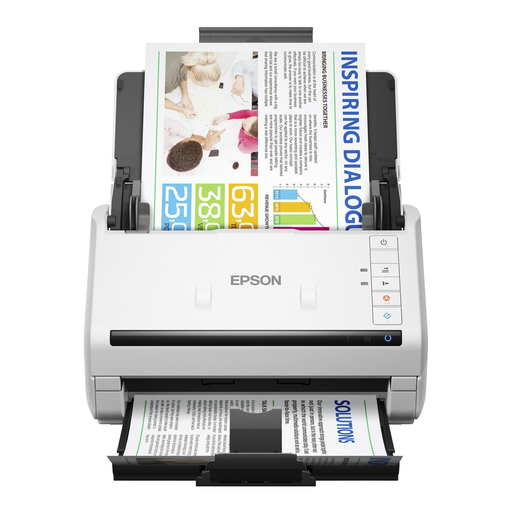
A model to compare if you regularly scan loose A4 handouts. Check the ADF capacity for this version and whether its duplex scanning suits your documents.
According to the product name: 600 × 600 DPI, A4.
View at Joybuy
Frequently asked questions
Can I scan protected lecture handouts and share the file with other students?
The Government of the Netherlands says you may make a copy for personal use, but you may not distribute or publish it. Before sharing, check separately whether you have permission or whether an applicable exception applies; owning a scanner doesn’t in itself give you the right to share a copy.
Should I feed a stapled handout or a book through an ADF?
An ADF such as the one on the Canon imageFORMULA R10 is designed for loose sheets within the stated paper specifications. A suitable flatbed or overhead setup is better for bound pages. Only remove staples if you’re allowed to and want to separate the original pages.
How can I make sure I can search the text in my scans?
Check that the scanner or supplied software supports OCR and searchable PDFs on your operating system. Plustek lists OCR software, but the software and platform support can vary between packages.
What cooling-off period usually applies when I buy a scanner online from a business?
According to the Government of the Netherlands, a 14-day cooling-off period often applies to distance purchases from a business. This doesn’t automatically apply to online purchases from a private seller; check who the seller is and which terms and conditions apply.


