
Vandaag of morgen in huis

Kwaliteit gegarandeerd

Welkomstaanbiedingen ontgrendelen: GRATIS bezorging | Tot 80% korting | Gratis 30 dagen JoyPlus-proefperiode
Download de app
When buying DIY tools, it’s tempting to focus on power, accessories or a low price. That seems logical, but it’s often where people make the wrong choice. A machine may look powerful, yet not come with the right saw blades. A multi-tool may promise plenty of functions, but be of little use without a compatible battery. And a hand tool may look sturdy, but not be suitable for the material you want to work with.
This buying guide helps you compare tools based on verifiable specifications, intended use and maintenance.
A higher wattage doesn’t automatically mean a machine is suitable for every job. With an electric jigsaw, cutting depth, pendulum action, speed control and baseplate adjustment are also important. You’ll also need a different type of blade for metal than for wood.
A high maximum speed doesn’t tell you everything about a rotary multi-tool either. Check that the accessories are suitable for the material and that you can adjust the speed.
A machine without compatible accessories can lead to extra costs. So check:
For example, the POWERPLUS POWDP4060 uses a 20V Dual Power battery, but the battery and charger are sold separately according to the product information.
A cable cutter with a stated capacity for copper and aluminium isn’t designed for steel wire, brake cables or piano wire. Similarly, a utility knife is suitable for controlled cutting of materials such as cardboard, carpet or insulation, but not for materials that exceed its recommended cutting capacity.
So don’t rely on the product title alone. Pay particular attention to the material, dimensions, maximum capacity and safety warnings.
Three specifications are particularly useful when choosing a jigsaw:
According to its product description, the Einhell TC-JS 90 has a power rating of 650 W, a maximum cutting depth of 90 mm in wood and 10 mm in steel. The baseplate can be tilted up to 45 degrees. The Powerplus POWESET3 has a power rating of 710 W, four pendulum settings, six speed settings and a stated cutting depth of 65 mm in wood.
With a wire stripper, check that its size ranges match the cables you use. According to the product information, the WORKPRO 2-in-1 wire stripper and side cutter is designed for wire sizes 10, 12, 14 and 16 AWG and can cut hard wire up to 2 mm.
The WORKPRO cable cutter has a stated maximum capacity of 33,6 mm² for copper and aluminium. It measures 210 mm in length. Don’t use this type of cable cutter on steel wires or other materials that the manufacturer doesn’t specify it for.
Reciprocating saw blades are often sold in sets. Look for:
The WORKPRO set contains six bi-metal reciprocating saw blades for metal, wood with nails, ordinary wood and plastic. The product information states that the blades have a standard shank. Even so, always check the connection on your own machine before ordering.
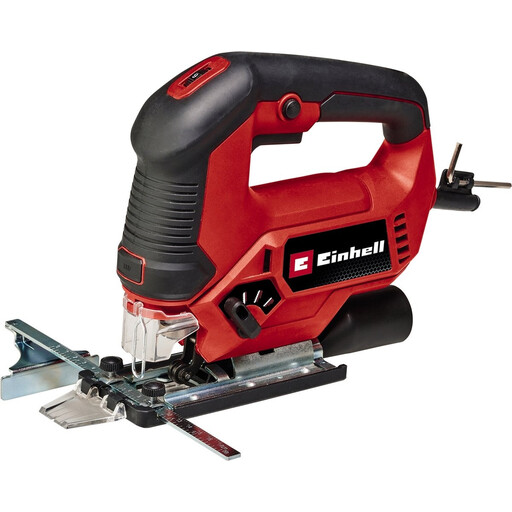
Why it suits this type of user: A corded jigsaw is a good choice for home users who don’t want to invest in a battery platform and regularly cut wood or thin metal.
The product information lists cutting depths for different materials, six practical features and a T-shank for changing blades without tools.
650 W, electronic speed control, LED light, dust-blowing function and a baseplate that tilts up to 45 degrees.
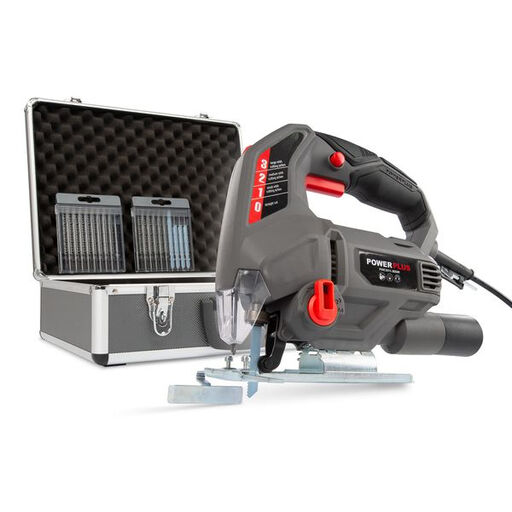
Why it suits this type of user: A handy choice for DIYers who work with different materials and want to keep their accessories neatly organised in a case.
The stated cutting depths are listed separately for wood, steel and plastic, making it easier to match the tool to the job.
710 W, six speed settings, four pendulum settings, dust extraction connection and 20 accessories included.
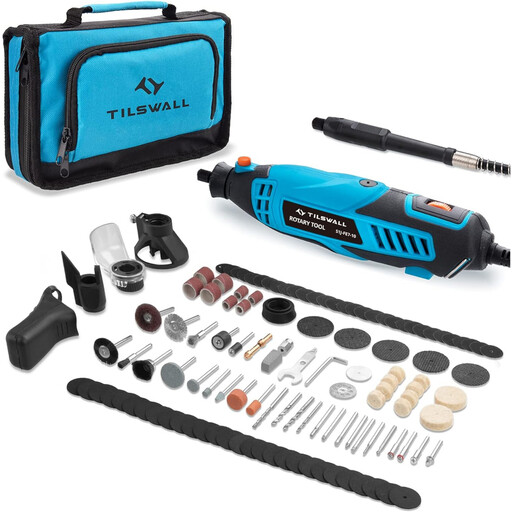
Why it suits this type of user: For hobbyists and craftspeople who want to engrave, polish, grind, drill and carry out small sawing jobs with one rotary multi-tool.
The set includes six speed settings and 145 accessories, so you can choose a suitable setting for each material and task.
160 W, 8.000–33.000 RPM, LED light, auxiliary handle and accessories for wood, metal, glass and plastic, among other materials.
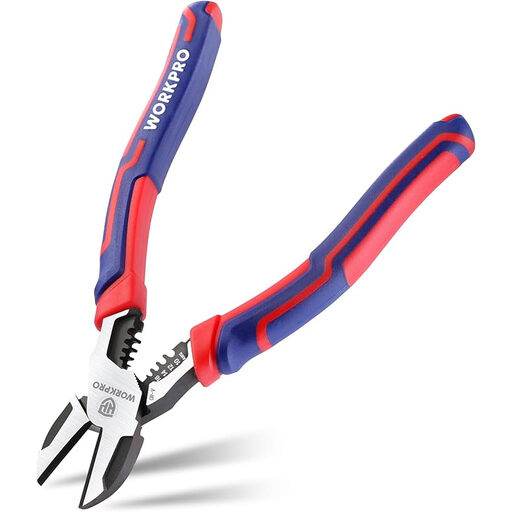
Why it suits this type of user: This combination tool saves space in a tool bag for electrical installations, cable work and home repairs.
The product information gives specific wire sizes and a maximum cutting diameter. Use the tool within these stated limits.
2-in-1 design, chrome vanadium steel, TPR handles and a stated cutting capacity of up to 2 mm for hard wire.
We’ve put together a complete, up-to-date list of products that meet these strict selection criteria and the applicable European safety regulations.
Wear safety glasses when using power tools and keep the workpiece firmly secured. Ear protection and a dust mask may also be appropriate for sawing, grinding or engraving. Before use, check accessories for cracks, wear or deformation.
Clean machines after use, keep the ventilation openings clear and store saw blades dry in a case. If you’re using a folding knife or utility knife, make sure the blade is fully retracted when the tool isn’t in use. A blunt blade can slip, so replace it in good time.
A laser engraving machine requires extra care. According to its product description, the xTool F1 Ultra 20W Fiber & Diode Dual Engraver is offered exclusively for commercial use and for users with the appropriate laser knowledge and certification. It isn’t a sensible choice for general craft materials or occasional hobby projects unless you have the required knowledge and safety equipment.
Start with tools that cover several common jobs: a jigsaw for sheet materials, a utility knife for controlled cutting, a hand screwdriver set and a measuring tool. Add an oscillating multi-tool or rotary multi-tool later when you have specific sawing, sanding or engraving jobs to tackle.
Lifespan depends on how often you use a tool, how hard you work it, how it’s stored and how well it’s maintained. Don’t force a saw unnecessarily, use the right accessory and clear away dust regularly. Also check whether batteries, chargers, saw blades and other parts are available separately.
As well as the purchase price, you’ll need to consider accessories, replacement blades, batteries and electricity. A corded machine avoids the cost of a battery platform, while a cordless tool can be useful in places without a power socket. So compare what’s included as well as the ongoing costs before you order.
