
Livraison le jour même et le lendemain

Qualité garantie

Débloquez vos offres de bienvenue: Livraison GRATUITE | Jusqu'à -80 % | 30 jours d'essai gratuits à JoyPlus
Téléchargez l'application
Disposable underwear can be handy when you're travelling, on your period, during the postpartum period, for overnight use or if you have incontinence. That said, it's not wise to rely solely on words like "ultra-thin", "leak-proof" or "extra absorbent". Such terms only mean something when you also look at the material, the fit and the absorbent layer.
The most common buying mistakes come down to three pitfalls:
First, decide what you need the underwear for. For a short trip or after exercise, a simple disposable underwear for women may be sufficient. For menstruation, heavy bleeding or overnight use, you'll need a style with an absorbent core, wide protection at the back and possibly elasticated leg cuffs.
Pay attention to the difference between:
A product with a superabsorbent polymer, often referred to as SAP, can hold fluid within the core. Also check whether the manufacturer mentions a double core, anti-leak cuffs or a wide absorbent zone.
Use the hip measurement from the size chart and don't rely solely on S, M, L or XL. Sizes vary between brands. For YIJINCHAN underwear, for example:
A snug fit helps keep the core in place. For overnight disposable underwear, high coverage, elasticated leg openings and a longer back are particularly important. If you're between two sizes, you can consider the larger size as long as the leg cuffs still fit well.
A breathable disposable underwear feels more comfortable when you wear it for longer periods. Cotton products can be suitable for sensitive skin, but check whether they contain fragrances, lotions or latex if you prefer to avoid those.
Individually wrapped briefs are practical for hand luggage, maternity care, a sports bag or caregiving. They stay clean until you need them. Disposable underwear is intended for single use only. Dispose of it in general waste after use and never flush it down the toilet, even if it feels thin.
Bear in mind that "biodegradable" or "sustainably packaged" may refer to just one part of the product. Check the packaging and local waste disposal instructions before drawing any conclusions.
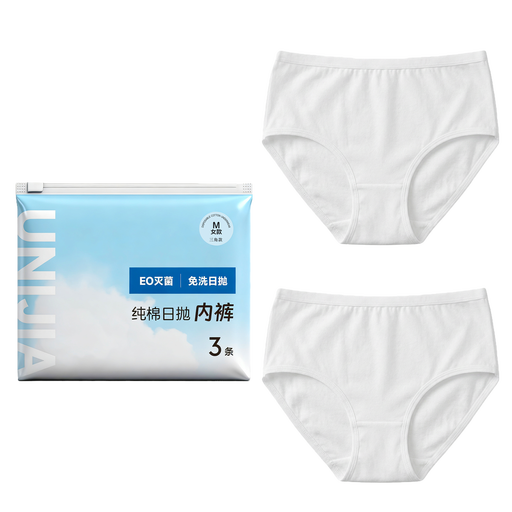
Why this fits the profile: A simple 3-pack for travel, the gym, daily use or as a spare during the postpartum period. The stated size M is suitable for hips measuring 89–99 cm.
The product information clearly states the material, quantity and hip measurements. This means you're not buying based solely on a generic size or a vague comfort claim.
100% cotton according to the product description, individually wrapped and intended for single use. This is not an absorbent period or incontinence style.
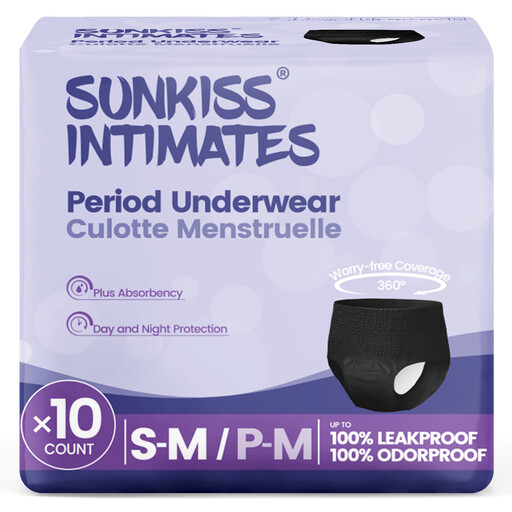
Why this fits the profile: Designed for menstruation, heavy flow, overnight use and postpartum wear. The product description mentions a double absorbent layer and a 360-degree design.
The description mentions anti-leak barriers, elasticated leg openings and four sizes. According to SUNKISS's own research, the absorbency is comparable to roughly four regular pads; treat this as a guideline, not a guarantee.
Double core, odour control according to the product information and machine washable. Check the size references and washing instructions before use.
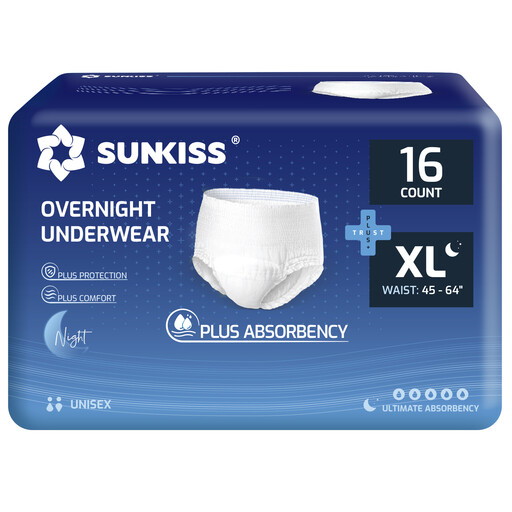
Why this fits the profile: A unisex style for adults who need heavier protection during the day or night, for example for incontinence care or postpartum support.
The product information mentions a double core, a wide core zone, leg cuffs and a back section that is less likely to sag. Check the fit before using it for extended periods.
XL size with 16 pieces, latex-free and fragrance-free according to the product description. Intended for single use; do not wash or reuse.
We've put together a full, up-to-date list of products that fully meet these strict selection criteria and comply with current European safety regulations.
That depends on the style, the amount of fluid and your activity level. A regular disposable brief is intended as a temporary hygienic replacement. Absorbent disposable underwear can last longer, but follow the product information and change it as soon as it feels damp, full or uncomfortable. A stated duration, such as "up to 12 hours", is not a fixed guarantee.
Some styles are described by the manufacturer as suitable for menstruation and postpartum use. Where possible, choose a style with wide coverage, soft edges and a size that doesn't pinch. If you have persistent symptoms, unusual bleeding or skin irritation, it's wise to seek medical advice; disposable underwear does not replace medical care or treatment.
Reusable underwear can be more cost-effective per wear if used frequently, but it requires water, detergent, energy and time. Disposable underwear usually costs more per piece, but is practical for travel, nights away from home, maternity care and situations where washing isn't immediately possible. Compare the price per piece and take into account the number of changes you need per day.
