
Vandaag of morgen in huis

Kwaliteit gegarandeerd

Welkomstaanbiedingen ontgrendelen: GRATIS bezorging | Tot 80% korting | Gratis 30 dagen JoyPlus-proefperiode
Download de app
Taking an ordinary towel with you when you travel seems simple enough – until your luggage is full, the towel stays damp, or you have no way to wash it afterwards. Disposable towels and compressed towels offer a practical solution for travellers, business travellers, campers, sports enthusiasts and hotel guests.
However, not every product is right for every situation. A small pack doesn't automatically mean the towel is large enough. Terms like “soft”, “absorbent” and “biodegradable” should always be checked against the actual product specifications. Below, you'll find out what to look for and which options suit different uses.
Compressed towels take up very little space before use, but the final size varies considerably. A face towel of around 24 × 30 cm is fine for hands and face, but not as a disposable bath towel. For drying your whole body, you'll need something closer to 70 × 140 cm.
Always check the unfolded size, not just the size of the tablet or packaging.
Absorbency depends on fibre type, thickness and manufacturing technique. Spunlace, also known as hydro-entanglement, is a technique where fibres are mechanically interwoven using water jets. Product descriptions from C&S state that this structure is soft, low-lint and absorbent. That's a product claim, not a guarantee that every user will have the same experience.
With a cotton disposable towel, the material is more clearly described, but cotton can take up more space than a thin non-woven product. So weigh up softness, size, absorbency and pack volume.
Many disposable towels are intended to be thrown away after use. Some compressed towels can, according to the product description, be dried and reused to a limited extent, but that doesn't change the original advice for single use.
Also pay attention to disposal instructions: disposable towels and wet and dry face wipes should not be flushed down the toilet. Dispose of them according to local waste regulations. “Biodegradable” does not automatically mean you can flush the product or leave it in nature without conditions.
Choose the size based on the task:
A travel towel for a city break doesn't need to be the same size as a towel for camping or the swimming pool.
Many disposable towels are made from plant-based fibres, viscose, lyocell, cotton or non-woven material. Check that the composition is clearly stated. For people with sensitive skin, an unscented product without added alcohol or optical brighteners may be more comfortable, but this is not a medical assessment.
According to the product description, the Purcotton Baby Tissue contains no perfume, alcohol, plasticisers or fluorescent brighteners. The manufacturer also mentions an OEKO-TEX STANDARD 100 certification. Always check the current label before purchase and stop use if irritation occurs.
Individually wrapped towels stay better protected from moisture and dirt when you're on the go. A box or roll of loose sheets is more convenient for everyday use at home, but must be stored dry. Look at:
With compressed towels, you also need water to fully open the product. A sink, water bottle or shower is usually sufficient. Check whether the instructions say a few seconds or 20–30 seconds of immersion.
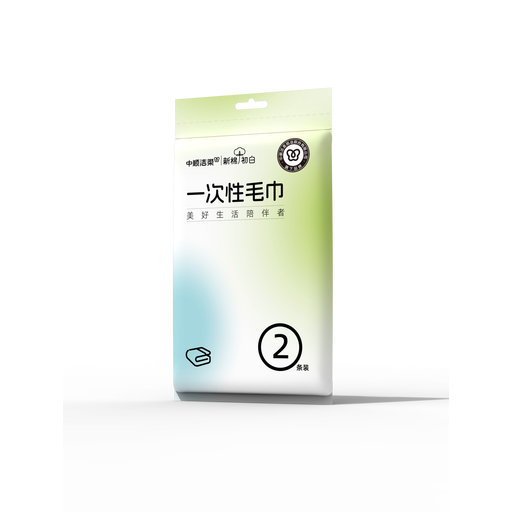
Why this fits the profile: The set of two towels is straightforward for a short trip, hotel stay, gym session or as a spare in a rucksack.
The unfolded size of 30 × 70 cm is clearly stated. So you can see upfront that this is not a full bath towel of 70 × 140 cm.
According to the product description: plant fibres, spunlace technique, low-lint material and two separate towels per pack.
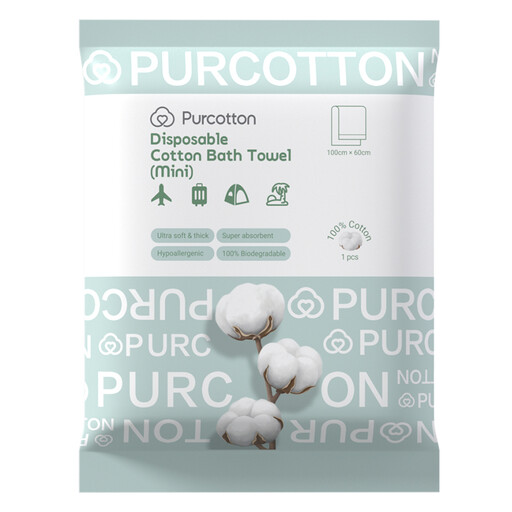
Why this fits the profile: If you particularly value a cotton disposable towel and a soft feel, you get a clearly described material and individually wrapped version.
The size of 60 × 100 cm stops you buying a small face cloth when you're actually looking for a compact bath towel.
According to the manufacturer: 100% cotton, individually wrapped, no fluorescent brighteners and intended to be disposed of after use.
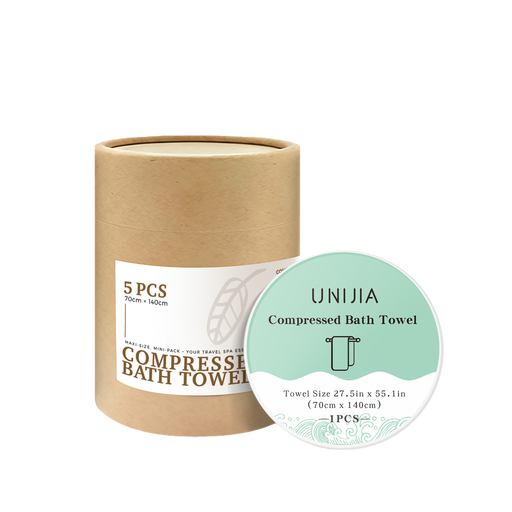
Why this fits the profile: The five compressed bath towels are aimed at travel, camping, beach, swimming pool and situations where a large size matters.
The final size of 70 × 140 cm is stated, along with the instruction to immerse the tablet in water for 20–30 seconds.
According to the product description: five individually wrapped tablets, 100% plant-based fibres and a paper tube with no plastic packaging.
We've put together a full, up-to-date list of products that fully meet these strict selection criteria and current European safety regulations.
For daily facial care, loose sheets or compressed face towels are often more practical. The YIJINCHAN Facial Towels consist, according to the product description, of 60 sheets measuring 30 × 25 cm. For families, packs of 720 or 2880 sheets may be of interest, but do check the storage space and shelf life.
A disposable bath towel makes more sense for showering, swimming or camping. Bear in mind that a size of 30 × 70 cm is fine for hands and face, but offers less coverage than 70 × 140 cm.
Take one tablet out of the packaging and add water. With some models, full unfolding takes a few seconds; with the YIJINCHAN bath towel, 20–30 seconds of immersion is recommended. Squeeze out any excess water before using the towel.
This varies by product. C&S states a shelf life of three years. For other products, the relevant date is on the packaging. Store the towels in a dry, cool place away from direct sunlight. An opened pack of wet wipes should ideally be used according to the label and sealed tightly.
That depends on how often you use them and the type of product. A regular towel creates no waste per use, but does require washing, drying and luggage space. Disposable towels cost more per piece than a reusable towel, but can be practical for short trips, emergencies, hotels and activities where washing facilities aren't available.
