
当日/次日达

品质保障

开启新人专享福利: 全场免邮 | 低至 2 折 | 免费试用 30 天 JoyPlus 会员
下载 Joybuy
Disposable facial towels are handy for daily cleansing, removing make-up, travelling and exercising. What’s more, they stay dry and clean in their packaging, so you don’t have to keep a damp towel in the bathroom. Yet many disposable facial towels look very similar. The difference often lies in the material, size, packaging and usage advice.
If you only look at the number of sheets or an appealing claim, you could end up choosing a product that is too small, sheds lint when wet, or is awkwardly packaged. With these checkpoints, you can compare disposable facial towels in a practical way.
A pack with hundreds of sheets may seem good value, but also check the number of packs, the size of each sheet and the thickness. A bulk pack is handy for a family, while a smaller pack might be more sensible for a gym bag or holiday.
So don’t just compare the total quantity – also look at:
The term “soft” tells you very little if it’s not clear what the towel is made from. Possible materials include cotton, viscose, lyocell or other plant-based non-wovens. The feel on your skin also depends on the structure, thickness and finish.
According to Purcotton’s product information, their towels are made from 100% cotton, without perfume, alcohol, fluorescent whiteners or fabric softeners. These are verifiable product specifications, but they don’t guarantee that every skin type will react the same way.
The Ochama × J.ZAO towels list a material combination of viscose and lyocell fibre, with a pearl texture. Always check the actual label if the composition matters to you.
You can often moisten a dry facial towel with water, but that doesn’t make it a wet cleansing wipe with a cleansing lotion. For removing make-up, you may also need a cleanser. Use the towel gently and avoid rubbing hard around the eyes.
Disposable towels are generally not flushable. Throw used ones in the bin, even if they contain biodegradable or plant-based fibres. Decomposition depends on the conditions and the waste processing system.
For daily facial cleansing, a smooth or soft texture and a material that doesn’t shed lint easily are important. If you have sensitive skin, you can look for:
A mention such as OEKO-TEX STANDARD 100 can give extra information about the tested product components. According to Purcotton’s product information, their towels are certified to this standard and tested for sensitive skin. This is a product claim made by the supplier; it doesn’t mean that skin irritation is ruled out for everyone.
For dry use after washing, softness and absorbency are most relevant. For removing make-up or a quick wet compress, wet strength is also important. A towel that falls apart, leaves fibres behind or doesn’t absorb enough moisture is less pleasant to use.
Look out for terms such as:
These terms describe properties, but they don’t automatically tell you how the product will feel on your skin.
A sheet of around 20 × 20 cm offers more coverage than a small travel size. A thicker towel can be more comfortable when used wet, while a thinner sheet takes up less space.
The dispenser also matters. A box is tidy for home use. A pull-out pack or one with a hook can be handy in the bathroom, but keep it dry and away from direct splashes. For on the go, compact, individually wrapped or compressed towels are practical.
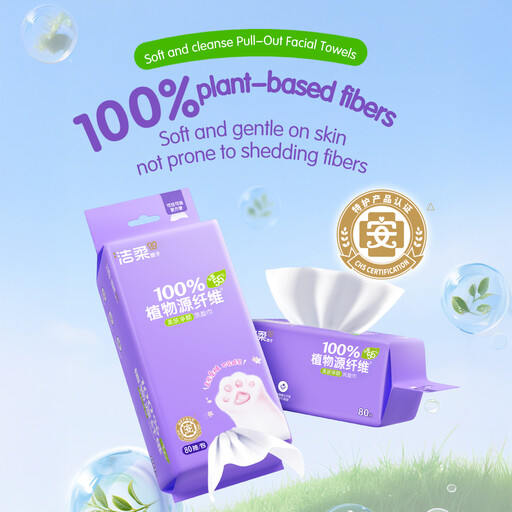
Why this fits the profile: A single pack of 80 sheets is straightforward for anyone trying disposable facial towels for the first time or looking for a supply to take on the go.
The count of 80 sheets and the size of 200 × 200 mm are clearly stated. The product information also mentions a plant-based non-woven material and use for dry and wet cleansing.
80 sheets per pack; 200 × 200 mm; according to the product description, soft, absorbent and suitable for wet use.
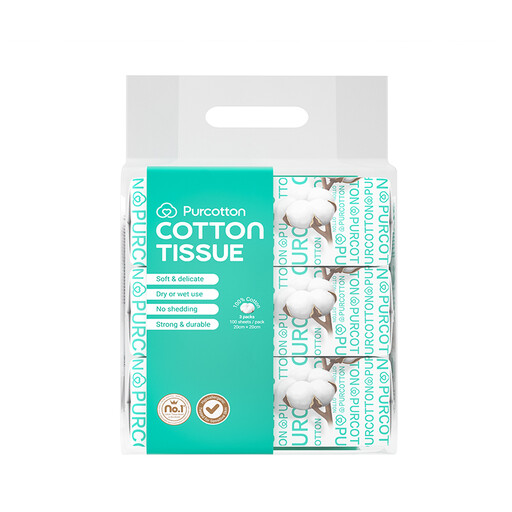
Why this fits the profile: This choice is aimed at shoppers who want to compare an explicit material, larger sheets and information about ingredients and certification.
The product description mentions 100% cotton, 20 × 20 cm, dry and wet use, and the advice not to flush. According to Purcotton’s own information, the towels are free from fragrance, alcohol and softeners.
300 sheets in 3 packs; 100% cotton according to the product information; OEKO-TEX STANDARD 100 is mentioned by the brand.
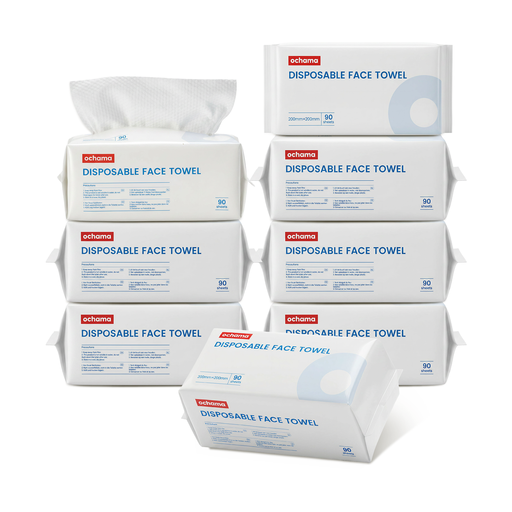
Why this fits the profile: The pack of 8 bundles of 90 sheets is suitable for families, daily use and keeping a steady supply at home.
The total count is broken down into 90 sheets × 8 packs. The instructions mention dry and wet use, storage in a dry place and disposal in the bin.
720 sheets; pearl texture; according to the product information, suitable for dry and wet use and fragrance-free.
We’ve put together a full, up-to-date list of products that fully meet these strict selection criteria and comply with current European safety regulations.
That depends on the material and the individual. Choose a product with a clearly stated composition and check whether perfume, alcohol or other additives are present. According to Purcotton’s own product information, certain towels have been tested for sensitive skin. Stop using them if you experience redness, itching or irritation.
Most disposable facial towels are designed for single use. After cleansing, they can contain moisture, make-up residue and dirt. Reusing them can also affect the structure and hygiene. If you want to produce less waste, you could consider reusable alternative facial towels made from cotton, but these need to be washed and dried thoroughly after each use.
That depends on the number of sheets and how often you use a towel. Divide the total number of sheets by your daily usage. A pack of 180 sheets with two towels per day would theoretically last about 90 days. Keep the packaging closed, cool and dry. Never flush used towels down the toilet.
