
Vandaag of morgen in huis

Kwaliteit gegarandeerd

Welkomstaanbiedingen ontgrendelen: GRATIS bezorging | Tot 80% korting | Gratis 30 dagen JoyPlus-proefperiode
Download de app
Disposable face towels are handy after washing, when removing make-up, while travelling or after a workout. They take up little space and you don’t need to wash them straight away. Yet many products look alike, while the material, size and packaging can differ quite a bit.
A low price per pack therefore doesn’t tell the whole story. Pay particular attention to these common pitfalls:
For soft face towels, the material is a key starting point. Products made from viscose or plant-based non-woven fibres generally feel different to cotton face towels. Cotton is usually reusable, whereas viscose and non-woven varieties are often designed for single use.
Some products list an exact composition, such as 100% plant-based viscose. Others simply state “ultra-soft non-woven material”. That difference matters if you’re looking for a face towel for sensitive skin and want the product information to be as clear as possible.
A claim like “hypoallergenic” should be read as a product claim from the brand, not a medical guarantee. According to the manufacturer’s product description, certain variants are intended for gentle daily cleansing. Stop use if irritation occurs and avoid contact with the eyes.
The size determines how easy a towel is to use. A sheet of around 20 × 20 cm offers enough surface area for the face, while a size of 30 × 25 cm gives more room for cleansing, drying or applying skincare.
A higher material density, expressed in g/m², can indicate a thicker towel. The ochama model has a density of 65 g/m² according to the product data. That’s a verifiable product specification, but it doesn’t automatically mean it’s more comfortable for everyone.
Also pay attention to the texture. A pearl texture can, according to the product description, help absorb oil and make-up. Don’t use excessive pressure: a face towel shouldn’t be used like a scrub.
For daily use, the number of sheets is at least as important as the price. Divide the price by the number of pieces to compare the cost per towel.
Dispose of used towels in the general waste. Even if a towel contains plant-based fibres, it shouldn’t automatically be flushed down the toilet. The product information for the variants mentioned states that you should not flush them.
The selection below is based on stated product specifications such as material, size, number of sheets and packaging. These are not medical recommendations.
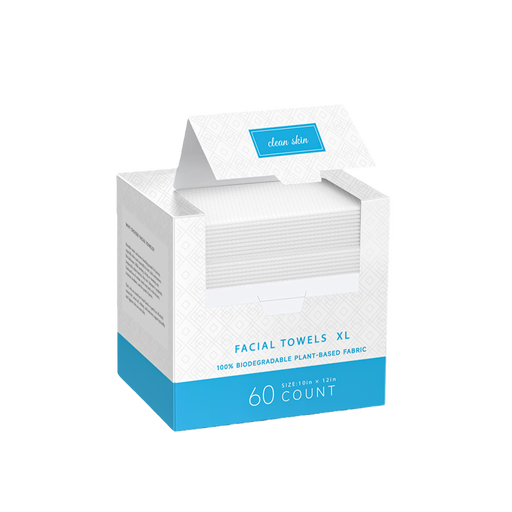
Why this fits the profile: The pack of 60 sheets is manageable for anyone wanting to try disposable face towels first, or for using them mainly while travelling and on short stays.
The product description states the material, the size of 30 × 25 cm and the packaging in a plastic-free paper box. This means you can check the key specifications in advance.
100% plant-based viscose according to the product data, pearl texture and 60 sheets in a compact box.
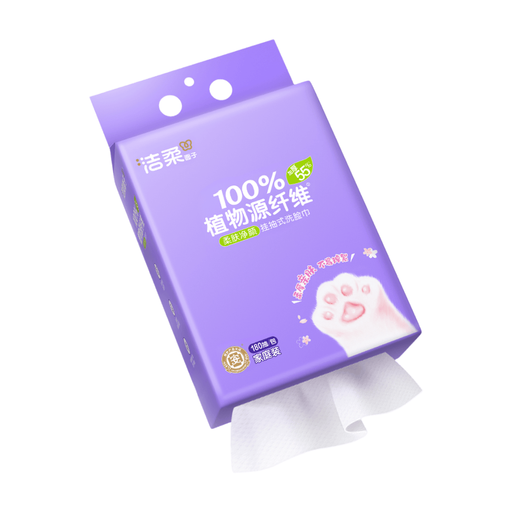
Why this fits the profile: The large supply is suitable for daily use at home, without having to open a new pack each time.
The pack contains 180 sheets measuring 200 × 180 mm. This stops you from relying solely on marketing terms like “extra large” or “long-lasting use”.
Plant-based non-woven fibres according to the product data, hydro-entanglement/spunlace technology and a large sheet per piece.
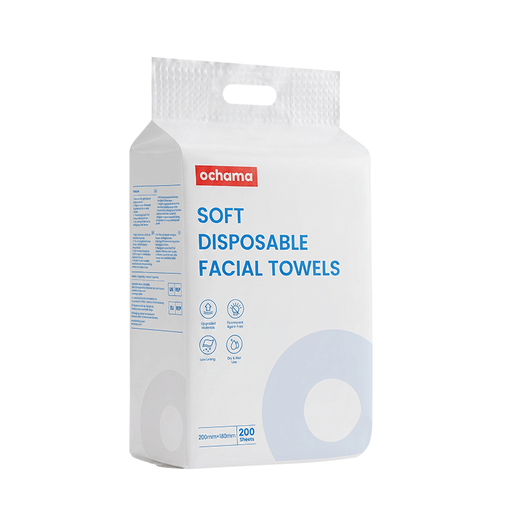
Why this fits the profile: The hangable pack and pull-out design are practical in the bathroom, gym bag or a small toilet area.
The packaging is designed for taking one sheet at a time. Store it dry and close the opening according to the usage instructions to limit moisture and dust reaching the unused towels.
200 sheets, 65 g/m² according to the product data and suitable for dry or slightly damp use.
Disposable towels are especially practical when you want to avoid washing, are often on the go, or value a clean towel for each use. They do create more waste. A reusable face towel made of cotton or microfibre requires maintenance, but can be used more often if washed properly.
If you want to compare both options, you can also look at the range of reusable face towels. With reusable variants, pay attention to washing instructions, drying time and the ability to store different towels separately.
We’ve put together a full, up-to-date list of products that fully meet these strict selection criteria and comply with current European safety regulations.
Yes, many dry face towels can be moistened with water. With some variants you can also use a cleanser. Always check the product instructions and don’t rub hard on the skin. A dry towel is not automatically a moist make-up wipe.
That depends mainly on the packaging and storage. Keep them in a dry place, out of direct sunlight and not above a damp shower. Close a pull-out pack after use. For products with a best-before or storage recommendation, check the information on the packaging.
The product descriptions of several mentioned variants list make-up removal as an application. That doesn’t mean every waterproof product will come off with one towel. If needed, first use a suitable cleansing product and avoid contact with the eyes. Stop using if irritation occurs.
