
Vandaag of morgen in huis

Kwaliteit gegarandeerd

Welkomstaanbiedingen ontgrendelen: GRATIS bezorging | Tot 80% korting | Gratis 30 dagen JoyPlus-proefperiode
Download de app
Disposable face towels are handy for daily washing, removing make-up, travelling, and situations where you'd rather not use a shared towel. Yet many packs look very similar. A large number of wipes, a soft texture, or the phrase "suitable for sensitive skin" doesn't always tell you enough about how they'll perform in practice.
So pay particular attention to the material, the size, the packaging, and how you intend to use the wipes. That way, you can avoid paying for a large pack that turns out to be awkward, or for wipes that are too thin for wet use.
A pack containing hundreds or thousands of sheets can seem like good value. However, the relevant comparison is the price per wipe and the amount you need for each use. A thicker sheet may feel nicer, but you might use fewer of them. Also check whether the count refers to individual sheets or to pulls where multiple layers form one wipe together.
Soft face wipes can feel pleasant, but softness doesn't automatically tell you anything about absorbency or strength when the wipe gets wet. For removing make-up and wiping with water, you need a material that won't fall apart easily. So look at the product specifications for material, texture, and any gram weight.
Disposable face towels are generally not flushable. Even if a wipe feels thin, it can cause blockages. Dispose of used wipes in your general waste, following local waste regulations. Also, do not reuse them: after use, moisture and skin residue can remain in the material.
Many disposable face cloths are made from non-woven material or fibres such as viscose and lyocell. Pay attention to the exact description. A pearl texture can provide extra grip when wiping, but it doesn't on its own tell you how soft or strong the wipe is.
For sensitive skin, an unscented product is a practical choice. This at least avoids added fragrance as a potential source of irritation. According to the product description of certain ochama wipes, they are unscented and contain none of the 14 specified allergens. This is product information from the brand and not a medical assessment. Stop using them if you experience redness, itching, or irritation.
Check whether the wipe is intended for dry and wet use. A dry wipe is suitable for drying your face or hands. For wet facial cleansing, moisten it with water and wring out any excess. If you're using a wipe to remove make-up, a larger or thicker size may be more practical.
Bear in mind that "wet face wipes" and dry wipes that you moisten yourself are not the same product. Some variants do not contain any cleansing liquid and are therefore just a wipe. You will then need water and, if necessary, your usual cleansing product.
For facial cleansing, a compact size is often sufficient. A product with a hanging dispenser can be handy in a small bathroom, at the gym, or when travelling. An individually wrapped towel takes up more space but stays better protected from moisture and dirt on the go.
Also look at the gram weight, if it's stated. According to the product information, the ochama variant with 200 sheets has a weight of 65 g/m² and a sheet size of 180 × 200 mm. This gives you more to go on than just the description "extra soft". For products without a stated layer thickness or dimensions, always check the current product page.
Reusable cotton wipes can produce less waste in the long run, but they need to be washed after each use and dried completely. A damp wipe left lying in the bathroom is not ideal for repeated use. Disposable face towels are practical when you want to grab a clean wipe quickly, for example when travelling, in a hotel, after exercise, or in a household with multiple users.
The choice depends on your usage pattern:
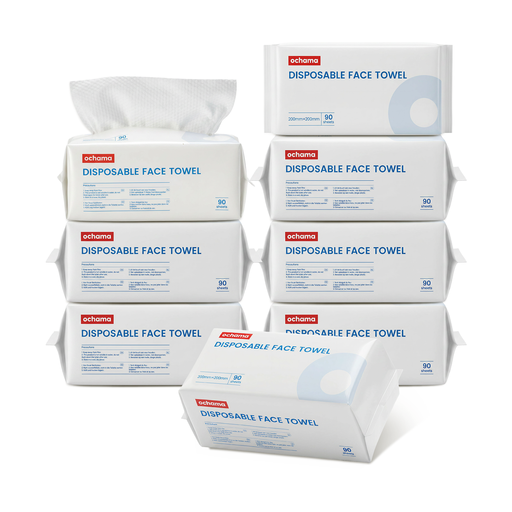
Why this fits the profile: The pack contains 720 sheets, divided into 8 packs of 90. That's manageable for daily use by a family or household.
The number of sheets and the distribution per pack are clearly stated. This makes it easier to estimate the stock and the price per sheet.
Viscose and lyocell fibres, pearl texture, unscented and suitable for dry and wet use.
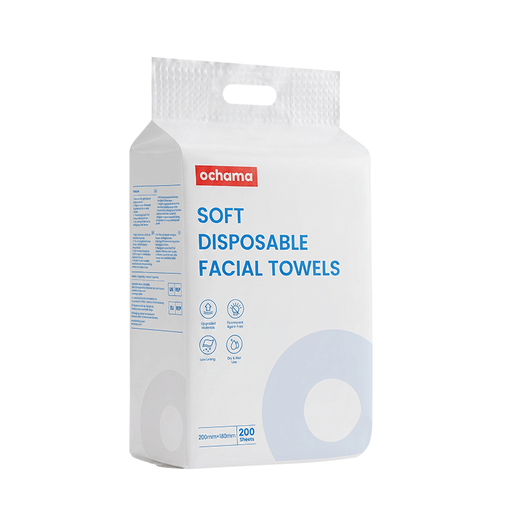
Why this fits the profile: The hanging pack with a pull-out design is practical when you want a fixed spot next to the sink and need one sheet quickly.
The gram weight of 65 g/m² and the sheet size of 180 × 200 mm are stated. So you don't have to rely solely on the term "soft".
200 sheets per pack, hanging hook, pull-out design and, according to the product description, suitable for dry and damp use.
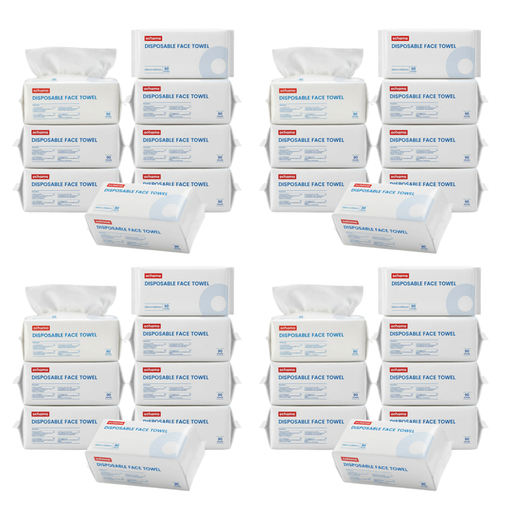
Why this fits the profile: With 32 packs of 90 sheets, this large value pack is aimed at households with high consumption or multiple users.
The stock is divided into individual packs. This means you don't have to keep one large opened pack in a damp bathroom every day.
2880 sheets, pearl texture and, according to the product information, usable for dry and wet wiping.
We've put together a full, up-to-date list of products that fully meet these strict selection criteria and current European safety regulations.
That varies by product. Preferably choose an unscented variant and check the material. According to ochama's own product information, certain variants are intended for different skin types, including sensitive skin. That is a brand claim and not a medical guarantee. If irritation occurs, stop using them.
For products that state dry and wet use, you can moisten the wipe with water and wring it out. Check beforehand whether the material remains strong enough when wet. Then use the wipe once and dispose of it.
A large pack can lower the price per sheet, but only if you use the wipes regularly and can store them dry. Compare the total number of individual sheets, the price per sheet, and the amount needed per facial cleansing. For occasional use, such as a holiday, a smaller or individually wrapped set may be more practical.
