If you need clean mugs during the cooking workshop, start by looking at a professional model with a specified short cycle, and check how many of your own mugs will actually fit. If the washing up can wait until afterwards, a domestic dishwasher with a suitable load is often a more sensible starting point; place settings are not a measure of how many mugs it can hold. If you provide food commercially, assess the relevant food safety procedures separately: a dishwasher programme alone does not prove compliance.
Who are these options relevant to?
Workshops where mugs are reused
If participants need clean mugs again for successive sessions, the programme duration and the basket’s actual capacity are key. Miele Professional and Winterhalter describe professional models designed for this type of use.
Workshops where the washing up can wait
You can collect mugs and other crockery and run a suitable domestic dishwasher after the workshop. Inventum and ETNA describe models for smaller and larger household loads.
Workshops in a small kitchen
If the available alcove, floor or worktop space limits the size of the appliance, weigh up where it can go against how many mugs will actually fit. Consumentenbond describes, among other things, the differences between slimline and mini dishwashers.
What should you consider when choosing?
Professional dishwasher
Choose this option if: you need the mugs again during the same workshop and a short cycle is important.
Bear in mind: the model variant, connection and actual mug capacity; stated place settings or baskets per hour do not guarantee a certain number of mugs.
Standard-size domestic dishwasher
Choose this option if: the mugs can be washed with other crockery afterwards and you have room for a suitable load.
Bear in mind: a built-in model needs a suitable alcove; eco-label figures do not automatically tell you about a short workshop cycle.
Slimline or compact dishwasher
Choose this option if: a standard model will not fit in your kitchen and you do not need the mugs again straight away.
Bear in mind: limited basket space may mean extra wash cycles. Kenniscentrum Duurzaam Leven warns that mini dishwashers can be relatively inefficient and produce disappointing results.
| What to consider |
What should you look for? |
Who should pay particular attention? |
| Turnaround time |
Compare the full programme duration with the break between sessions, and check when the mugs will be ready to use again. |
If I need the mugs again during the same workshop, I want to know whether they’ll be ready in time for the next session. Around 28% of consumers say turnaround time is their main concern when buying. |
| Cleaning and use |
Check that the programme is suitable for the level of soiling; load mugs according to the instructions and keep the filter clean. |
When mugs are shared, I want a clear procedure for cleaning them and, if the activity requires it, working safely with food. Around 22% of consumers prioritise hygienic reuse. |
| Mug capacity |
Measure the height, diameter and handles of your mugs, and check the basket layout and that the spray arms can move freely. |
If I need to wash lots of mugs after or between group sessions, I want to know how many will really fit in one load. Around 22% of consumers say group capacity is their main concern when buying. |
| Space and connection |
Measure the available space and doorway; check the connections required for the exact model variant. |
In a small workshop kitchen, I want an appliance that fits the available space without compromising on the load capacity I need. Around 17% of consumers make space their top priority. |
| Consumption and washing routine |
For domestic models, compare the eco figures with the programme you actually intend to use. |
If I can wait until there’s a suitable full load, I mainly want to assess consumption for that washing routine. Around 11% of consumers say running costs are their main concern when buying. |
Common buying mistakes
-
Assuming place settings equal a guaranteed number of mugs
The stated capacity is based on standard place settings; wide mugs, tall rims and handles can fill the basket sooner.
Measure a typical mug and check how it fits, the height of the upper basket and the clearance around the spray arms.
-
Assuming eco-mode consumption applies to a quick programme
The domestic energy label describes the eco programme, not necessarily the workshop cycle you want to use.
Compare the programme duration separately and, where the figures are available, check the consumption of the programme you plan to use.
-
Assuming a smaller dishwasher is more efficient
Kenniscentrum Duurzaam Leven warns that mini dishwashers can be relatively inefficient and may deliver disappointing results or be less convenient to use.
Choose a compact model if space genuinely demands it, and compare the capacity and label figures of the models that will fit.
-
Comparing professional throughput figures without context
Winterhalter’s product page gives different baskets-per-hour figures for the UC-S, so a single throughput figure should not automatically be treated as a fixed capacity.
Before deciding, confirm the programme, model variant, connection and capacity using your own mugs.
Brands to consider
Inventum
The Inventum VVW5520 is a freestanding compact model for domestic use.
- Inventum states that the VVW5520 has a capacity of six standard place settings.
- Six place settings do not tell you how many workshop mugs will fit. Kenniscentrum Duurzaam Leven also warns against mini dishwashers because they can be relatively inefficient and often produce disappointing test results.
ETNA
The ETNA VW540A is a built-in domestic model for a larger load of washing up afterwards.
- ETNA states that this model holds 14 standard place settings and has a height-adjustable upper basket.
- The alcove and door panel need to suit your kitchen; place settings do not indicate the actual mug capacity.
Miele Professional
The PFD 100 SmartBiz is a professional commercial dishwasher for workshops where you may need the mugs again during the session.
- According to Miele Professional, this model processes 13 standard place settings in 36 minutes.
- These are manufacturer figures for the model, not an independently measured mug count or a guarantee that every mug will be dry within that time. For this model variant, Miele specifies AC 230 V, 50 Hz, 10–16 A.
Winterhalter
The UC-S is a professional rack dishwasher for a small wash-up area.
- Winterhalter lists a 400 × 400 mm rack size and 230 V for the UC-S.
- The manufacturer’s page gives different baskets-per-hour figures. Confirm the capacity for the exact model variant and programme before comparing it with other models.
Domestic dishwashers at Joybuy
These models are aimed at washing workshop mugs and other crockery in a domestic setting, either afterwards or in a suitable cycle. Before buying, check that the basket and installation will work for your needs.
 No image available
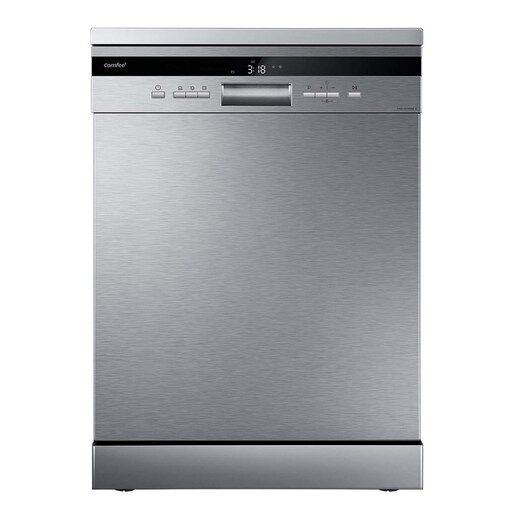
COMFEE' FD1435E-X freestanding dishwasher
A domestic model for washing up a collected load after the workshop.
Specifications listed: 14 place settings, 44 dB and energy class D.
The product information mentions foldable supports and an adjustable cup holder; check that your own mugs fit properly in the basket.
Joybuy
 No image available
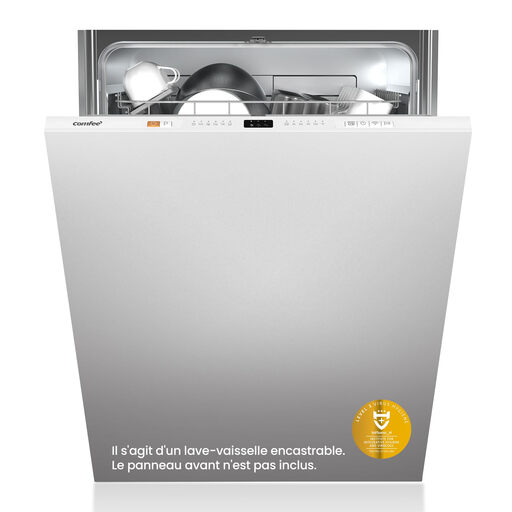
COMFEE' CDWPB1215PB-EU fully integrated dishwasher
A built-in option if the washing up can wait until afterwards and your kitchen has a suitable alcove.
Specifications listed: 12 place settings and a 30-minute Rapid programme.
According to the product information, the front panel is not included. A programme duration does not tell you how many workshop mugs will fit or when they will be completely dry.
Joybuy
 No image available
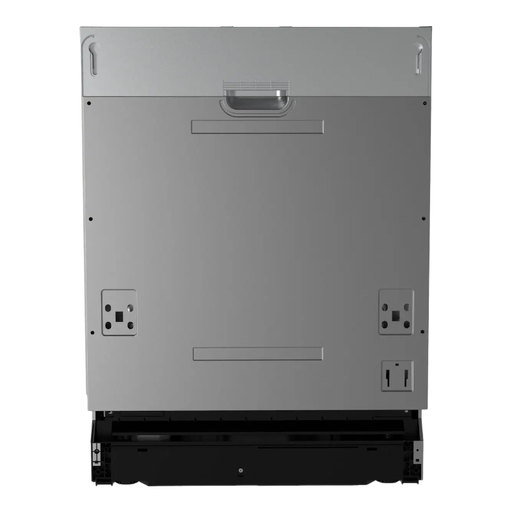
Wiggo WD-B6126E built-in dishwasher
A domestic built-in model for a load of washing up that can be collected and washed afterwards.
Specifications listed: 12 place settings, energy class E and a 220-minute standard programme.
The specified alcove dimensions are 60 cm wide and 58 cm deep. Check that your available alcove is suitable.
Joybuy
 No image available
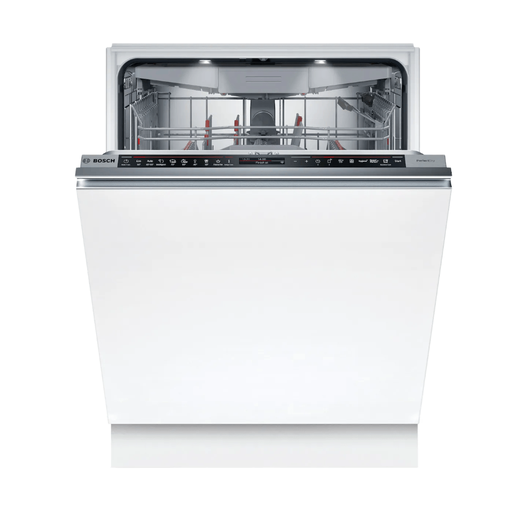
Bosch SMD8TCX04E fully integrated dishwasher
A domestic built-in model for a larger collected load of washing up after the workshop.
Specifications listed: 14 place settings, 60 cm and energy class A.
The product information mentions flexible baskets and an Extra Clean Zone. Installation requires a suitable alcove and furniture door.
Joybuy
 No image available
Bosch SPS4EMI17E freestanding, 45 cm
A slimline domestic option if a standard-width model will not fit in the available space.
Specifications listed: 13 place settings and six programmes.
The product information mentions a height-adjustable upper basket. Check the actual space for your mugs and the room needed to install the appliance.
Joybuy
Frequently asked questions
How should I load mugs into the dishwasher?
Place dishwasher-safe mugs upside down, and position crockery with a rim so that water can drain away. Scrape off large food scraps and clean the filter regularly. Check beforehand that mugs with handles fit in the basket. Consumentenbond provides these loading tips for dishes.
Is the energy label on a domestic dishwasher a good guide to a quick workshop programme?
No. The label does not automatically tell you how a quick programme performs: the stated energy, water and duration figures are based on the eco programme. Compare a quick programme separately if you need the mugs again during the workshop. The European Commission states that, since 1 March 2021, the EU energy label for domestic dishwashers has used a scale from A to G.
Does a commercial cooking workshop need to register with the NVWA and follow HACCP procedures?
It depends on the activity in practice. The NVWA says that businesses supplying food directly to consumers must register, and describes the requirement for businesses that prepare, process or sell food to follow a HACCP food safety plan or an applicable hygiene code. Cleaning mugs alone does not determine whether these requirements apply to a particular workshop organiser.


