Who is this choice relevant to?

Organisers running consecutive sessions

You need the same crockery again before a long domestic dishwasher cycle has finished. So compare the programme duration as well as how much of your own crockery fits in each basket. The programme details and basket sizes quoted are manufacturer specifications from MEIKO; actual throughput depends on how you load the machine.

Commercial workshop kitchen

As well as choosing an appliance, you need to check which food safety procedures apply to your activity. The Netherlands Food and Consumer Product Safety Authority describes a HACCP food safety plan or the relevant hygiene code for food businesses. Check the terms for business purchases in advance, too.

Small teaching kitchen where washing up can wait

If the washing up can wait, the priority is a machine that fits your available space and can hold your own crockery and kitchen utensils. A standard number of place settings does not automatically tell you how many large plates or pans will fit in your load.

What should you look for when choosing?

Professional front-loader for quick turnaround

Suitable when: you need your plates and cutlery again between workshop sessions. MEIKO lists programmes of 90, 120 and 180 seconds for the M-iClean U M, and a 500 × 500 mm basket.

Keep in mind: programme duration alone does not tell you how much washing up you can get through in practice. Also check the load, connection, water treatment and servicing.

Professional dishwasher for large items

Suitable when: you regularly want to wash large trays or platters as well as crockery. HOBART lists space for 600 × 400 mm trays in the PROFI FXL.

Keep in mind: you may not need the extra space for everyday crockery. HOBART specifies a 400 V power cable and a configurable 230 V option; ask for confirmation of the suitable connection for your premises.

Domestic dishwasher for washing up afterwards

Suitable when: you can wash up after the workshop and do not need your crockery back quickly between sessions.

Keep in mind: a short cycle may shorten or skip the drying phase. The Consumers’ Association notes that this is common with short domestic programmes.

What to consider What should you check? Who should consider this?
Getting your crockery back in time Count the dishes used in each session and compare the full programme cycle with the time until the next session. Check how much of your crockery fits in each basket. If you need the same plates ready again quickly, the stated wash time is not the only thing that matters. Around 36% of consumers say getting their crockery back quickly is their top priority.
Food-safe working Check whether your activity falls under the rules for a food business and which procedures are appropriate for your own HACCP plan or the relevant hygiene code. If you run the workshop as a food business, you need to make sure your choice of machine fits with the applicable food safety procedures. Around 29% of consumers prioritise this.
Space and loading Measure the available space and your largest items. For domestic machines, compare the basket layout and place settings; for professional models, check the basket size and loading height. If your kitchen is cramped or your crockery is an unusual size, it helps to know in advance what will really fit in one load. Around 21% of consumers prioritise suitable dimensions and loading capacity.
Use and maintenance Compare energy label figures for domestic machines on the same eco-programme basis. For professional machines, ask about the products required, water treatment and servicing for your needs. If you wash up regularly, make sure the usage and maintenance requirements suit how often you use the machine. Around 14% of consumers say these ongoing considerations are their top priority.

Common purchasing pitfalls

  • Comparing place settings alone

    Place settings describe a standard load, but do not necessarily account for your large plates, bowls or workshop equipment. As a result, a load may hold less than you expect.

    Measure a few representative items and compare them with the basket size and loading height. For a domestic model, also check how adjustable the baskets are.

    If large items do not fit, you may need to run an extra cycle.

  • Assuming a short programme means the washing up is all done

    Domestic short programmes may shorten or skip the drying phase. Loading and unloading the machine, and drying items further if needed, also take time.

    Compare the whole process with the time between workshop sessions, not just the stated wash time.

    You may need to allow extra time for unloading or drying items further.

  • Using eco figures to predict every wash

    The EU energy label for domestic dishwashers is based on the eco programme. Other programmes have different purposes and use the machine differently.

    Only compare label figures on the same basis, and check the manual for information about other programmes.

  • Treating a business purchase like a personal purchase

    The Chamber of Commerce points out that business buyers generally have less consumer protection; in certain circumstances, small businesses may sometimes be able to rely on consumer law.

    Before ordering, get confirmation of the applicable business terms and who will take care of installation and servicing.

Relevant brands for this choice

MEIKO

The professional M-iClean U front-loaders are worth considering if you need your crockery back between workshop sessions.

  • MEIKO lists a 500 × 500 mm basket and programmes of 90, 120 and 180 seconds for the M version.
  • These are manufacturer specifications, not an independent measure of total throughput. Compare the basket with your own load and check the installation requirements.

HOBART

The professional PROFI range includes the FXL, designed for situations where you wash large trays or platters as well as crockery.

  • According to HOBART, the FXL wash chamber can accommodate trays measuring 600 × 400 mm.
  • You may not need this extra space for everyday crockery. HOBART specifies a 400 V power cable and a configurable 230 V option; check which connection is suitable for your premises.

Winterhalter

According to Winterhalter, its professional UC front-loaders come in versions for crockery, glassware and mixed bistro items, among others.

  • According to the manufacturer, the UC series is available in sizes S, M, L and XL.
  • Choose a version after checking the basket, types of items to be washed and installation requirements. Claims about efficiency and washing results are made by the manufacturer.

Inventum

The freestanding domestic VVW6036AW is worth considering if you can wash up after the workshop.

  • Inventum lists 14 standard place settings, an adjustable upper basket, energy class C and an intensive programme.
  • Place settings describe a standard load and do not tell you how many large workshop items will fit.

Bosch

The freestanding domestic SMS4EVW08E is worth considering if you want to compare dimensions and eco-programme figures, among other things.

  • Bosch lists dimensions of 845 × 600 × 600 mm, energy class B and water use of 9.0 litres per eco cycle.
  • The eco figure does not tell you how much a faster programme uses or how long it takes.

Siemens

The freestanding domestic SN23EC03ME is worth considering if you are looking for flexible baskets and a choice of programmes.

  • Siemens lists energy class B, water use of 9.0 litres per eco cycle and varioFlex baskets.
  • These model specifications do not prove that a domestic cycle will be quick enough for consecutive workshop sessions.

Domestic dishwashers at Joybuy

These models are domestic options for washing up after a workshop. Check the dimensions, layout and programme duration of the version you choose against your own crockery and schedule.
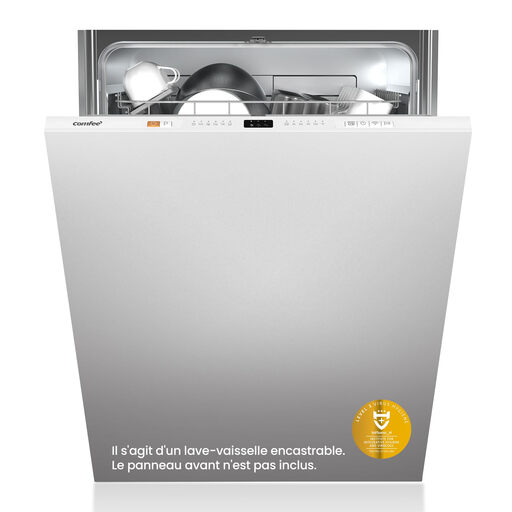
Comfee' CDWPB1215PB-EU fully integrated dishwasher

Comfee' CDWPB1215PB-EU fully integrated dishwasher

An option if you want a domestic model and can wash up afterwards; the front panel is not included.

The product description lists 12 place settings, a 30-minute Rapid programme for lightly soiled dishes and a 90-minute programme that includes drying. It also mentions a half-load function and energy class E.

View at Joybuy
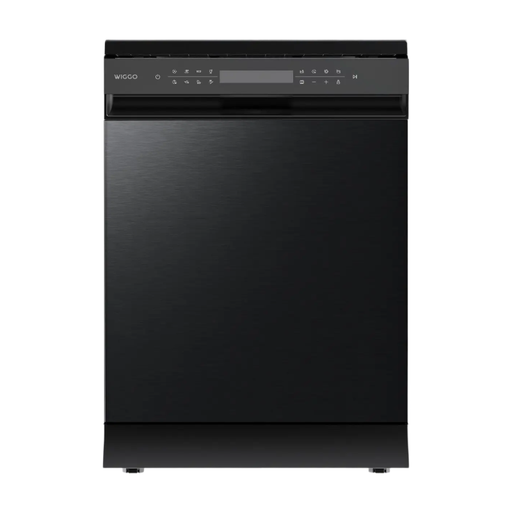
Wiggo WD-F6148B freestanding dishwasher

Wiggo WD-F6148B freestanding dishwasher

A domestic option to compare if you can run the dishwasher after the workshop.

The product description lists 14 place settings and a 90-minute programme. The stated dimensions are 60 × 60 × 85 cm; energy class B appears in the product name.

View at Joybuy
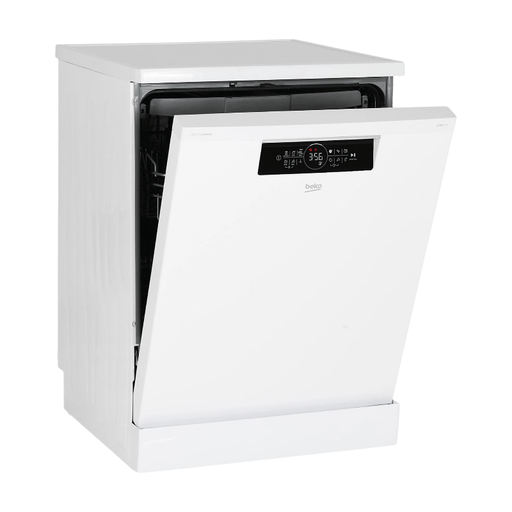
Beko BDFN36641WD freestanding dishwasher

Beko BDFN36641WD freestanding dishwasher

A model to consider if you are looking for a domestic machine with room for a standard load.

The product description lists 16 place settings, 11 programmes, an adjustable upper basket, a cutlery drawer and a half-load function. Fast Plus is described as a feature that makes the programme up to three times faster.

View at Joybuy
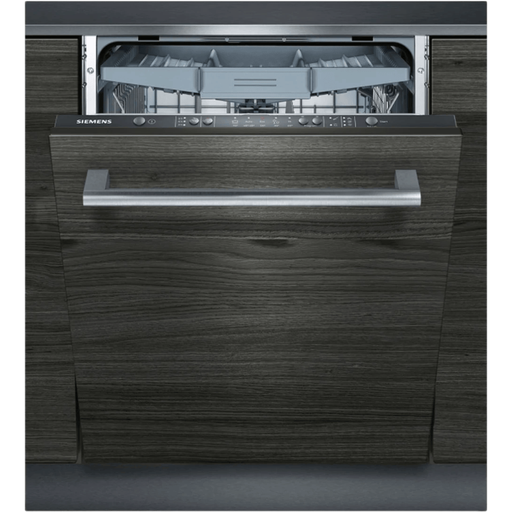
Siemens SN615X03EE fully integrated dishwasher

Siemens SN615X03EE fully integrated dishwasher

A domestic model to compare if a fully integrated design and a separate cutlery drawer suit your kitchen.

The product description lists 13 place settings, 5 programmes, a cutlery drawer and VarioSpeed Plus. The stated dimensions are 81,50 × 59,80 × 55 cm.

View at Joybuy
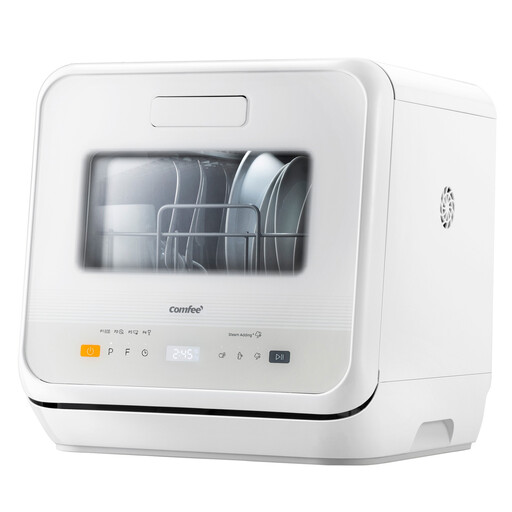
Comfee' CDWMTO201D(W) compact dishwasher

Comfee' CDWMTO201D(W) compact dishwasher

A compact option if you have limited space and your dishes are within the stated maximum diameter.

The product description lists dimensions of 420 × 435 × 435 mm, a 5-litre water tank and a maximum dish diameter of 250 mm. The name lists 6+3 programmes.

View at Joybuy

Frequently asked questions

Is a professional dishwasher a legal requirement for a cookery workshop?

Choosing a professional machine and following the applicable food safety rules are separate matters. The Netherlands Food and Consumer Product Safety Authority states that a food business must follow a HACCP food safety plan or the relevant hygiene code. Check whether your workshop falls under these rules and which procedures apply to your activity.

Can I use the EU energy label to compare a commercial dishwasher with a domestic one?

Not as a direct comparison of energy use. The EU energy label for domestic dishwashers gives figures based on the eco programme, including kWh per 100 eco cycles and water per eco cycle. Compare a professional machine using figures based on the same type of use.

What should I check before installation?

Measure the available space and your largest items, and check the connection requirements for the exact version. For example, HOBART specifies a 400 V power cable and a configurable 230 V option for the PROFI FXL; ask for confirmation of the suitable connection for your premises.

What maintenance matters when you have a lot of washing up?

Remove large food scraps and clean the filters and spray arms as directed in the manual. The Consumers’ Association warns that blocked filters can prevent the water from draining properly.

Do standard consumer rights apply if I buy the dishwasher for my workshop business?

Not automatically. According to the Chamber of Commerce, business buyers generally have less protection than consumers; in certain circumstances, small businesses may sometimes be able to rely on consumer law. Before buying, check the terms for business use, the warranty, installation and servicing.
