What should you look for when choosing?
Start with the space available, then consider the usable capacity and cutlery layout. Milieu Centraal recommends a standard-size model if you can fill it properly.
| What to consider |
What should you check? |
Who is this important for? |
| Space and connections |
Measure the space available and check the external dimensions, water inlet, drain and electrical connection against the instruction manual. |
If I have limited kitchen space, I want to know exactly where the machine can go and be connected. Around 33% of consumers prioritise where it can be installed. |
| Cutlery layout |
Check whether the model has a cutlery basket, cutlery drawer or both, and follow the instructions for sharp cutlery. |
I want to load and unload cutlery easily while leaving room for other tableware. Around 27% of consumers prioritise the cutlery layout. |
| Space for a shared load |
Compare the stated place settings and rack layout with a typical shared load; measure large plates and pans separately. |
If we share the washing-up with housemates, I want to know whether our usual load will fit in the machine. Around 20% of consumers mainly choose based on the space available for a shared load. |
| Energy and water consumption |
Compare energy consumption per 100 eco cycles and water consumption per eco cycle on the energy label, and consider how often you'll need to run a cycle. |
I want to weigh up consumption against our usual load and how often we do the washing-up. Around 20% of consumers mainly consider energy and water consumption in everyday use. |
Freestanding dishwashers at Joybuy
These freestanding dishwashers are options to consider for shared loads and washing cutlery that is dishwasher-safe. Check whether the capacity, cutlery layout and available space suit your kitchen for each model.
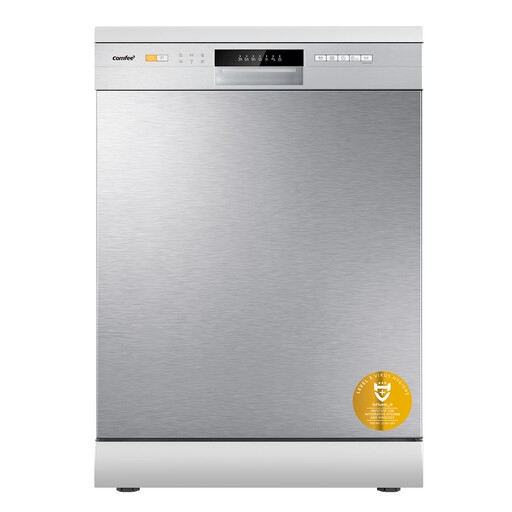 Image unavailable
Comfee' CDWPF1201PS
The stated capacity and removable cutlery basket make this an option to consider for shared loads; compare the capacity with your own tableware.
- 12 place settings
- Half-load function
- Delay start
- 49 dB
- Energy rating E
View at Joybuy
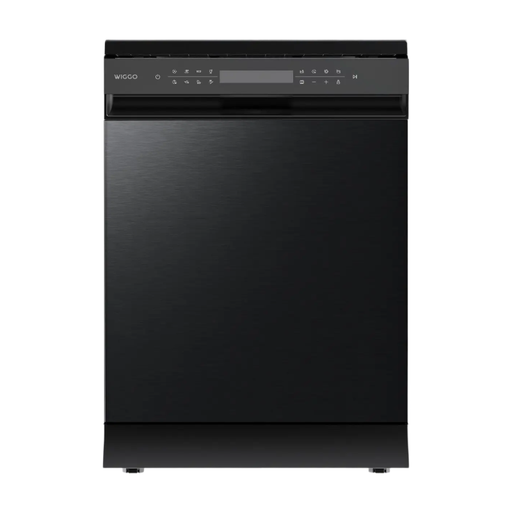 Image unavailable
Wiggo WD-F6148B
A standard-size model to consider if you have room for a 60 cm-wide freestanding dishwasher and your housemates can fill it properly.
- 60 cm wide
- Full size
- Energy rating B
View at Joybuy
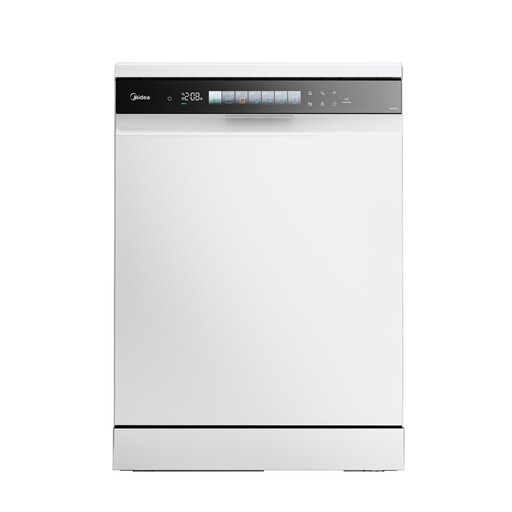 Image unavailable
Midea MDWEF1433GW-W
An option to consider for shared washing-up; check whether the capacity and cutlery layout of the exact model suit your load.
View at Joybuy
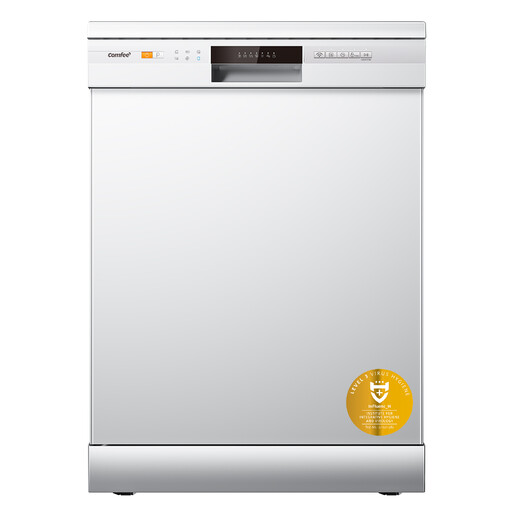 Image unavailable
Comfee' CDWPF1201PW-WE-EU
The stated capacity can help you assess this model for shared loads; compare it with your usual amount of washing-up and the space available.
- 12 place settings
- 8 programmes
- Wi-Fi and IoT function
- Energy rating E
View at Joybuy
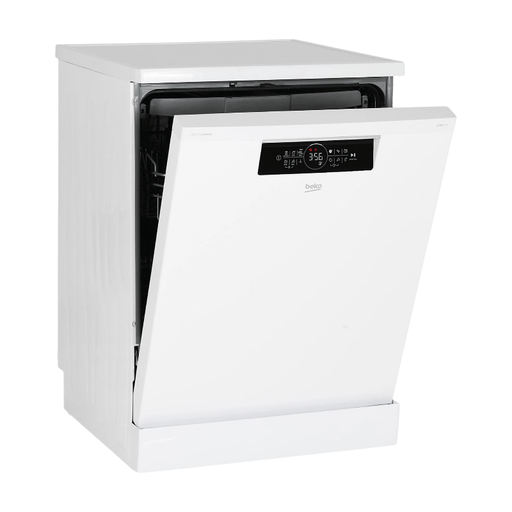 Image unavailable
Beko BDFN36641WD
A standard-size model to consider if you and your housemates collect larger loads; check that it fits and that you can usually fill it properly.
View at Joybuy
Frequently asked questions
Is a cutlery drawer always better than a cutlery basket?
No. According to the Consumentenbond, a cutlery drawer frees up space in the lower rack, while a cutlery basket is easy to take out of the machine. Choose based on the tableware that needs to fit and how you want to load and unload your cutlery.
Should dishwasher-safe cutlery be rinsed before loading?
No, pre-rinsing isn't necessary according to Milieu Centraal. Remove food scraps to prevent the filter from getting blocked, and follow the machine's instructions for sharp cutlery.
What should I check before installing a dishwasher in a student kitchen?
Check the space available and the water, drain and electrical connections against the instruction manual for the model you've chosen. For example, the Inventum manual for the VVW5520 specifies a flat, sturdy surface and warns against connecting it with an extension lead or multi-plug; these instructions apply to that model.
Do dishwashers in the Netherlands have an energy label?
Yes. According to the Rijksoverheid, an energy label is required for dishwashers, among other appliances, and also includes information about water consumption. The scale for dishwashers runs from A to G.
Is a standard-size model only worthwhile if you can fill it properly?
That's the condition Milieu Centraal gives when recommending a standard-size model. If you and your housemates usually collect only a small amount of washing-up, also compare a slimline model and the eco-cycle consumption of models that fit your kitchen.


