
Parents with plastic lunchboxes
You want to clean several containers and lids regularly. Check the instructions for each item: Voedingscentrum points out that dishwasher use may sometimes be limited to the top rack or a low temperature.


For one or a few lunchboxes, washing them by hand with a little hot water may be an alternative; Milieu Centraal generally describes handwashing as more economical than using an average dishwasher in these circumstances. If you choose a machine, start by checking the instructions for each container and the space available, then consider how often you’re actually likely to run a small load. A slimline machine may suit you if you also collect other dishes; a countertop model takes up worktop space, and Milieu Centraal’s general caveat about mini dishwashers is not a test result for any specific model.
You want to clean several containers and lids regularly. Check the instructions for each item: Voedingscentrum points out that dishwasher use may sometimes be limited to the top rack or a low temperature.
You don’t want to run a large machine for just a few dishes, so you’re weighing up a slimline dishwasher, saving up dishes and washing by hand. Milieu Centraal emphasises that a dishwasher needs to be full to deliver the stated benefits of use.
Your choice depends on the space and connections available: a countertop model takes up worktop space, while a slimline freestanding or integrated machine needs a different location.
A good fit if: you usually clean one or a few lunchboxes and can wash them using a little hot water.
Bear in mind: it involves manual work; in these circumstances, Milieu Centraal generally describes handwashing as more economical than using an average dishwasher.
A good fit if: you don’t have a suitable floor or built-in space, but do have room on the worktop and the right connections.
Bear in mind: Inventum lists six place settings and no half-load option for the VVW5520; Milieu Centraal’s general caveat about mini dishwashers is not an assessment of this specific model.
A good fit if: you have space for the machine and want to collect lunch containers with other dishes.
Bear in mind: Inventum’s half-load option is specific to certain models and doesn’t automatically make a half-full cycle more economical than waiting until the machine is full.
A good fit if: you have a suitable built-in space and kitchen door panel.
Bear in mind: ETNA specifies a recess height of 820–880 mm and a door-on-door system for the VW47SM; check in advance that these dimensions suit your kitchen.
A good fit if: you can wash lunchboxes with your other dishes and usually fill the machine properly.
Bear in mind: Milieu Centraal advises filling a full-size model; if you can’t do that, the organisation suggests a smaller model with low energy and water consumption as an alternative.
First check the instructions for containers, lids and seals. Then measure the available space, and only after that compare the loads you expect to wash and the machine’s consumption.
| Consideration | What should you check? | Who should give this more weight? |
|---|---|---|
| Containers and wash programme | Check the instructions for the container, lid and seal separately; look out for rack or temperature restrictions. | If I put lunch containers and their lids in the dishwasher, I want to know which temperature and rack are permitted for each item. Around 26% of consumers give these material instructions top priority. |
| Small loads | Compare the rack layout and capacity with your containers; check whether the exact model has a half-load option. | When I only have a few containers to wash, I want to know whether I can wash them with other dishes or should wait until I have more. Around 21% of consumers prioritise dealing with small loads. |
| Drying plastic | Check whether the model has a drying option or automatic door opening, and bear in mind that you may need to dry items by hand afterwards. | If I want to put the containers away as soon as the cycle ends, I pay particular attention to moisture that can remain on plastic. Around 21% of consumers give drying plastic top priority. |
| Space and installation | Measure the space and door opening; check the connections and, for an integrated model, the recess and door-panel dimensions too. | With limited kitchen space, I want to know in advance whether a countertop, freestanding or integrated model will actually fit. Around 16% of consumers prioritise the space needed for installation. |
| Energy and water consumption | Compare the kWh per 100 eco cycles and litres per eco cycle on the energy label with the load you expect to wash. | If I often use the machine for small loads, I want to factor in consumption across the cycles I actually need to run. Around 16% of consumers give ongoing energy and water consumption top priority. |
The label may mean that a particular item can only go on the top rack or be washed at a low temperature. A programme outside the instructions is therefore not suitable.
Check the instructions for containers, lids and seals separately before choosing a programme.
An item washed against the instructions may be damaged or need to be washed by hand afterwards.
Milieu Centraal generally advises against mini dishwashers because of their relative consumption and test results; this is not an individual test result for every countertop model.
Compare the energy label with the number of cycles your loads will require. Bear in mind that small loads may mean running the machine more often or saving up dishes.
Running it more often may use extra energy and water; this depends on how you actually fill the machine.
A manufacturer’s claim about a half-load option doesn’t automatically compare that setting with a full machine.
Check which programmes can be used with the option on the exact model, and only compare figures measured on the same basis.
Place settings describe standard crockery and cutlery, not the dimensions of your lunchboxes. An integrated model also needs a suitable recess.
Measure your containers and the available space, then check the rack and installation dimensions of the model you’re considering.
If the dimensions aren’t right, you may need to adapt the location or installation.
Inventum offers models for both compact worktop spaces and slimline freestanding installations.
The integrated VW47SM is worth considering if your kitchen has a suitable slimline recess.
The freestanding SPS2HKI55E is a useful reference if you’re looking for a slimline machine with an adjustable top rack and an extra drying option.
This selection includes countertop models for compact spaces and freestanding dishwashers with a half-load option. Compare the stated capacity with your containers and any other dishes you might collect.
 No image available
A countertop model for anyone who wants to wash a small load in a compact space.
4 place settings; built-in 5-litre water tank. The product name lists 5+1 wash programmes and a double-tempered-glass door.
 No image available
A countertop model for anyone who wants to wash a small load using a built-in water tank.
Built-in 5-litre water tank; 9 wash programmes; energy rating D. The product name specifies 37 × 50 cm.
 No image available
A compact countertop model for anyone looking for a small capacity and the option to use water from a tank or tap.
3 place settings; built-in 5-litre water tank; 7 programmes; energy rating C.
 No image available
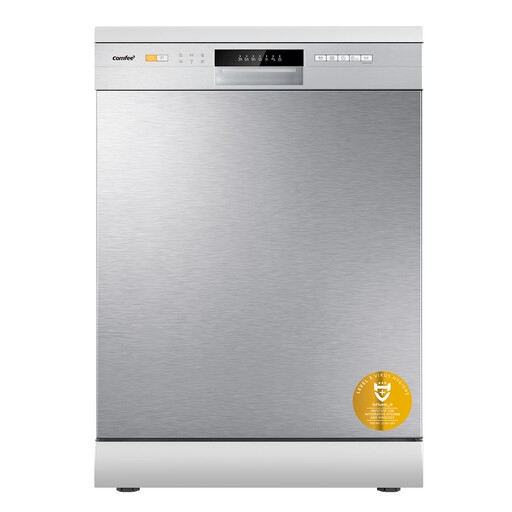
A freestanding model with a half-load function for anyone who also wants to collect other dishes.
12 place settings; half load; energy rating E; 49 dB.
 No image available
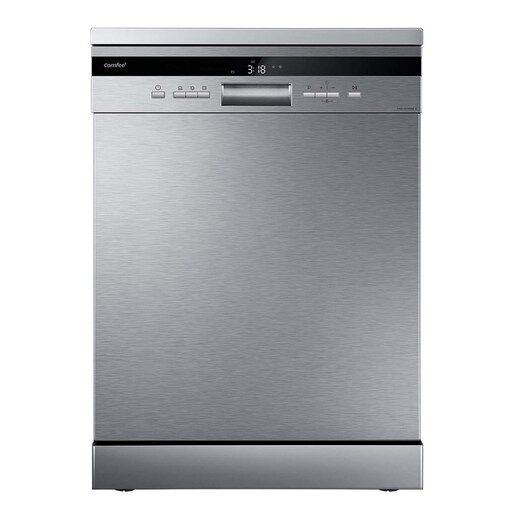
A freestanding model with a half-load function for anyone who wants to wash lunchboxes with a larger load of dishes.
14 place settings; half load; energy rating D; 44 dB.
No, follow the instructions for each item. According to Voedingscentrum, the label may, for example, mean that an item can only go on the top rack or be washed at a low temperature; follow the manufacturer’s instructions too.
Remove food scraps and keep the filter clean. Milieu Centraal says pre-rinsing is usually unnecessary; Bosch explains that a blocked filter can disrupt the water flow and affect how the dishwasher works.
The energy label gives figures for the eco programme, including energy consumption, water consumption and capacity. It isn’t a separate measurement for your quantity of lunch containers or for a half-load setting.
Yes, the Dutch government says that dishwashers must carry an energy label. Compare the label and the figures for the exact model when assessing machines.
No, according to the Dutch government, there is no fixed statutory guarantee period in the Netherlands. You’re entitled to a product that works properly, and if there’s a fault, the retailer is your point of contact; a manufacturer’s guarantee may provide additional cover.