What should you look for when choosing?
Compact tabletop model
Best for: a kitchen without a suitable floor space, if your shared washing-up fits in the rack.
The trade-off: capacity per load is lower; according to the Consumentenbond, a compact model is not automatically more energy-efficient.
Slimline freestanding dishwasher
Best for: a space where a 45 cm-wide model works better than a tabletop one.
The trade-off: you need floor space and suitable connections; check that your mugs fit beneath the top rack.
Freestanding full-size dishwasher
Best for: a kitchen with room for a larger appliance and plenty of shared washing-up.
The trade-off: it takes up more space; if you run it regularly, Milieu Centraal recommends using a full load on the eco programme wherever practical.
Measure the space first, then compare the racks, connections and usage information for models that will fit.
| What to consider |
What should you look for? |
Who is this for? |
| Loading mugs |
Check the height and shape of your mugs, the space between the racks, and whether the mugs can stand securely upside down. An adjustable top rack can change the available space. |
If I share mugs of different shapes with others, I want to load them securely without them touching. Around 36% of consumers give easy mug loading top priority. |
| Space and connections |
Measure the entire installation space and check the water supply, waste outlet and electrical connection against the manual for the model you choose. |
If the kitchen has little spare space, I want to know whether a tabletop or freestanding model will genuinely fit and can be connected. Around 29% of consumers put available space and installation first. |
| Consumption per load |
Compare models using the same energy-label criteria: the European Commission lists, among other things, energy use per 100 eco cycles, water use per eco cycle and programme duration. Milieu Centraal recommends running a full dishwasher on eco whenever practical. |
If the dishwasher runs frequently, I want to weigh ongoing consumption against the amount of washing-up and the time it takes. Around 21% of consumers give energy and water use top priority. |
| Noise |
Compare the noise information on the EU label or the stated figure for the exact model; do not assume the noise level based on the brand name. |
If I work, sit or sleep close to the kitchen, I want to factor the stated noise level into my choice. Around 14% of consumers put peace and quiet first. |
Joybuy products
This selection includes tabletop models for a compact setup and one 60 cm-wide freestanding model. For each appliance, check the available space and connections, and make sure the rack suits your mugs.
 No image available
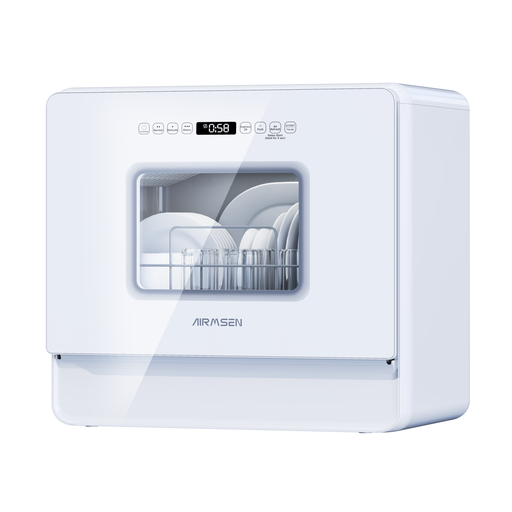
AIRMSEN A01 tabletop dishwasher with two-tier rack
A tabletop model for a compact setup; check that the rack and capacity suit your shared washing-up.
The product title lists a two-tier rack, a built-in 5 L water tank, 3 spray arms and a 12-hour delay start.
An adapter may be needed when connecting it to a tap.
Joybuy
 No image available
AIRMSEN portable tabletop dishwasher with built-in tank
A portable tabletop model to consider if you’re looking for a compact setup; think about where the waste water can drain.
The product title lists 5+1 wash cycles, a built-in 5 L water tank and a double-tempered glass door.
The drain hose needs to reach a sink or a container.
Joybuy
 No image available
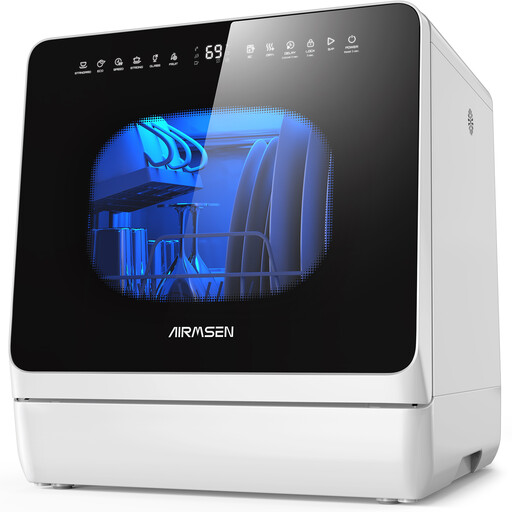
AIRMSEN tabletop dishwasher with 8 wash programmes
A tabletop model for a compact space; check the rack capacity against the washing-up you want to do together.
The product title lists 8 wash programmes, an integrated water softener, delay start and a child lock.
Joybuy
 No image available
Heinrich's HTG 8855 mini dishwasher
A mini dishwasher for smaller loads; check that the stated capacity suits the number of mugs and other items you need to wash.
The product title lists 3 place settings, 7 programmes, a digital display, a 24-hour delay start, 56.3dB and energy class C.
The product title says it can be used with a water tank or connected directly to a tap.
Joybuy
 No image available
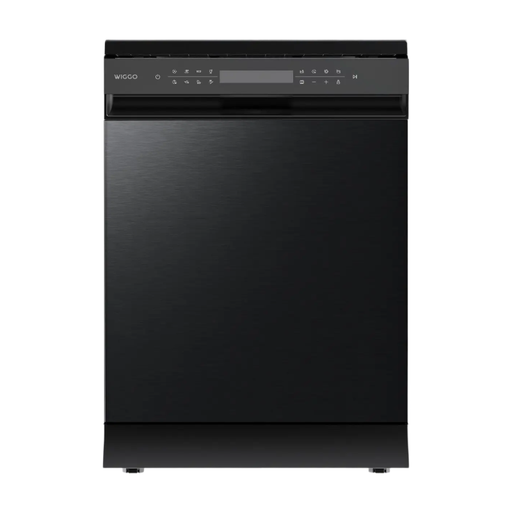
Wiggo WD-F6148B freestanding dishwasher, 60 cm, Dark Inox
A freestanding model for a kitchen with space for a 60 cm-wide appliance; measure the space and check the connections.
The product title lists a width of 60 cm, a Dark Inox finish and energy class B.
This freestanding model needs water and waste connections.
Joybuy
Frequently asked questions
How should you load mugs into a dishwasher?
Place mugs upside down and make sure they stand securely without touching one another. If necessary, angle items with rims so water does not collect in them; for unusual materials, check the dishwasher-safe symbol on the mug too. This follows the usage advice from the Consumentenbond and Voedingscentrum.
Which connections should you check before buying?
Check the entire installation space, water supply, waste outlet and electrical connection against the manual for the model you have chosen. The manual for the Inventum VVW5520 says the electrical connection must match the rating plate and advises against using an extension lead or multi-socket adaptor with this model.
How do you compare dishwasher consumption?
Compare models that fit your space using the same eco-label criteria. The European Commission lists, among other things, energy use per 100 eco cycles, water use per eco cycle and programme duration on the EU energy label; Milieu Centraal recommends running a full dishwasher on eco whenever practical.
Who should you contact in the Netherlands if a fault develops after purchase?
For a consumer purchase, contact the seller for a solution if the product is not as it should be. The Dutch government explains that statutory guarantees apply alongside any extra guarantee; an extra guarantee does not replace your statutory rights.
Do you have to hand in your old dishwasher when replacing it?
When you buy a similar new appliance, the seller must take back an old appliance from a private household free of charge under the Dutch take-back scheme. The Dutch government states that this scheme does not apply to business equipment.


