
Lunch host with lots of washing up
You want to wash mugs along with plates and cutlery after lunch, and you can usually fill the machine properly.


Choose your dishwasher size based on the full lunch load and the space available. Milieu Centraal recommends filling a standard-sized dishwasher properly. If you only have a few mugs, washing them in a washing-up bowl may be more suitable than buying a new machine. Compare programmes separately: according to the Consumentenbond, the eco programme takes longer than the automatic programme, and the European Commission bases the relevant energy-label information on the eco programme.
You want to wash mugs along with plates and cutlery after lunch, and you can usually fill the machine properly.
You’re looking for a dishwasher that fits the space available without sacrificing more capacity than necessary.
You want to know whether a programme will finish before you need the mugs again, so you compare programme duration with energy and water use.
Start by considering the total amount of washing up and the space available in your kitchen. Then look at the rack layout and the programme you actually plan to use. If you only have a few mugs to wash, a washing-up bowl may be all you need.
| What to consider | What to look for | Who this matters to |
|---|---|---|
| Loading mugs | Check the rack with your tallest and widest mugs; Bosch recommends leaving enough space between items for even drying. | If my mugs have wide handles or are tall, I want to know that they’ll fit securely without being crammed together. Around 33% of consumers prioritise being able to load mugs properly. |
| Size and capacity | Measure the space available and compare it with the room needed for a full load. Milieu Centraal recommends filling a standard-sized dishwasher properly; according to the Consumentenbond, a slimline dishwasher is about 45 cm wide. | If I want to wash plates, cutlery and serving dishes after lunch too, I first consider how much washing up I usually have and which size will fit. Around 27% of consumers put size and capacity at the top of their list. |
| Programme duration | Compare how long the programme you plan to use takes; the Consumentenbond says the eco programme takes longer than the automatic programme. | If I need the mugs again quickly, I want to weigh up how long the chosen cycle takes against its energy and water use. Around 20% of consumers prioritise having their mugs available again in good time. |
| Energy and water use | Compare kWh per 100 eco cycles, water per eco cycle and capacity on the same basis. The European Commission describes this energy-label information for the eco programme. | If I plan to use the machine regularly, I want to weigh up its energy and water use against the amount of washing up I actually load. Around 20% of consumers prioritise energy and water use based on how often they expect to use the machine. |
The number of place settings doesn’t tell you exactly how much space your mugs, plates and serving dishes will take up together. The shape of your mugs and their handles can limit the usable rack space.
Check the rack layout and, if necessary, measure your tallest and widest mug before choosing a size.
A smaller machine has less capacity and won’t necessarily use less energy or water. Milieu Centraal points out that mini dishwashers can use relatively large amounts and often achieve only moderate test results.
Compare its capacity and eco data with those of a slimline model, or wash a small number of mugs in a washing-up bowl.
Siemens describes the SN55ES12CE as integrated, while Joybuy categorises it as fully integrated. This difference can matter when it comes to the kitchen door panel and installation.
Before buying, check the full model code, the manufacturer’s information and the required door panel and door system.
According to Beko, the freestanding slimline BDFS26046XQ holds 10 place settings and may be a good option if a standard-width model won’t fit.
Bosch offers slimline and standard-width freestanding models, including the SPS4EMI17E and SMS4EMI06E.
The SN55ES12CE is a 60 cm-wide, semi-integrated built-in dishwasher with flexComfort racks.
Miele offers freestanding and built-in models. According to Miele, the freestanding G 5633 SC Active E has a cutlery tray and QuickPowerWash.
The F94SV808P is a fully integrated XXL built-in model for anyone who wants to wash plenty of other lunch dishes too.
These Joybuy products include freestanding and built-in dishwashers, with both standard-width and slimline models for washing mugs alongside other lunch dishes.
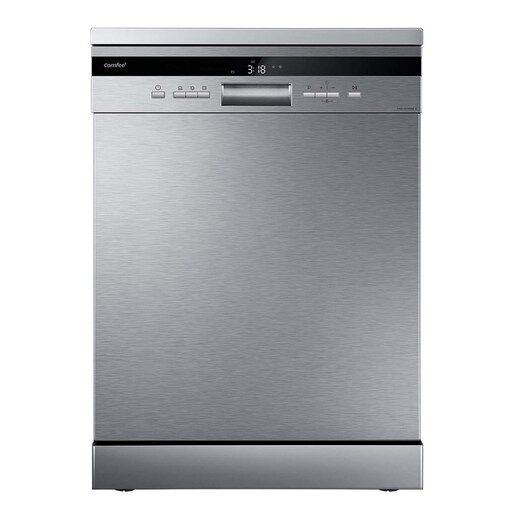 No image available
A freestanding model for anyone who wants to wash mugs along with other lunch dishes.
14 place settings; stated noise level 44 dB; energy class D.
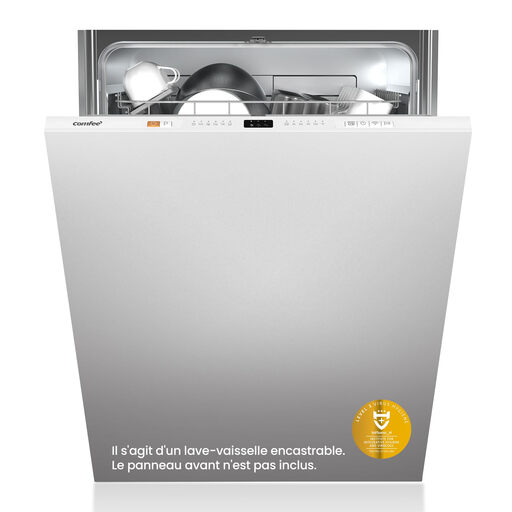 No image available
A built-in model for washing mugs with a smaller load of lunch dishes; check that a fully integrated design suits your kitchen.
12 place settings; 30-minute quick programme; half-load function. The front panel is not included.
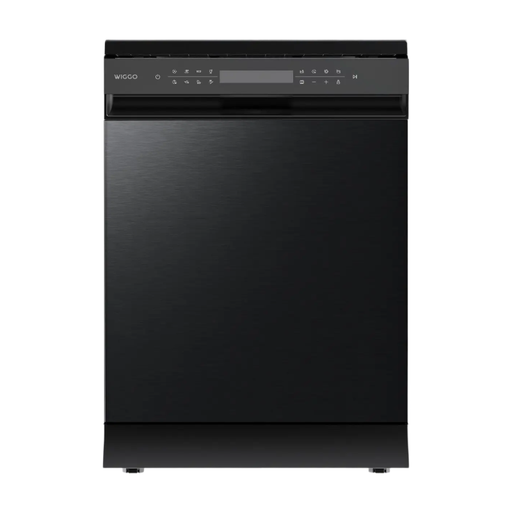 No image available
A standard-width freestanding model for anyone with space for a larger dishwasher.
Width 60 cm; energy class B.
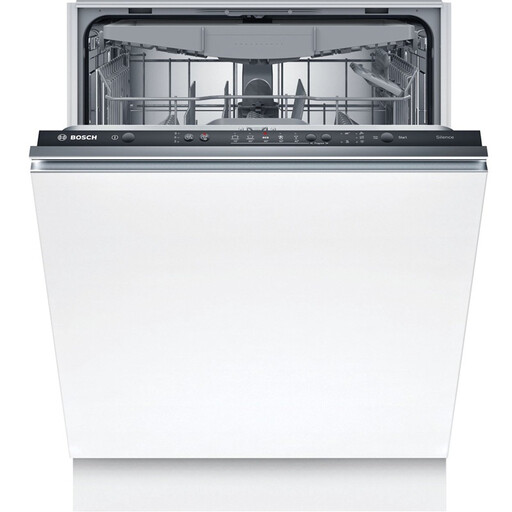 No image available
A built-in model for washing mugs alongside other lunch dishes; check that the space available and kitchen door panel suit this design.
13 place settings; 6 programmes; VarioSpeed and AquaStop. The stated niche width is 60 cm and the minimum niche height is 82 cm.
 No image available
A slimline freestanding model for kitchens with less width to spare.
Width 45 cm; 13 place settings; EcoSilence Drive and AquaStop.
No. The energy and water figures on the label are based on the eco programme. If the manufacturer provides details for another programme, compare them separately.
Check the space available, the type of kitchen door panel and the installation instructions for the exact model. An integrated dishwasher and a fully integrated dishwasher are different types of design.
First, check that there’s enough space between the items and that the filter is clean. Bosch lists a blocked filter as a possible cause of poor cleaning; follow your model’s manual for maintenance.
Yes. According to the Rijksoverheid, dishwashers must have an energy label. Since 1 March 2021, the EU energy label for household dishwashers has used a scale from A to G and includes information such as energy and water use, capacity and noise.