
Anyone with lots of mugs to wash
After a neighbourhood meal, you want to fit mugs and other dishes in together, so you’re looking at usable rack space rather than just the number of place settings.


First, choose a dishwasher whose type and dimensions suit your kitchen. A standard model could be an option for lots of mugs and other dishes, but place settings refer to sets of dishes, not the number of mugs that will fit in your racks, according to the Dutch Consumers’ Association. A slimline model may be a good solution if space is limited, while a mini dishwasher handles fewer items at a time. If you want to reuse your mugs the same evening, compare the duration of your chosen programme separately from the eco figures on the energy label, which are based on the eco programme, according to the European Commission.
After a neighbourhood meal, you want to fit mugs and other dishes in together, so you’re looking at usable rack space rather than just the number of place settings.
You’re weighing up the space available against how much washing-up will fit in each load, and checking the dishwasher type and rack layout.
You’re comparing the duration of the programme you’ll actually use with the eco figures on the energy label.
Start with the space available and the type of dishwasher. Then check whether the racks can accommodate your mugs and compare programme times if you need them clean again quickly.
| What to consider | What should you check? | Who is this important for? |
|---|---|---|
| Usable rack space | Compare the rack layout, the height of the upper rack and the space taken up by mug handles. Also check that the spray arms can rotate freely. | If I want to wash lots of mugs and other dishes together after a meal, I focus on usable rack space. Around 36% of consumers give a large mixed load the highest priority. |
| Dishwasher type and kitchen space | Measure the available width and, for a built-in model, the cabinet niche. Check whether a freestanding or built-in dishwasher will suit your existing kitchen. | If space is limited, I want to know which model will actually fit before considering capacity. Around 29% of consumers prioritise limited kitchen space. |
| Programme duration | Check how long the programme you want to use takes; it may differ from the eco programme duration shown on the energy label. | If I need the mugs again later that evening, I check how long it will take for my chosen programme to finish. Around 21% of consumers give having items ready to reuse in time the highest priority. |
| Energy and water use, and noise | Compare figures on a like-for-like basis: the European Commission says the EU energy label includes energy use per 100 eco cycles, water use per eco cycle and noise levels. | If the dishwasher will also be used regularly day to day, I take energy and water use and noise into account. Around 14% of consumers prioritise these everyday running costs. |
A place setting is a set of different types of dishes. The shape and handles of your own mugs determine how many will fit securely in the rack.
Compare the rack layout and any height adjustments with your mugs. Before starting the dishwasher, check that the spray arms can rotate freely.
A mini dishwasher has less stated capacity than larger models. Milieu Centraal generally advises against compact mini dishwashers because of their relatively high energy use and often disappointing test results or ease of use.
First measure up to see whether a slimline model will fit, and think about how much washing-up you’ll want to do on ordinary days too.
The energy label figures are based on the eco programme. If you need your mugs again that evening, you may want to use a different programme.
Check the duration and conditions of the programme you want to use for the exact model, as well as its eco figures.
Offers freestanding mini, slimline and standard models. The different sizes can help you weigh up the space available against the rack capacity you need.
The BDFS26046XQ is a freestanding slimline option to compare if you have limited width available.
The VW540A is a built-in model for kitchens that can accommodate a 60 cm dishwasher.
The SN23EC03ME is a 60 cm freestanding model to compare if you’re also considering rack layout and controls.
Offers built-in, freestanding and compact dishwashers; the available type may be important for your existing kitchen.
These models include freestanding dishwashers and a slimline option, as well as a built-in model for a suitable kitchen.
 No image available
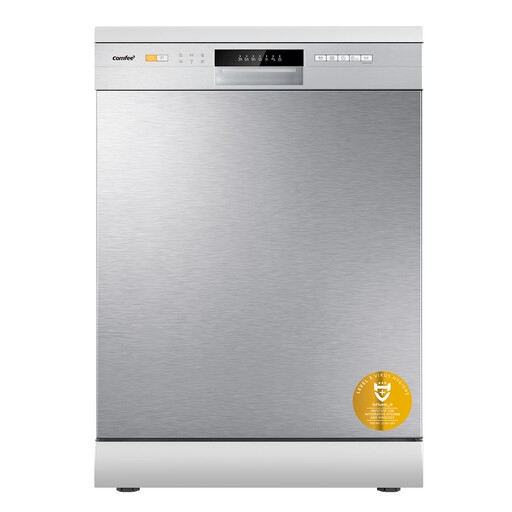
A freestanding option if you want to wash a mixed load; 12 place settings refers to sets of dishes, not a guaranteed number of mugs.
The product name lists a half-load function, a delay start, a stainless steel interior, 49 dB and energy class E.
 No image available
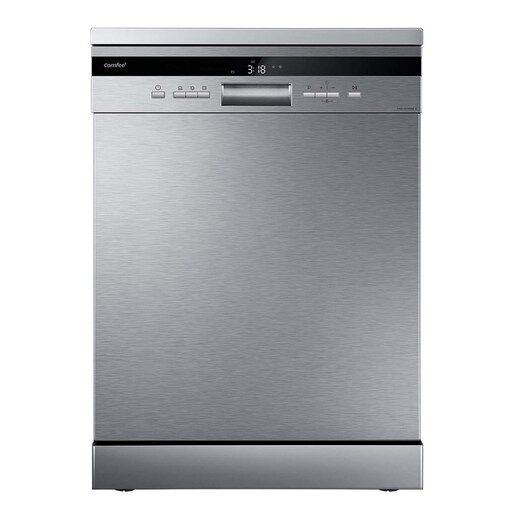
A freestanding model if you want to fit other dishes in with your mugs in a single load; the stated number of place settings doesn’t specify how many mugs it holds.
The product name lists 44 dB, a half-load function, flexible supports, a stainless steel interior and energy class D.
 No image available
A slimline freestanding model to consider if your kitchen is short on width. Check that the rack layout suits the height and handles of your mugs.
The product name lists 13 place settings.
 No image available
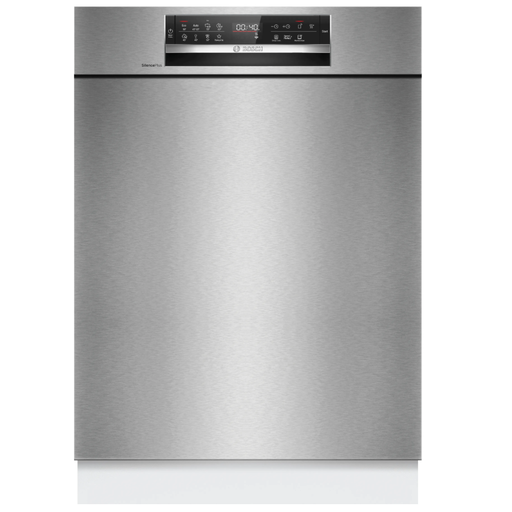
An undercounter option for a kitchen that can accommodate this installation type. Check the dimensions and connections before making your choice.
The product name lists a 60 cm model in brushed steel.
 No image available
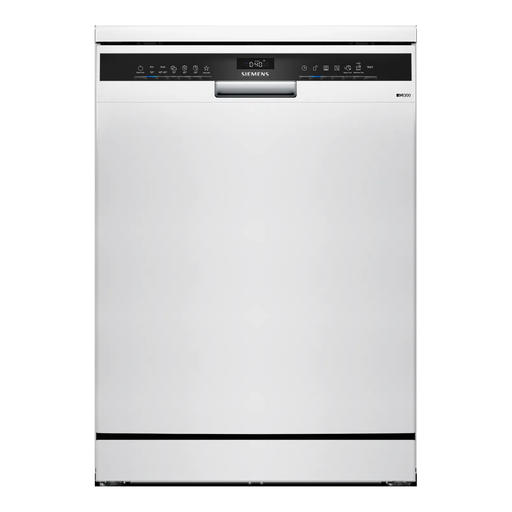
A freestanding option to compare if you’re looking for a larger dishwasher; check the rack layout for the mugs you want to wash.
The product name lists a 60 cm model in white.
Place cups and mugs upside down, and angle items with a rim so less water collects inside them. Before starting the dishwasher, check that the spray arms can rotate freely, and follow any instructions on the mug about using the upper rack or a low-temperature programme.
Scrape off any large food scraps; pre-rinsing is generally unnecessary. Clean the filter according to the manual. Grease can build up if you often use short or low-temperature programmes, so follow the appliance’s maintenance advice too.
The EU energy label includes energy use per 100 eco cycles, water use per eco cycle and the duration of the eco programme, among other details, according to the European Commission. Your actual costs also depend on how you use the dishwasher, the programme you choose, your tariffs and the detergent you use; don’t estimate the energy use of a quick programme from the eco label alone.
If you’ve used the product normally and it doesn’t do what you could reasonably expect, you can contact the seller about your statutory guarantee rights. ACM ConsuWijzer explains that the manufacturer’s guarantee period doesn’t automatically mark the end of those rights; the appropriate solution depends on the circumstances.
As a private customer, you can hand in your old appliance free of charge through the seller when buying a new, similar appliance, including when you buy online, according to the Dutch government. Disposal is separate from any paid dismantling or installation service.