Who should consider this?

Host with lots of washing-up

After a meal with family or friends, you’ll want to load mugs and other crockery with enough space between them. The Consumentenbond and Bosch Home Netherlands offer useful guidance on assessing size and the space between items.

Buyer with limited kitchen space

You’re looking for a machine that fits the space available and your kitchen layout, even if that means splitting the washing-up from a celebratory meal across more cycles. The Consumentenbond highlights size and positioning as factors to consider when choosing.

Host who needs to reuse mugs quickly

You want to know whether a wash programme and drying process fit the time you have before you need the mugs again. Milieu Centraal and manufacturers describe programme and drying features that you can compare for each model.

What should you look for when choosing?

Standard freestanding

A good fit for: a freestanding setup with suitable connections, if you want to load lots of meal dishes as well as mugs. The Inventum VVW6036AW is one example, with an adjustable upper basket.

Things to consider: it needs more installation space than a slimline model, and the stated place-setting capacity doesn’t guarantee your mugs will fit.

Standard built-in

A good fit for: a kitchen with a suitable recess and matching door panel. Measure the recess and check that your mugs fit the basket layout.

Things to consider: the dimensions, door design and installation all need to be right. An adjustable upper basket can create more space above, but reduce the space below.

Slimline or compact

A good fit for: a kitchen where the available width determines your choice. The Beko BDFS26046XQ is an example of a slimline freestanding model with a capacity of 10 place settings.

Things to consider: check that the usable basket space can take your full load. According to the Consumentenbond, a small dishwasher isn’t automatically energy-efficient.

Factor to consider What should you check? Who is this important for?
Usable basket space Measure your largest mug and check the height, space for the handles, cup racks and whether the spray arm can rotate freely. If I want to load wide mugs and other crockery after a meal, I’ll look at the space available in the basket. Around 33% of consumers make room for a mixed celebratory load their top priority.
Kitchen space and layout Measure the space or recess, door clearance and required connections. For a built-in model, also check the door panel and installation requirements. If my kitchen is short on space, the machine needs to fit the available space and layout before I consider capacity. Around 27% of consumers give suitable positioning top priority.
Time until you need the mugs again Compare the duration of the programme you plan to use and check whether you can load your mugs with enough space between them. If I need the mugs again during or soon after the meal, I want to know how much time washing and drying will take. Around 20% of consumers prioritise getting their mugs back into use quickly.
Energy and water use for everyday washing Compare kWh per 100 eco cycles and water per eco cycle on the EU energy label, as well as capacity and programme duration. If I use the machine regularly after the celebration, the energy and water used for those everyday cycles will influence my choice. Around 20% of consumers make everyday running costs their top priority.

Things to watch out for

  • Assuming the place-setting capacity tells you how many large mugs will fit

    A place setting refers to a standard set of tableware. The width of your mugs and the space needed around their handles also affect how you can load them.

    Measure your largest mug and check the basket layout, cup racks and clearance for the spray arm before relying on the stated capacity.

    The space taken up by mugs may mean you need to run an extra cycle after the meal.

  • Choosing a slimline machine without allowing for the celebratory load

    A slimmer or more compact model may suit your kitchen, but it may offer less usable space for a large mixed load. The Consumentenbond warns that a small dishwasher isn’t automatically energy-efficient.

    Balance the space available for installation against the amount of washing-up you want to do in one cycle.

    A larger load may need to be split across more cycles.

  • Assuming the eco label promises your mugs will be ready quickly

    The programme duration and energy-use figures on the EU energy label relate to the eco programme. They don’t tell you whether your mugs will be ready in time for the next round of drinks.

    Compare the duration of the programme you actually plan to use with the eco figures. Milieu Centraal recommends the eco programme for energy-efficient washing when you don’t need to reuse items quickly.

  • Treating built-in installation and removal as one service

    You’ll still need a suitable recess and installation. According to information from the Dutch government, free collection of a similar old appliance doesn’t include free disconnection and removal.

    Measure the recess and door panel, and ask in advance which installation and removal work is included with your purchase.

    Installation and removal may be charged as separate services.

Brands to consider

Inventum

The VVW6036AW is an example of a standard freestanding model for a kitchen without a suitable built-in recess.

  • Inventum says this model has a capacity of 14 place settings, an adjustable upper basket, an eco programme and automatic door opening.
  • The stated place-setting capacity doesn’t confirm how many celebratory mugs will fit. Check the basket space and drying results for your load.

ETNA

The VW540A is an example of a standard built-in model for a suitable kitchen layout.

  • ETNA lists a capacity of 14 place settings, an adjustable upper basket, energy class A and a noise level of 40 dB for this model.
  • These are the stated product specifications. Measure the recess and assess how much room your mugs take up, and how the noise level feels in your kitchen.

Beko

The freestanding BDFS26046XQ is a slimline option if the available width is a key constraint.

  • Beko lists a capacity of 10 place settings, an adjustable upper basket, energy class C and a noise level of 44 dBA for this model.
  • The manufacturer makes a cleaning claim for a specific intensive zone. This mainly relates to the lower basket and isn’t an independent test of how all mugs are cleaned.

Bosch

The SMV4EAX28E is a standard fully integrated model for a suitable recess and kitchen door panel.

  • Bosch lists a capacity of 13 place settings, energy class A and Flex baskets for this model.
  • Bosch gives the eco programme a duration of 4 hours and 30 minutes. Check other programmes separately if you want to reuse your mugs quickly.

Dishwashers at Joybuy

This Joybuy selection includes freestanding and built-in dishwashers for washing up after a meal with family or friends. Check that each model suits your kitchen layout and that its basket space works for your mugs.
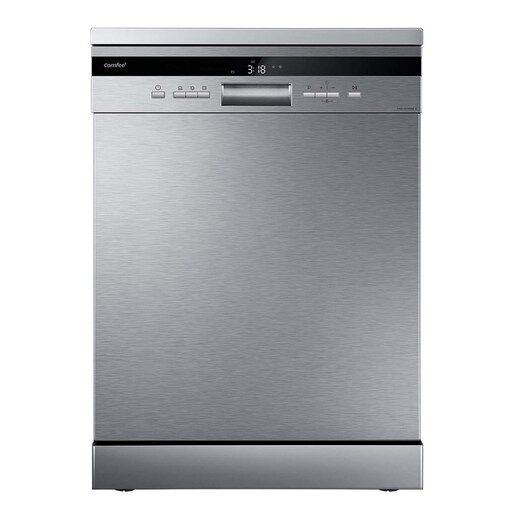
COMFEE' FD1435E-X freestanding dishwasher

COMFEE' FD1435E-X

A freestanding model to consider if you’re looking for a suitable setup and want to factor in your other washing-up too.

14 place settings; 44 dB; energy class D.

Joybuy
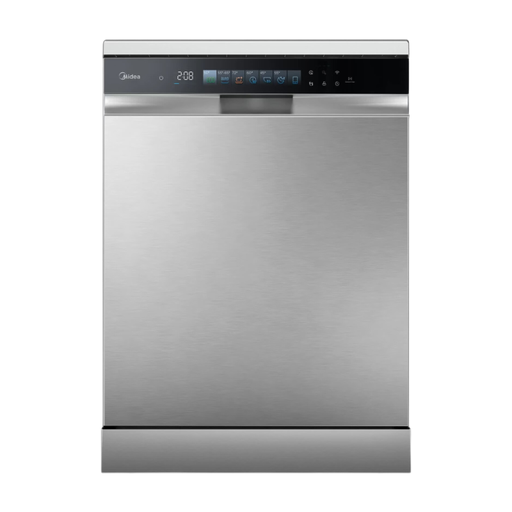
Midea MDWEF1433GSS-W freestanding dishwasher in stainless steel

Midea MDWEF1433GSS-W

A freestanding model for anyone who isn’t looking for a built-in setup. Check that the available space and basket layout suit your mugs.

Stainless steel finish.

Joybuy
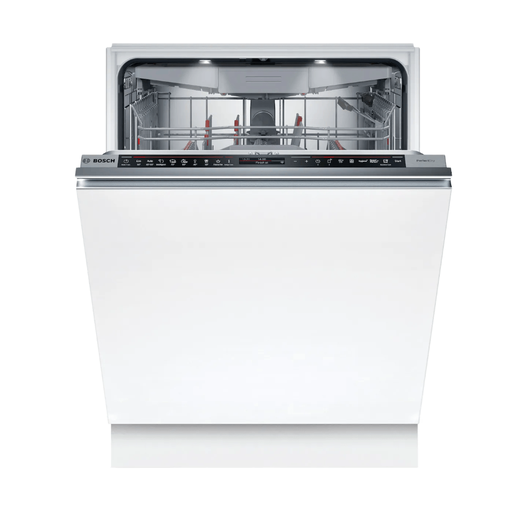
Bosch SMD8TCX04E integrated dishwasher

Bosch SMD8TCX04E

An integrated model for a suitable built-in setup. Check the recess, door panel and space needed for your mugs.

14 place settings; energy class A; 42 dB; 8 programmes.

Joybuy
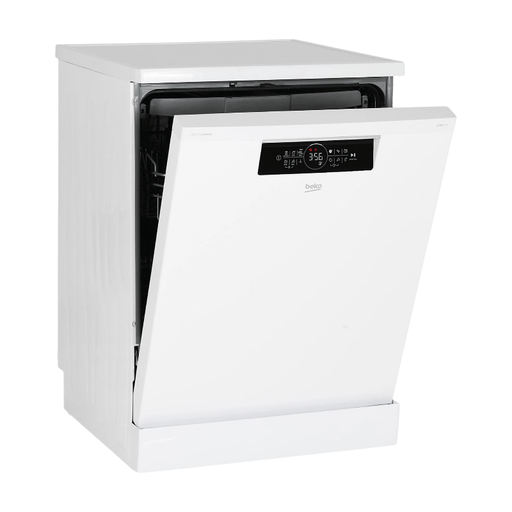
Beko BDFN36641WD freestanding dishwasher

Beko BDFN36641WD

A freestanding model to compare if this type of setup suits your kitchen. Check that the basket has enough room for your load.

Joybuy
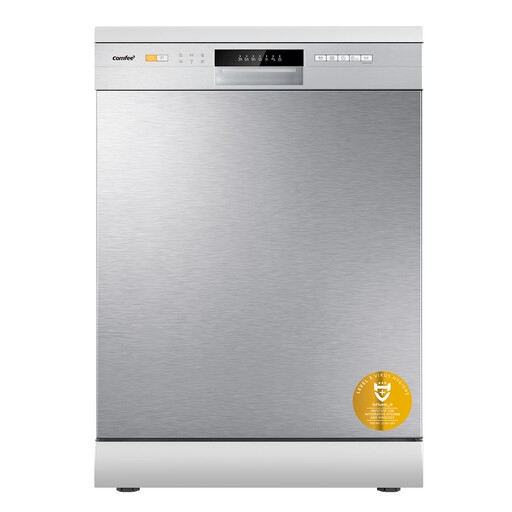
COMFEE' CDWPF1201PS freestanding dishwasher

COMFEE' CDWPF1201PS

A freestanding model to include in your comparison of installation, basket space and the programmes you plan to use for mugs.

12 place settings; 49 dB; energy class E. According to the product information, intensive drying isn’t available on the Quick programme.

Joybuy

Frequently asked questions

How should you load mugs in the dishwasher?

Only use mugs that the product information says are dishwasher-safe. Bosch recommends placing cups in the upper basket with space between them. Also check that the handles are clear and the spray arm can rotate.

Is the eco programme suitable if guests need clean mugs again the same day?

Not necessarily. The eco programme is designed for energy-efficient washing, but it may take longer than your schedule allows. Milieu Centraal recommends the eco programme for efficient washing. If you need to reuse mugs quickly, compare the duration of the other programmes on the specific model and allow time for drying.

Which information on the energy label is relevant?

Since 1 March 2021, the EU energy label for household dishwashers has used a scale from A to G. It also shows details including kWh per 100 eco cycles, water per eco cycle, capacity, programme duration and noise level. The European Commission explains this label information; compare models using the same label criteria.

Does a two-year manufacturer’s guarantee cover the full statutory guarantee?

No. According to the Dutch government, the Netherlands has no fixed statutory guarantee period. You’re entitled to a product that works as it should, depending on what you can reasonably expect. If there’s a fault, contact the retailer; the manufacturer’s guarantee is in addition to this.

Does the retailer have to take away my old dishwasher when I buy a similar new one?

For a private purchase, the retailer must take back a similar old appliance free of charge, according to the Dutch government. This also applies to online purchases. Ask in advance how collection is arranged if you also need disconnection or installation, as these are separate services.
