What should you look for?
First, work out what size will fit in your kitchen and whether you can usually load the machine efficiently. Then compare the short programme with eco in terms of time, drying phase and consumption.
| Factor to consider |
What to look for |
Who is it most relevant to? |
| Ready to use again in time |
Compare the short programme’s length and drying phase with eco; also check the level of soiling the short programme is designed for. |
If I need the lunchboxes again straight after class, the main thing is whether they’ll be clean and dry in time. For around 33% of consumers, having them ready the same evening is the main consideration. |
| Cleaning and drying plastic |
Check the instructions for each container, lid and detachable part; also look at the rack layout and drying method. |
If you use plastic containers, you’ll want to position each item according to its instructions and know whether it may need extra drying. For around 25% of consumers, plastic suitability and drying are top priorities. |
| Suitable size and capacity |
Measure the available space and decide whether you need a freestanding model or a suitable built-in recess; check whether your usual dishes will fit in the racks. |
If space is limited in my kitchen or I want to wash lunchboxes with the rest of the dishes, the appliance needs to fit and be practical to load. For around 25% of consumers, installation and capacity are the main considerations. |
| Consumption for your own needs |
Check the energy label for consumption per 100 eco cycles and water use per eco cycle; also consider how often you expect to use the short programme. |
If you want to know how much the machine uses for your usual load, compare its labelled eco programme with your own routine. Around 17% of consumers focus mainly on consumption for their usual load. |
Dishwashers at Joybuy
This selection includes freestanding and fully integrated dishwashers in a range of sizes, including models with a short programme or a function for smaller loads. Compare programme length and drying options with your routine, and check that the installation type suits your kitchen.
 No image available
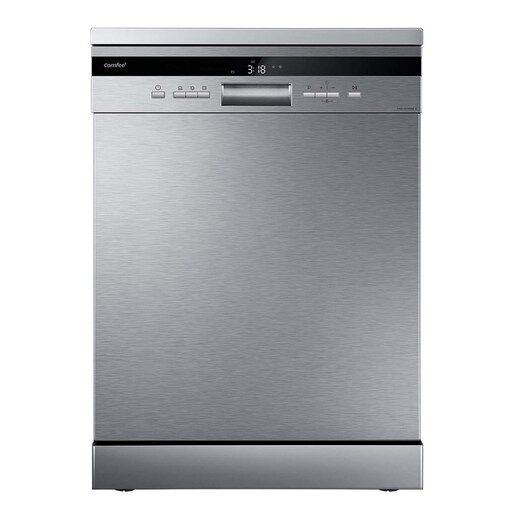
Comfee' FD1435E-X freestanding dishwasher
The product information on Joybuy lists a half-load function for smaller loads and automatic door opening to help dry plastic dishes.
The stated capacity is 14 place settings; its energy rating is D and the stated noise level is 44 dB.
View at Joybuy
 No image available
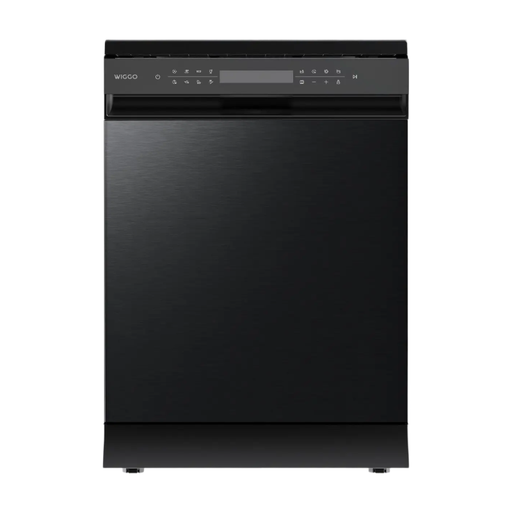
Wiggo WD-F6148B freestanding dishwasher
This 60 cm model is an option for washing lunchboxes with your other everyday dishes; the product information on Joybuy lists 14 place settings.
Joybuy lists 8 programmes, including a short programme, automatic door opening at the end of the cycle and water consumption of 9.8 litres per cycle.
View at Joybuy
 No image available
Bosch SPS4EMI17E freestanding dishwasher
The product title on Joybuy states a width of 45 cm, which may be useful if kitchen space is limited. The stated capacity differs between this listing and Bosch Netherlands.
Joybuy lists six programmes, including Short 60°C, automatic door opening, an adjustable top rack and a VarioDrawer. Check the specifications for the exact version before buying.
View at Joybuy
 No image available
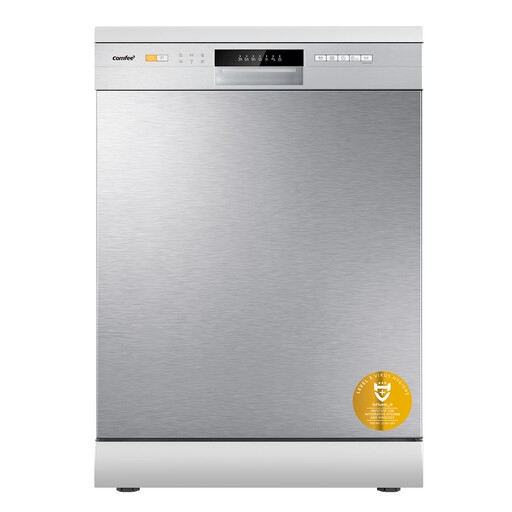
Comfee' CDWPF1201PS freestanding dishwasher
Joybuy lists a 30-minute Quick programme and a half-load function for smaller loads.
Intensive drying isn’t available with the Quick programme. The stated capacity is 12 place settings; its energy rating is E and the stated noise level is 49 dB.
View at Joybuy
 No image available
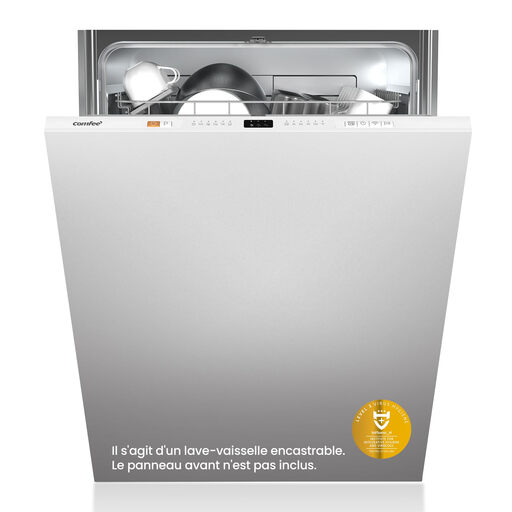
Comfee' CDWPB1215PB-EU fully integrated dishwasher
According to Joybuy, this fully integrated model has a 30-minute Rapid programme and a half-load function for either the upper or lower basket.
Extra Dry isn’t available with the Rapid programme. Joybuy lists dimensions of 815 × 598 × 550 mm; the kitchen door panel is not included.
View at Joybuy
Frequently asked questions
Can every part of a dishwasher-safe lunchbox go in any programme?
Not necessarily. Check the instructions for the container, lid and any detachable parts separately. The Netherlands Nutrition Centre says use may sometimes be limited to the top rack or a low temperature; the Consumers’ Association advises placing delicate plastic items on the top rack.
Is the short programme suitable if I need the containers again quickly?
It can be, if the dishes aren’t very dirty and the programme length and drying phase fit your plans. The Consumers’ Association points out that short programmes often shorten or skip the drying phase, so compare them with eco too if you need to put the containers away dry.
How can I stop water collecting in the containers?
Position the containers so water can drain away, and check that the rack keeps them stable. The Consumers’ Association advises wiping away food residue and cleaning the filter regularly; pre-rinsing under a running tap is generally unnecessary.
Which energy label should I compare when choosing a dishwasher?
Compare the current EU energy label, whose scale for dishwashers has run from A to G since 1 March 2021. The European Commission lists details including energy use per 100 eco cycles, water use per eco cycle, programme length, capacity and noise level. These label figures describe the eco programme, not necessarily a short programme.


