
Lunch box user with limited worktop space
You want to wash containers and lids regularly, but can barely spare any permanent worktop space. The available space and the rack layout together determine which type will work for you.


Start by choosing a location and checking the connection requirements. Then make sure your lunch boxes and separate lids fit in the rack: the place-setting capacity alone won’t tell you that. A mini dishwasher with a water tank may suit you if there’s no fixed water supply, while a countertop model with a fixed connection or a slimline freestanding machine will need a different set-up. Also compare consumption for a load you can realistically fill; a smaller appliance isn’t automatically more energy-efficient.
You want to wash containers and lids regularly, but can barely spare any permanent worktop space. The available space and the rack layout together determine which type will work for you.
You have room for a small machine, but no suitable fixed water supply where you want to put it. Compare models with a water tank, and check separately how the wastewater is drained.
You want to fit plates, glasses and cutlery in alongside your lunch boxes. Compare a countertop model with a slimline freestanding machine in terms of usable space and the load you usually want to wash.
Start with the available space and connections, then check whether your usual combination of lunch boxes and dishes will fit in the rack. The percentages show how consumers might divide their main buying priorities when making this choice.
| What to consider | What should you check? | Who is this most important to? |
|---|---|---|
| Whether lunch boxes fit | Measure your largest container and lid, check the rack layout and follow the washing instructions for each item. | If I want to be sure my containers and separate parts will fit in the rack, I’ll put fit first; around 26% of consumers make suitable cleaning for lunch boxes their main priority. |
| Kitchen space | Measure the width, height and depth of the space, and check that the door can open fully there. | I want to leave enough room to work and move around, so I’ll measure the intended space carefully; around 26% of consumers prioritise keeping their kitchen space free. |
| Connection requirements | Compare the manual for the exact model with the available water supply, drainage and electrical connection. | If there’s no fixed water supply, I want to know in advance what set-up and drainage will be needed; around 21% of consumers make connection requirements their first consideration. |
| Space for other dishes | Compare the dishes and lunch box parts from a typical meal with the rack, rather than relying on the place-setting capacity alone. | I want to wash lunch boxes alongside plates and cutlery; around 16% of consumers prioritise usable space for their everyday dishes. |
| Consumption per usable load | Compare kWh per 100 eco cycles and litres per eco cycle, and consider how often you’ll need to wash your own loads. | If I mainly want to factor in the electricity and water used for my usual load, I’ll look beyond the size; around 11% of consumers prioritise consumption per usable load. |
Washing instructions can vary between containers and parts. For products marked with the dishwasher symbol, Sistema recommends washing them in the top rack.
Check the symbols and follow the instructions for the exact container, lid and any inserts.
A place setting means standard cutlery and crockery for one person at one meal. Lunch boxes come in different shapes and may take up more rack space.
Compare your largest container and separate parts with the actual rack before choosing a model.
Milieu Centraal takes a cautious view of compact mini dishwashers because of their consumption and practicality. For the same amount of washing-up, a small rack may mean you have to run the machine more often.
Compare the eco figures and work out how many usable loads you’ll need for your usual dishes.
The water supply, drainage and electrical connection are separate parts of the installation. A water tank doesn’t automatically remove the need to arrange drainage.
Before buying, check the manual and the connection points at the intended location.
The Bob range is a mini dishwasher for anyone short on width who is looking for a model with a water tank.
The TDW5501B is a countertop model for a space with a fixed water supply and drainage.
The VVW5520 is a countertop model worth comparing if you’re considering programmes and drying as well as rack space.
The VWV147SWIT is a slimline freestanding option for anyone who wants to keep the worktop clear and has floor space available.
The Aquatica is a small countertop model with a tap connection, worth comparing if that connection suits your kitchen.
These Joybuy products are compact dishwashers for use on or beside the worktop. Check the connection requirements and stated capacity for each model, and make sure your lunch boxes will fit in the rack.
 No image available
A compact option to consider if there’s no fixed water supply.
The product information lists a built-in 5-litre water tank, space for 4 place settings, a width of 42,8 cm and 5+1 wash cycles.
Without a fixed water supply, the product information says wastewater drains through a hose into a collection container.
 No image available
A countertop model to compare if you’re looking for a compact version with a manually filled water tank.
The product information lists a 5-litre tank, space for 4 place settings, a width of 37 cm and 9 wash programmes.
 No image available
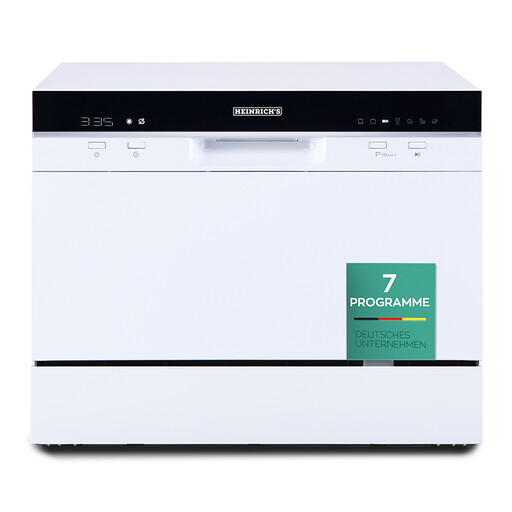
A countertop model to include in your comparison if its stated capacity suits your everyday washing-up.
The product name lists 6 place settings, 7 programmes and energy class D. The product information mentions a water connection and drain hose.
 No image available
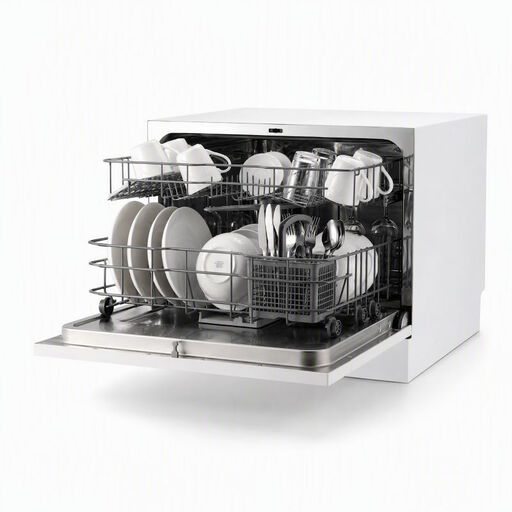
A countertop model to compare if you also want to wash other dishes alongside your lunch boxes.
The product name lists 6 standard place settings. The product information mentions a 30-minute quick wash programme and 8 functions.
 No image available
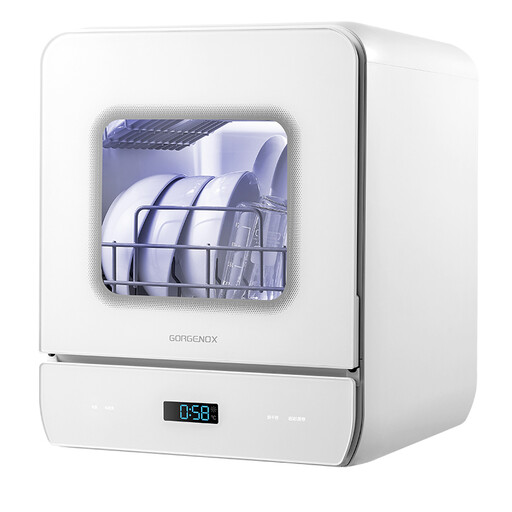
A compact countertop model to compare if a stated capacity of 3 sets suits your needs.
The product name lists a dishwasher function and space for 3 sets.
No, follow the instructions for the exact container, lid and any inserts. For products marked with the dishwasher symbol, Sistema recommends using the top rack; Mepal advises keeping the lid and pot of its on-the-go products separate so they can dry properly.
A water tank supplies the water, but it doesn’t automatically tell you how the wastewater is drained. Before deciding where to put the machine, check the drainage method and installation manual for the model you’ve chosen.
Compare the information on the EU energy label, including kWh per 100 eco cycles, water per eco cycle and capacity. The European Commission explains that the dishwasher label is based on the eco programme; also consider how many cycles your own washing-up will need.
According to ACM ConsuWijzer, the seller is responsible for providing a suitable, free solution if a product breaks down under normal use sooner than you could reasonably expect. There isn’t simply one fixed statutory warranty period that applies to every purchase.
Yes. The Dutch government lists dishwashers among the appliances that must have an energy label. The European Commission describes the current dishwasher label as using a scale from A to G; the label doesn’t tell you whether a particular model is suitable for your lunch boxes.