First, choose a dishwasher size that suits your kitchen and the amount of washing-up you usually do at once. A mini or slimline model takes up less space but offers less room inside; a standard model can handle more items in one load, while an integrated model needs a suitable housing unit and connection. Compare energy use on the same eco-programme basis, and check the drying instructions for your lunch boxes and lids.
Who is this advice for?
Users of plastic lunch boxes
You want to be able to put containers and lids away clean and dry after use. Mepal recommends leaving the container and lid of its own on-the-go products to dry separately; check the instructions for your specific lunch box.
Buyers with a small kitchen
The space you have available may limit your options. The Consumers’ Association discusses compact dishwashers for smaller kitchens and households with less washing-up; remember to measure the space where you plan to put the appliance, too.
Buyers who want to wash lunch boxes with the family’s dishes
You want to fit containers in with plates and cookware in a single load. The Consumers’ Association describes standard dishwashers with room for 12 to 16 place settings, but that figure doesn’t tell you whether a particular lunch box will fit in the rack.
What should you look for when choosing?
| What to consider |
What to look for |
Who should pay particular attention? |
| Cleaning and drying |
Check the instructions for the container, lid and seal. Also see whether the racks have room to place the parts separately. |
I want to be able to put the container and lid away dry after washing; around 33% of consumers put cleaning and drying first. |
| Size and installation |
Measure the available space or housing unit and check the connections required. Then choose between a freestanding and an integrated model. |
If my kitchen has limited space, I want to know which size will fit first; around 27% of consumers say size and installation are their main concern. |
| Room for all your dishes |
Measure your largest container and check the rack layout. Also work out how many lunch boxes and other items you want to wash at once. |
I want to wash lunch boxes together with plates and cookware; around 20% of consumers put capacity for a combined load at the top of their list. |
| Energy use and running costs |
Compare energy and water use on the same label basis, and consider which programmes you expect to use. Remember to factor in dishwasher detergent and filter maintenance, too. |
If I’m keeping an eye on energy use, I want to know what the eco programme figure means and which other programmes I use; around 20% of consumers prioritise energy use and running costs. |
Common buying mistakes
-
Assuming the number of place settings tells you whether lunch boxes will fit
A place setting is a standard set of tableware. Containers and lids come in different shapes and sizes, so the number of place settings doesn’t guarantee that your items will fit.
Measure the largest items and check the rack height, layout and adjustability of the exact model.
-
Taking a drying claim as a guarantee for every plastic lid
Bosch’s drying claim is based on standard plastic tableware, a comparison with another Bosch model and specified programme conditions. It doesn’t prove that every lunch box lid will come out dry.
Check the drying function of the model you’re considering, and follow the lunch box manufacturer’s instructions as well.
-
Assuming eco-label energy use applies to every programme
Label figures are based on the eco programme. The European Commission explains that the EU energy label for dishwashers shows energy use on this comparable basis.
Compare labels on the same basis and consult the model manual for information about other programmes.
-
Comparing appliances without considering installation and maintenance
You’ll need a suitable space and the right connections to use your dishwasher. Food residue and a dirty filter can also affect how it works.
Check the connection points and installation requirements before buying. The Consumers’ Association recommends checking the filter regularly and cleaning it when necessary.
Brands to consider
Inventum
The VVW5520 is a compact, freestanding option if you’re looking for a smaller load capacity.
- Inventum lists 6 place settings, a hygiene programme and an adjustable automatic door opening for the VVW5520.
- This model doesn’t have a half-load option. The number of place settings doesn’t tell you whether your lunch box will fit.
Beko
The Dutch models mentioned include a slimline freestanding dishwasher and a standard-width freestanding model.
- Beko lists 10 place settings and an adjustable upper rack for the BDFS26046XQ; for the BDFN26442XC, the brand lists 14 place settings and SelfDry.
- Beko’s claims about drying or cleaning results are manufacturer claims and don’t show how every lunch box lid will dry.
ETNA
The freestanding VWV142ZWA is an option if you’re looking for standard capacity and an adjustable upper rack.
- ETNA lists 14 place settings, an adjustable automatic door opening and an extra-dry function for this model.
- The specifications don’t prove that plastic containers and lids will come out of the machine dry.
Bosch
The SMV6YC802E is a fully integrated option for a suitable housing unit, with a focus on drying plastic tableware.
- Bosch lists PerfectDry for the SMV6YC802E. The claim of improved drying comes from the brand’s own research, which compares Bosch machines with standard plastic tableware under specified conditions.
- That comparison isn’t proof for every lunch box, programme or model in the Bosch range. Check the housing unit dimensions and installation requirements, too.
Siemens
The Dutch product range includes different sizes and types; the SN65ZX49CE is a fully integrated model.
- Siemens lists zeolite drying for the SN65ZX49CE and specifies the programmes and conditions for its hygiene performance.
- The drying claim applies to this brand and model; it doesn’t show that every Siemens dishwasher treats every lunch box in the same way.
Dishwashers at Joybuy
This selection includes worktop models, a standard-width freestanding dishwasher and fully integrated models. For each appliance, check the available space, the connection and whether there’s room for your lunch boxes.
 No image available
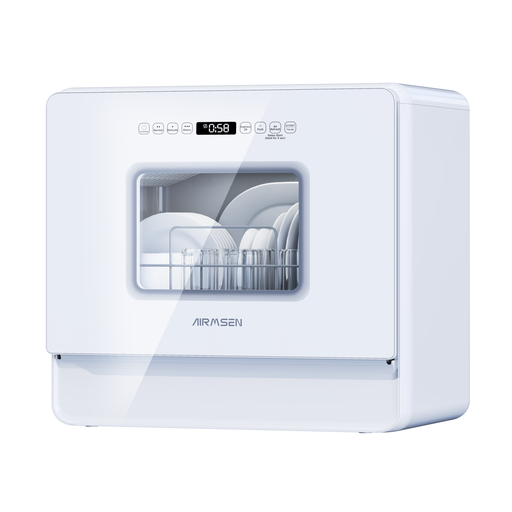
AIRMSEN A01 Large Slim Countertop Dishwasher
A worktop model to consider if you don’t want to install a standard dishwasher; measure the appliance and make sure there’s room for your containers and lids.
The product name specifies a built-in 5 L water tank, a two-level rack, five layouts and three spray arms. The product information says it can be supplied with water from the tank or a tap; check which connection is practical in your kitchen.
View at Joybuy
 No image available
AIRMSEN Tabletop Dishwasher, 37 × 50 cm, Energy Class D
This worktop model may suit you if you’re looking for a compact set-up; check the stated dimensions and whether your containers and lids will fit in the rack.
The product name specifies a 5 L water tank, 9 wash programmes and energy label class D. The product information also mentions a tap hose; check whether you’ll need an adaptor for this connection before buying.
View at Joybuy
 No image available
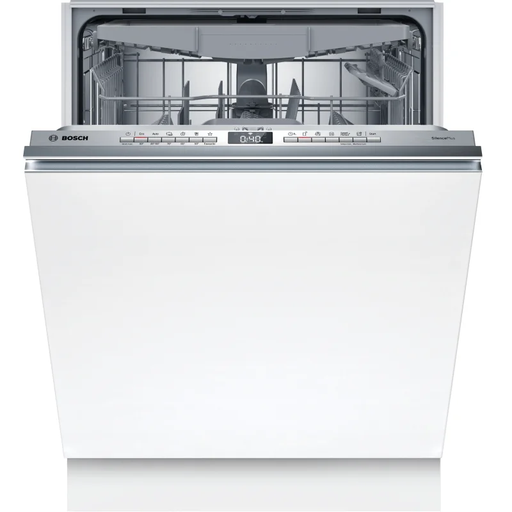
Bosch SMV4EVX08E Series 4, Fully Integrated Dishwasher, 60 cm
A fully integrated model to consider if your kitchen has a suitable housing unit; measure the space and check the installation requirements before choosing.
The product name specifies a width of 60 cm. According to the product information, EfficientDry opens the door when the cycle ends; check whether this feature suits your needs and the drying instructions for your lunch boxes.
View at Joybuy
 No image available
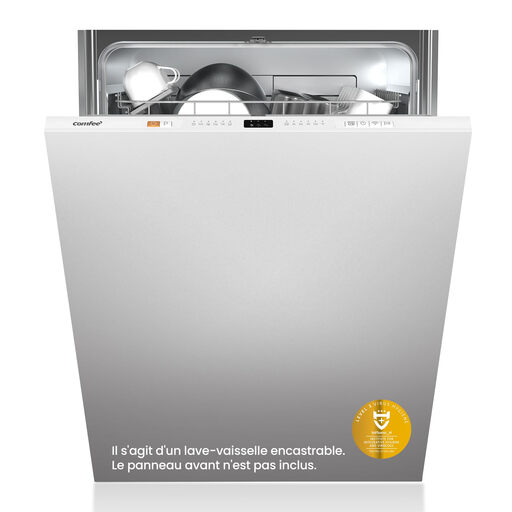
Comfee CDWPB1215PB-EU Fully Integrated Dishwasher, 12 Place Settings
This fully integrated model may suit you if you want to wash smaller loads; check the housing unit and the layout you need for lunch boxes and other dishes.
The product name specifies 12 place settings, 8 programmes, a half-load function and energy label class E. According to the product information, extra drying isn’t available with Rapid and Self-Cleaning; the furniture door panel isn’t included.
View at Joybuy
 No image available
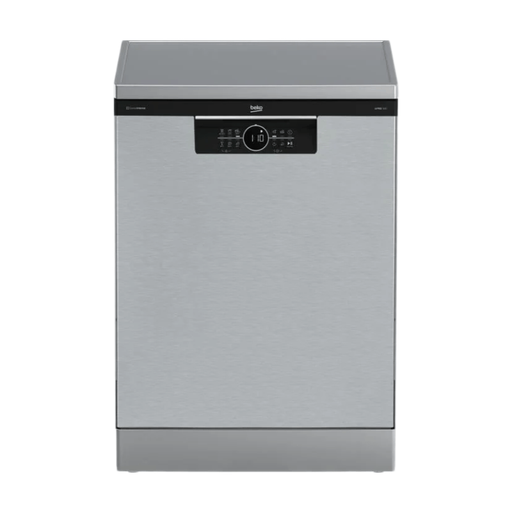
Beko BDFN26442XC CornerIntense dishwasher
A freestanding model to consider if you want to wash lunch boxes with a larger load of everyday dishes; check that you have enough space and the right connections.
Beko lists 14 place settings and SelfDry for the BDFN26442XC. The door opens automatically when the cycle ends. The place-setting figure doesn’t guarantee that lunch boxes will fit, and the feature doesn’t guarantee that every plastic lid will come out dry.
View at Joybuy
Frequently asked questions
Can every dishwasher-safe lunch box go on any programme?
Not necessarily: check the instructions for the specific container, lid and any seal before choosing a programme. Mepal says its own on-the-go products are dishwasher-safe and recommends storing the container and lid separately so they can dry properly; this advice won’t necessarily apply to other brands.
How do I keep my dishwasher clean when I regularly wash lunch boxes?
Remove large food scraps and check the filter regularly, cleaning it when needed. The Consumers’ Association also recommends keeping the spray arms clear and running a high-temperature programme regularly to prevent grease build-up, especially if you often use short or low-temperature programmes.
What should I check before installing a dishwasher?
Check the dimensions and type of the model you’ve chosen, and make sure you have a water tap, a drain and a suitable earthed electrical socket. For an integrated model, the housing unit and installation must also be suitable; follow the appliance manual for the connections.
What do the energy label and programme duration tell me about energy use?
The EU energy label shows, among other things, energy use per 100 eco cycles, water use per eco cycle and the duration of the eco programme. The European Commission explains this labelling basis for household dishwashers; you’ll need additional model information to find out how much other programmes use.
Do household dishwashers in the Netherlands need an energy label?
Yes. The Dutch government says energy labels are compulsory for household appliances. Dishwashers use the EU label scale from A to G, as explained by the European Commission.


