
Living alone and have little washing-up
You mainly want to clean a few mugs and are wondering whether an appliance is worth the space and cost. Milieu Centraal advises using little hot water when washing up by hand.


If you usually only have a few dishwasher-safe mugs and little other tableware, a dishwasher may not be the most economical choice: Milieu Centraal advises using little hot water when washing up by hand, and compares this with a machine running a well-loaded eco cycle. If you’d still prefer to wash up by machine, choose based on how much washing-up you can collect, whether your mugs will fit and the connections in your kitchen. The Daan Tech Bob’s tank replaces a fixed water supply, but wastewater still drains through a hose.
You mainly want to clean a few mugs and are wondering whether an appliance is worth the space and cost. Milieu Centraal advises using little hot water when washing up by hand.
You want to wash mugs in a machine, but the available space and your water supply and drainage options will determine which type suits your kitchen.
You collect mugs and other dishes for a larger load. Basket layout and the ability to run a properly full cycle are important; the Consumers’ Association also advises against stacking dishes and recommends leaving the spray arms free to rotate.
Best if: you usually only have one or a few mugs and use little hot water. Wash up in a washing-up bowl and turn off the hot tap, as Milieu Centraal advises.
The trade-off: you save the cost and space an appliance would take up, but you’ll have to do the washing-up yourself.
Best if: you regularly want to wash mugs along with other tableware, and have space on your worktop with a water supply and drain nearby.
The trade-off: the Inventum VVW5520 and Tomado TDW5501W models reviewed do not have a half-load option.
Best if: you don’t have a fixed water supply, but do have somewhere to drain the wastewater. Daan Tech specifies a 3,9-litre tank for the Bob.
The trade-off: you need to fill the Bob’s tank and drain the wastewater through a hose. Also check the energy label for the version you choose.
Best if: you want to wash mugs with more of your everyday washing-up and have room for a machine around 45 cm wide.
The trade-off: you’ll need more space for installation. How much benefit a larger load offers also depends on how often you can run the machine when it’s properly full.
| What to consider | What should you check? | Who is this most relevant to? |
|---|---|---|
| Amount of washing-up | Compare washing up by hand with the number of loads you can collect. Check the capacity and eco-cycle consumption. | If I usually only have a few mugs and little other tableware, I want to know whether an appliance makes sense for the amount I use every day. Around 33% of consumers say the amount of washing-up is their main buying concern. |
| Positioning and connections | Measure the available space and check the water supply and drainage requirements for the exact model. | In a small kitchen, I want to know in advance whether the appliance will fit and how to fill and empty it. Around 25% of consumers focus mainly on positioning and connections. |
| Mug fit | Measure your largest mug, including its handle, and check the basket and clearance for the spray arm. | If I have tall or wide mugs, I want to know whether they’ll fit securely and be sprayed properly. Around 25% of consumers say how well their own mugs fit is their main concern. |
| Consumption and maintenance | Compare kWh per 100 eco cycles and litres per eco cycle. Follow the model’s manual for maintenance. | When choosing an appliance, I also want to take its consumption and maintenance requirements into account. Around 17% of consumers prioritise running costs and maintenance. |
Milieu Centraal’s advice on washing up by hand is based on using little hot water and a washing-up bowl. For a dishwasher, the organisation recommends running a well-loaded eco cycle.
Think about how many mugs and other dishes you usually collect, then compare that with how you’d wash them by hand.
The number of place settings doesn’t tell you whether your mugs will fit in the basket, taking their height, width and handles into account.
Measure your largest mug and check the basket layout for the exact model. Place mugs upside down, don’t stack them and make sure the spray arm can rotate freely. This is in line with the Consumers’ Association’s usage advice.
According to the manufacturer, wastewater from the Daan Tech Bob drains through a hose.
Before buying, check where the hose can drain safely and which parts are included with the version you’ve chosen.
The label figures relate to the eco programme. If you have little washing-up, actual consumption also depends on how many cycles you run.
Compare like-for-like label figures and consider how often you’ll use the machine for your washing-up.
Inventum offers a countertop model, the VVW5520, with 6 place settings, and a slimline freestanding model, the VVW4530AW, with 10 place settings. These give you different options for positioning and capacity to compare.
The Tomado TDW5501W is a freestanding countertop dishwasher with 6 place settings. Consider this model if cup holders and a fixed water connection suit your kitchen.
The Bob is an ultracompact model with a built-in water tank. Daan Tech lists its capacity as 3 standard place settings.
The freestanding slimline VWV147SWIT dishwasher is an option if you want to wash other tableware alongside your mugs and have room for a machine around 45 cm wide.
This selection includes countertop dishwashers with water tanks. If you’ll be using one for mugs, pay particular attention to the basket, the space needed for installation and the capacity for any other tableware you want to wash at the same time.
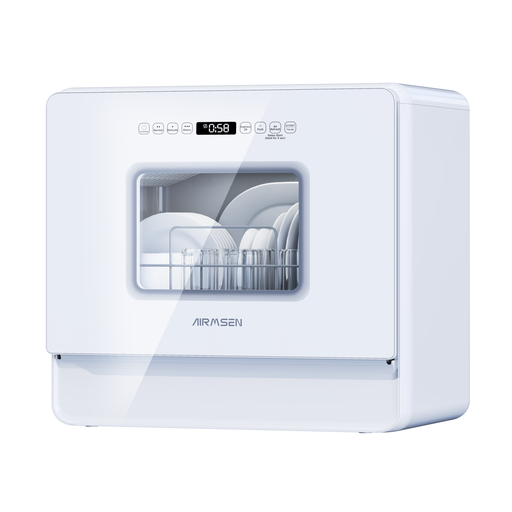 Image not available
An option if you’re looking for a countertop model with a tank and want to wash other tableware too.
The product description lists a 5-litre tank, five wash cycles, three spray arms and space for more than 40 items.
 Image not available
An option if you’re looking for a compact countertop model for mugs and a small amount of other tableware.
The product information lists a 5-litre tank, space for 4 place settings and 5+1 wash cycles.
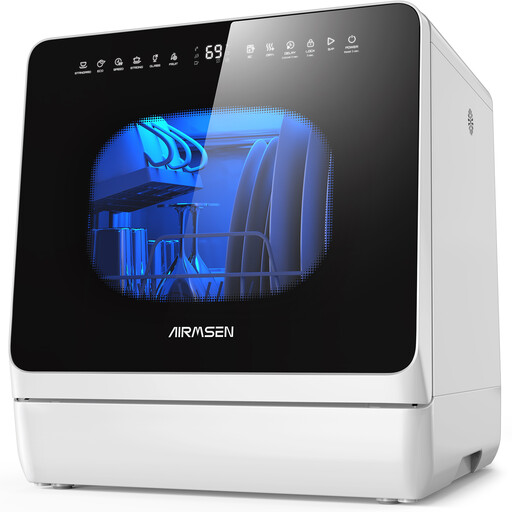 Image not available
An option if you’re looking for a countertop model with a tank and want to compare different wash programmes.
The product description lists a 5-litre tank, space for 4 place settings, eight programmes, a water softener and twin spray arms.
 Image not available
An option if you’re looking for a countertop model with a tank to wash mugs alongside other tableware.
The product information lists a 5-litre tank, space for 4 place settings and twin spray arms. The product name specifies dimensions of 37 × 50 cm and energy rating D.
 Image not available
A compact option to consider if you collect a small amount of washing-up.
The product information lists 3 place settings, a 5-litre tank, stated consumption of 4,2 litres per wash, seven programmes, 56,3 dB and energy rating C.
First, check whether the particular mug is dishwasher-safe. Place it upside down, don’t stack mugs and make sure the spray arm can rotate freely. For tall mugs, check the basket layout of the model you’ve chosen. The Consumers’ Association also advises leaving the spray arms free to rotate.
No, a tank doesn’t automatically replace the drain. Daan Tech says that wastewater from the Bob drains through a hose. If you’re considering this model, check where the hose will drain.
Compare kWh per 100 eco cycles and litres per eco cycle on a like-for-like basis. The label figures apply to the eco programme; your actual consumption also depends on the number of washes, the programme you use and your tariffs.
First check that the mugs aren’t blocking one another or the spray arm, then clean the filter according to the manual. The Consumers’ Association also advises checking the spray arms for blockages and degreasing the machine regularly.
Yes, washing up by hand is an alternative if you don’t have much to wash. Milieu Centraal advises using little hot water, washing up in a bowl and turning off the hot tap.