What should you consider when choosing?
| What to consider |
What should you check? |
Who is this important for? |
| Having cutlery ready in time |
Check the duration and conditions of the quick programme for each model; compare these separately from the eco programme duration. |
If I need the cutlery again the same evening after class, I want to know how long the quick cycle actually takes. Around 28% of consumers prioritise having their cutlery ready in time. |
| Capacity for class crockery |
Estimate how much cutlery and other crockery goes in the machine after each class, then compare this with the number of place settings. |
If you wash cutlery and crockery for several participants after a class, you don’t want to run unnecessary extra cycles. Around 22% of consumers prioritise having enough capacity. |
| Type and size |
Measure the available width, height and depth. For an integrated model, check the niche and hinge system too. |
If kitchen space is limited, the appliance must fit before capacity or programmes become relevant. Around 22% of consumers also prioritise installation and size. |
| Cutlery drawer or basket |
Check whether the exact model has a drawer, a basket or both, and whether the layout works for your cutlery and crockery. |
If you prefer to sort cutlery separately or want to take the cutlery holder out when unloading, consider the difference between a drawer and a basket. Around 17% of consumers make the layout their top priority. |
| Consumption and noise |
Compare the eco figures for energy, water, programme duration and noise on the same energy label. Also consider the noise level in relation to where and when you use the machine. |
If the machine runs frequently or is on during an evening class, I want to weigh up consumption and noise alongside programme duration. Around 11% of consumers prioritise an economical, quiet performance. |
The European Commission explains that the energy label shows, among other things, energy consumption per 100 eco cycles, water per eco cycle, programme duration, capacity and noise. These eco figures do not represent consumption for a quick programme.
Brands and models to consider
The features below apply to the models mentioned and are not a judgement on every dishwasher from each brand.
Inventum
The freestanding Inventum VVW6036AW is an example of a standard-size model with a removable cutlery basket.
- Inventum lists space for 14 place settings and eco and intensive programmes for this model.
- This model has a cutlery basket, not a cutlery drawer. The Consumentenbond warns that a half-load programme may be less economical per amount of crockery washed.
ETNA
The ETNA VW47SM is a slimline integrated option; the VWV147SWIT is a slimline freestanding option.
- ETNA lists nine place settings and a cutlery basket for both models.
- For the VW47SM, ETNA specifies a niche height of 820–880 mm; the freestanding VWV147SWIT is 44,8 cm wide. These details apply to those models, not the entire range.
Siemens
The fully integrated Siemens SN63HX16CN is worth considering if you have a suitable niche and a quick programme is important.
- Siemens Nederland lists a one-hour programme and flexible baskets and drawers for this model.
- The programme duration quoted is the manufacturer’s figure for this model, not an independent comparison of washing results. Check the full programme and installation details too.
Bosch
The fully integrated Bosch SMV4EB807E is an example where the layout and quoted noise level may be worth considering.
- Bosch lists flexible baskets and a noise level of 40 dB for this exact model.
- This model specification doesn’t prove that every Bosch dishwasher is equally quiet or will fit in every kitchen.
Miele
According to Miele, the freestanding Miele G 5632 SC Active S has both a cutlery drawer and a cutlery basket.
- Miele lists energy class A, QuickPowerWash and AutoOpen for this model.
- The claim about fast washing results comes from the manufacturer; no independent performance comparison for this model is shown.
Dishwashers at Joybuy
This selection includes countertop, freestanding and integrated dishwashers for washing cutlery alongside other crockery. First compare the space available, the expected load and when you’ll need the cutlery again.
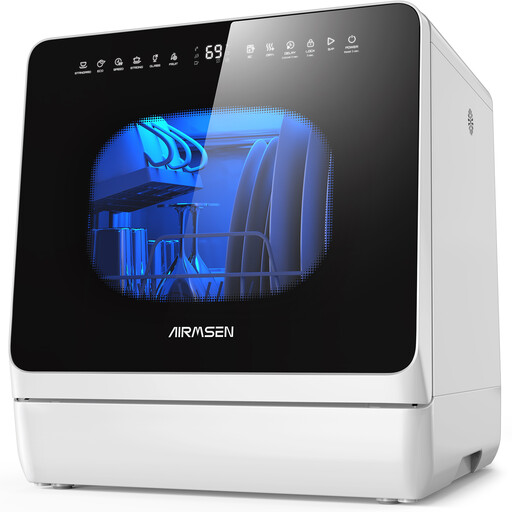 Image unavailable
AIRMSEN countertop dishwasher
A compact option to compare if kitchen space is limited.
The product name lists 8 wash programmes and a built-in water softener. The stated capacity is 4 place settings.
View at Joybuy
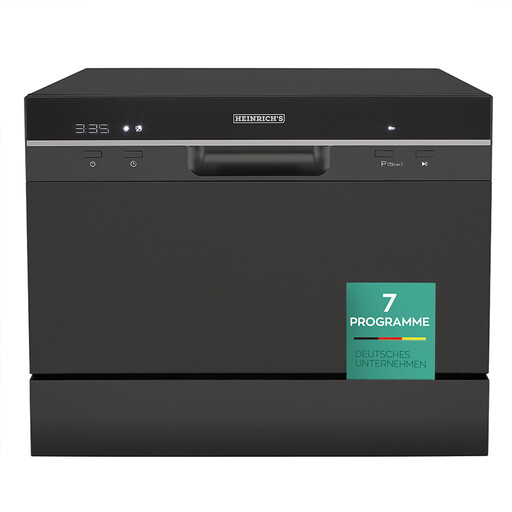 Image unavailable
Heinrich's HTG 8840 Schwarz countertop dishwasher
A countertop model to compare if a compact design and cutlery basket suit the way you load your dishwasher.
The product name lists 6 place settings and 7 programmes.
View at Joybuy
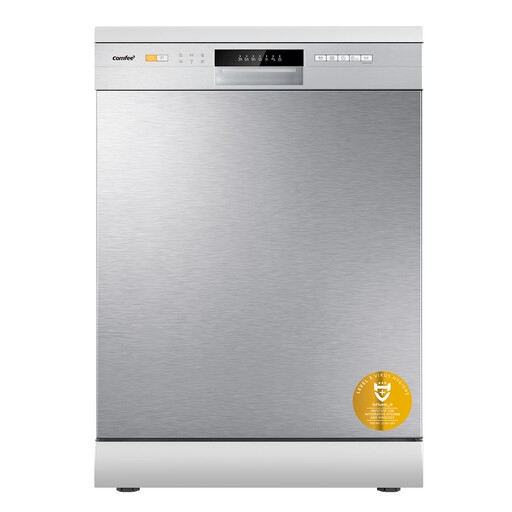 Image unavailable
Comfee' CDWPF1201PS freestanding dishwasher
A freestanding model to consider if you want to wash cutlery alongside other crockery.
The product name lists 12 place settings, a half-load function, 49 dB and energy class E. A half-load isn’t automatically as economical per amount of crockery as a full load.
View at Joybuy
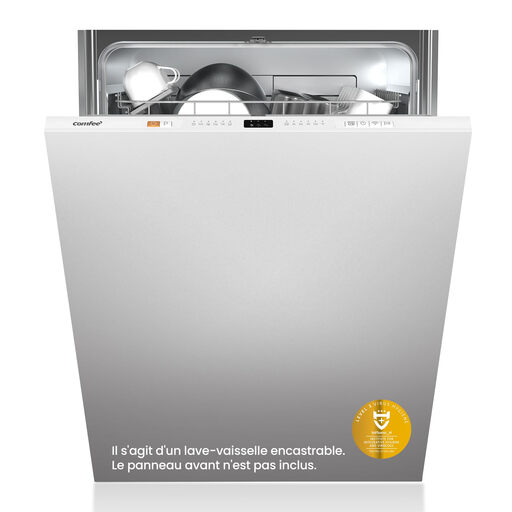 Image unavailable
Comfee' CDWPB1215PB-EU fully integrated dishwasher
An integrated option for a kitchen with a suitable niche; check in advance whether you have the required door panel.
The product name lists 12 place settings, 8 programmes, a half-load function and a 30-minute Quick Wash. The door panel is not included.
View at Joybuy
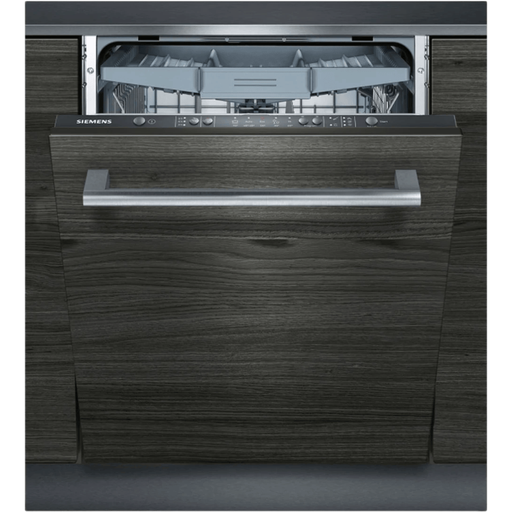 Image unavailable
Siemens SN615X03EE fully integrated dishwasher
An integrated model to compare if you’d like a separate cutlery drawer and want to explore time-saving features.
The product name lists a width of 60 cm, space for 13 place settings, 5 programmes and 46 dB. The product information mentions a cutlery drawer and VarioSpeed Plus; check the conditions for this feature on the exact model.
View at Joybuy
Frequently asked questions
Is a quick programme always the best choice after class?
No, it depends on when you need the cutlery again and how dirty the dishes are. If you can wait and the dishes are normally soiled, eco is an option that generally takes longer. For a quick turnaround, compare the programme duration and conditions for the exact model.
Should I pre-rinse cutlery, and how do I keep the dishwasher clean?
Remove food scraps and check the filter when needed. The Consumentenbond warns that frequent use of quick or low-temperature programmes can encourage grease build-up; bear this in mind when maintaining the machine.
What warranty applies to a dishwasher in the Netherlands?
According to the Rijksoverheid, the Netherlands has no fixed statutory warranty period. What you can expect if a product is faulty depends on the product and the circumstances; the retailer is your point of contact. Also check that your chosen integrated model and its installation are suitable for your kitchen.
What information appears on a dishwasher’s energy label?
According to the European Commission, the label shows, among other things, energy consumption per 100 eco cycles, water per eco cycle, programme duration, capacity and noise. EU information for retailers says the applicable energy label must also be clearly displayed in online shops.
Do extra food safety requirements apply if the evening class is part of a food business?
For businesses that handle food, the Rijksoverheid describes obligations relating to safe, hygienic food preparation and a food safety plan. Whether those rules apply to a particular class depends on the circumstances; don’t assume that a domestic dishwasher is suitable for commercial use just because it’s used for an evening class.


