
Families who regularly entertain
You want to wash your everyday plates and glasses alongside extra tableware. As well as checking the number of place settings, see whether the racks can accommodate your serving dishes and larger plates.


If you have the space and can usually fill the machine on an ordinary day, a standard dishwasher is a sensible choice for family dishes and extra tableware when guests come round. Don’t look at the number of place settings alone: Consumentenbond also recommends checking whether there’s enough usable space for your own plates and serving dishes. Milieu Centraal links efficient use to running a full machine; then compare the eco programmes on the EU energy label.
You want to wash your everyday plates and glasses alongside extra tableware. As well as checking the number of place settings, see whether the racks can accommodate your serving dishes and larger plates.
You want to avoid buying a dishwasher that doesn’t fit the space, kitchen door or plinth. Measure the available space and check the installation type before comparing models.
You’ll run a different load on an ordinary day than after having guests over. Compare the programmes and check whether their duration and energy use suit how full the machine usually is.
First measure the available space, then check whether the racks suit both your everyday dishes and the extra tableware you use when guests come round. Compare energy use and programme duration on the EU label on a like-for-like basis.
| What to consider | What to look for | Who should consider this? |
|---|---|---|
| Capacity and rack layout | Add together your everyday dishes and the extra items you use when entertaining; check that serving dishes and large plates fit, and see whether the racks are adjustable. | If I want to wash plates, glasses and serving dishes together after a family gathering, I’ll pay particular attention to the usable layout. Capacity is the top priority for around 33% of consumers. |
| Kitchen space and installation type | Measure the width, height and depth; for built-in models, also check the kitchen door, hinge type and plinth. | If the dishwasher needs to fit into an existing kitchen, I want to be sure the space and kitchen door are suitable. Kitchen fit is the main concern for around 27% of consumers. |
| Washing routine and drying | Compare the eco programme duration on the label, then check separately which quick programmes and drying features the model offers. | If I need clean tableware again quickly after guests have been round, I’ll look at the programme duration and how the model dries. Time and drying are the top priorities for around 20% of consumers. |
| Electricity and water use | Compare kWh per 100 eco cycles and litres per eco cycle on the labels for the exact models; take into account how often you use the machine. | If I wash dishes frequently, I’ll factor in the electricity and water used per cycle, without assuming that every cycle uses the same amount. Around 20% of consumers prioritise energy and water use during everyday operation. |
A place setting is a standard measure of capacity; it doesn’t automatically tell you whether your serving dishes, large plates or glasses will fit. If the layout doesn’t suit the dishes you use when entertaining, you may need to run an extra load.
Compare the racks and usable height with your own tableware and the largest items you want to wash.
If a full load doesn’t fit in one go, you may need to run another cycle.
Freestanding, under-counter and fully integrated models differ in their finish and installation requirements. A model with the right capacity won’t necessarily suit your kitchen.
Measure the space, kitchen door and plinth, and check the hinge type before you order.
The EU label includes figures such as energy use and programme duration for the eco programme. These figures don’t automatically apply to a quick or other programme.
Compare labels on a like-for-like basis and check quick programmes separately.
The freestanding VVW6036AB is a useful point of reference for a model with 14 place settings and an adjustable upper rack.
The freestanding iQ300 SN23EC03ME is a useful point of reference for a 60cm model with flexible racks and autoOpen Dry.
The fully integrated Serie 6 SMV6YCX07E is a useful point of reference if a suitable kitchen door and drying features are important to you.
The fully integrated BDIN38460 is a useful point of reference for a built-in model with 14 place settings and an adjustable upper rack.
These models include fully integrated dishwashers and a freestanding option for everyday dishes and varying loads. Before buying, check the dimensions and rack layout to make sure they suit your kitchen and tableware.
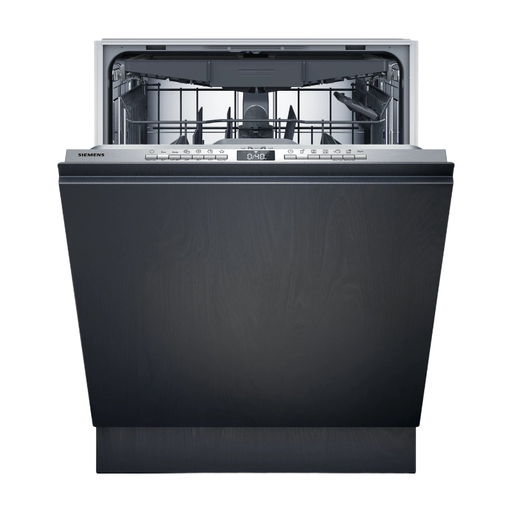 Image unavailable
A fully integrated model for anyone who wants to conceal their dishwasher behind a kitchen door.
The product name lists 14 place settings. The kitchen door isn’t included; also check the available space and rack layout for your tableware.
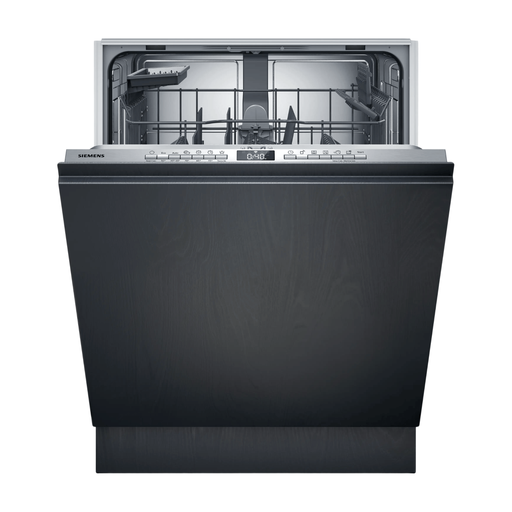 Image unavailable
A fully integrated model for anyone looking for a 60 cm dishwasher that fits behind a kitchen door.
Check the available space and make sure your kitchen door is suitable for installation.
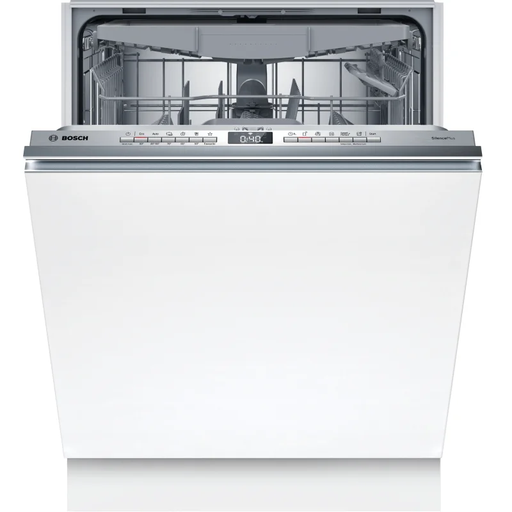 Image unavailable
A 60 cm fully integrated model for anyone looking for a suitable built-in option.
The product name lists 14 place settings. Check that the racks can accommodate the serving dishes and large plates you use.
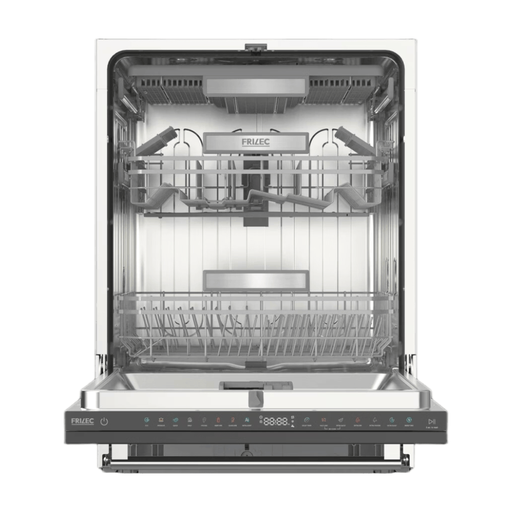 Image unavailable
A built-in model for anyone who wants to fit plenty of tableware into a single load.
The product name lists 16 place settings, energy class A, 39 dB and 8 programmes. Check that the installation dimensions suit your kitchen.
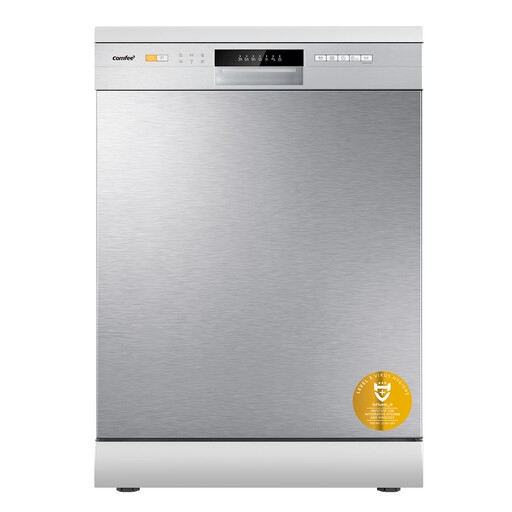 Image unavailable
A freestanding option for anyone who isn’t looking for an integrated model.
The product name lists 12 place settings and a half-load option. Check that the capacity suits the extra dishes you use when guests come round.
Not necessarily. According to Consumentenbond, an XXL built-in model offers extra interior height, but not necessarily more place settings than a standard model. Measure the space too, and check that your largest items fit in the racks.
No. According to Consumentenbond, rinsing dishes under the tap beforehand is generally unnecessary. Scrape off any large food scraps and choose a programme to suit how dirty the dishes are.
Compare the electricity use per 100 eco cycles and the water use per eco cycle on the EU label. Actual use also depends on how often you wash dishes and which programme you choose.
No. According to the Dutch government, the Netherlands has no fixed statutory warranty period: a product must do what you could reasonably expect it to do. If there’s a fault, contact the seller; any manufacturer’s warranty is in addition to this.
According to the Dutch government, when you buy a new appliance, the seller must take away a similar old appliance free of charge. Agree in advance how this will be arranged at delivery.