What should you look for when buying?
First, decide whether a freestanding, under-counter or fully integrated dishwasher will suit your kitchen. Then compare the rack layout and programmes with your own bowls and how you plan to use the appliance.
| What to consider |
What to look for |
Who should pay closer attention? |
| Room for bowls |
Compare the place-setting capacity and rack layout; measure your largest bowls and check whether the upper rack is adjustable. |
After a family breakfast, I want to fit bowls, cups and cutlery in together. That’s why around 33% of consumers prioritise practical rack space. |
| Fit and installation |
Measure the available height, width and depth. For an integrated model, also check the door panel and niche. |
If I’m fitting a dishwasher into an existing kitchen space, I want to know in advance that the dimensions and design are right. For around 27% of consumers, kitchen fit comes first. |
| Consumption with frequent use |
Compare kWh per 100 eco cycles and litres per eco cycle; don’t assume the eco figures also apply to a quick programme. |
If I wash dishes regularly, I want to compare the consumption of the energy-efficient cycle. Around 20% of consumers prioritise energy use. |
| Having crockery ready again quickly |
Check the duration and conditions of the quick programme for the exact model. |
If I need the bowls again later in the day, I want to know how long a suitable cycle takes. Around 20% of consumers prioritise being able to reuse their crockery quickly. |
Dishwashers at Joybuy
This selection includes freestanding and fully integrated dishwashers for mixed loads after breakfast. Check your kitchen measurements and whether your own bowls will fit in the racks.
 No image available
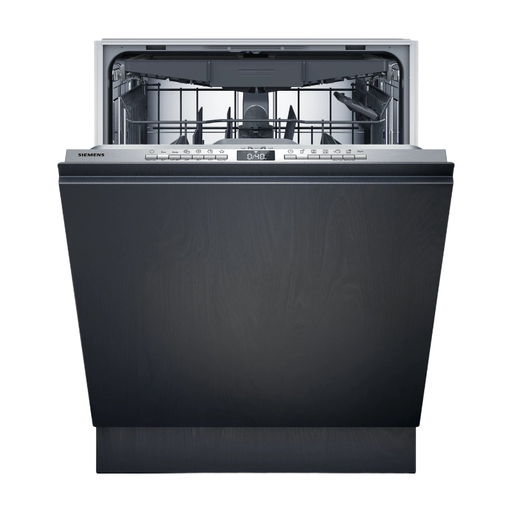
Siemens SN63EX06VE — fully integrated, 14 place settings
An option to consider if you want to fit a dishwasher behind a compatible kitchen door panel.
Fully integrated; 14 place settings.
View at Joybuy
 No image available
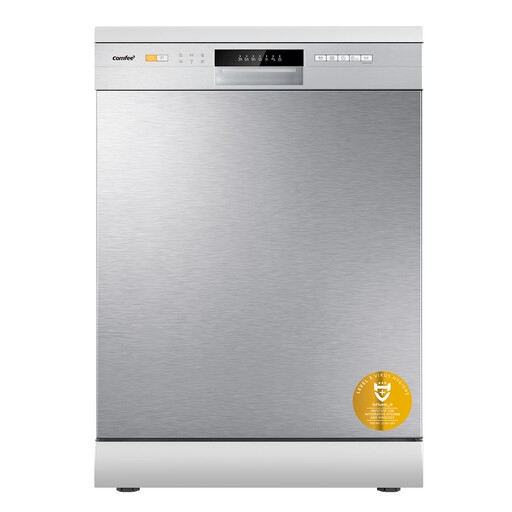
Comfee' CDWPF1201PS — freestanding, 12 place settings
A freestanding option to consider if you’re looking for a standalone model for your breakfast crockery.
12 place settings; energy label E.
View at Joybuy
 No image available
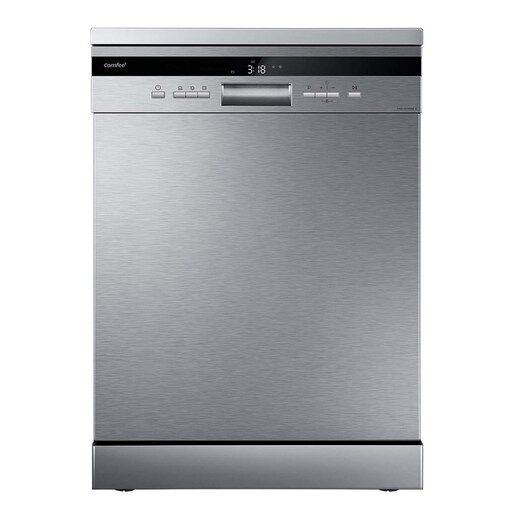
Comfee' FD1435E-X — freestanding, 14 place settings
A freestanding model to compare if you’re looking for a standalone appliance.
14 place settings; 44 dB; energy label D.
View at Joybuy
 No image available
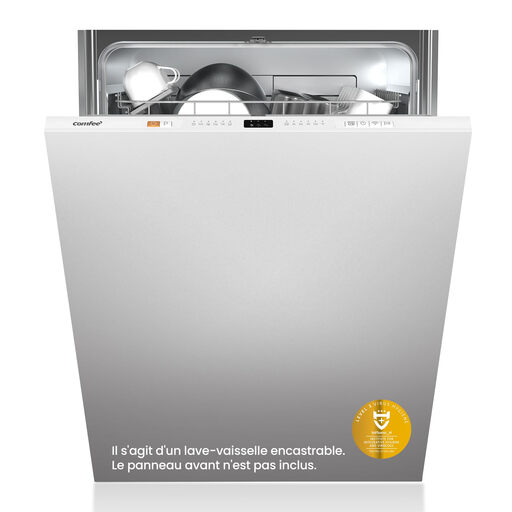
Comfee' CDWPB1215PB-EU — fully integrated, 12 place settings
An option to consider if you’re looking for a fully integrated model with a quick programme.
12 place settings; 8 programmes, including a 30-minute quick programme; energy label E. The front panel is not included.
View at Joybuy
 No image available
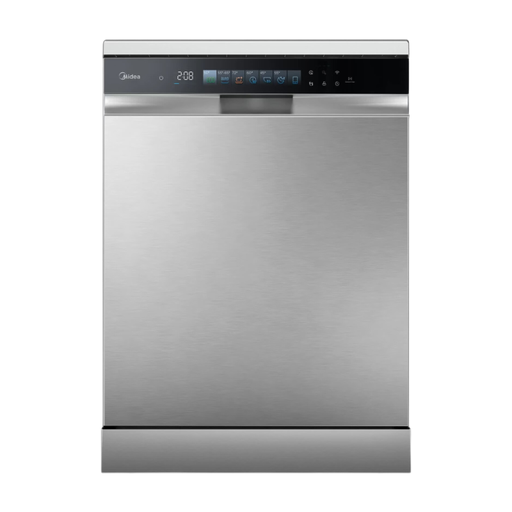
Midea MDWEF1433GSS-W — freestanding
A freestanding option to consider if you’re looking for a standalone appliance.
The product name specifies a stainless-steel finish.
View at Joybuy
Frequently asked questions
How should I load breakfast bowls into the dishwasher?
Place bowls and dishes upside down or at an angle so water can drain away. Once loaded, check that the spray arms can rotate freely.
Do I need to rinse breakfast bowls by hand first?
Usually, there’s no need to pre-rinse, but Milieu Centraal recommends wiping off food scraps first. This helps prevent leftover food from going into the dishwasher with the crockery.
Which figures on the energy label can I compare?
Energielabel.nl lists information including energy use per 100 eco cycles, water use per cycle, capacity, noise and the duration of the eco programme. Check the figures for other programmes separately for the exact model.
What can I do if my dishwasher develops a fault after purchase?
In the Netherlands, contact the retailer if the product is faulty. According to the Dutch government, there is no set statutory guarantee period; what you can expect from a product depends, among other things, on the product itself, its price and the information provided. A manufacturer’s guarantee is in addition to your statutory rights.


