
Households with dishes from daily meals
After eating together, you want to load plates, glasses, cutlery and, if possible, cookware efficiently. Usable capacity and basket layout are important, as Consumentenbond and Milieu Centraal also explain.


Start with a dishwasher type that fits your kitchen and a basket layout that can accommodate the plates, glasses and cookware you use regularly. Milieu Centraal links the efficiency benefits of a full-size model to loading it properly. Then compare the energy use of the specific model’s eco programme, its noise level and its drying features.
After eating together, you want to load plates, glasses, cutlery and, if possible, cookware efficiently. Usable capacity and basket layout are important, as Consumentenbond and Milieu Centraal also explain.
You need to choose between a built-in, freestanding or slimline model. The space available and the connections in your kitchen will determine which type fits. Consumentenbond and Bosch provide buying and installation information to help.
You compare noise levels, the eco programme and drying features because the dishwasher may be running while you’re still using the living space. Energielabel.nl explains the noise and energy-use information shown on the label.
First, choose a dishwasher type and capacity that suit your kitchen and the dishes from your usual evening meal. Then compare energy use, noise and drying performance for each model.
| What to consider | What to look for when buying | Who should pay particular attention? |
|---|---|---|
| Usable capacity | Compare the number of place settings with the space available for the plates, glasses, pans and dishes you use regularly. Check the basket layout too. | If you want to load pans and dishes as well as plates after a meal, a practical basket layout matters more than the number of place settings alone. Around 31% of consumers give capacity for everyday dishes top priority. |
| Type and installation | Measure the appliance and the space available. For built-in models, also check the door panel, hinge and hose route against the instructions for the exact model. | If your kitchen leaves little room for adjustments, you’ll want to know which type and connection will fit first. Around 25% of consumers prioritise kitchen fit and installation. |
| Energy use and programme duration | Compare kWh per 100 eco cycles, water use per cycle and the duration of the eco programme. Energielabel.nl explains these figures on the label; they don’t necessarily apply to every programme. | If you run the machine often, compare energy use on a like-for-like programme basis and choose a capacity you can load efficiently. Around 19% of consumers prioritise everyday energy use. |
| Noise in the evening | Compare the decibel rating and noise class on the energy label, and consider when you’re most likely to run the machine. | If you’re still in the same room after your meal, you’ll want to take the stated noise level into account. Around 13% of consumers give a quieter evening top priority. |
| Drying and unloading | Check the drying feature on the exact model and whether a cutlery drawer or basket suits your dishes. A drying feature doesn’t guarantee that every material will be completely dry. | If you want to put your dishes away soon after the cycle finishes, look for effective drying and a layout that’s easy to unload. Around 12% of consumers prioritise dry dishes and easy unloading. |
Place settings give you an idea of how much standard crockery a dishwasher can hold, but they don’t tell you whether your pans, glasses and dishes will fit comfortably in the baskets.
Check the baskets and their adjustability against the dishes you use regularly, rather than relying on the stated capacity alone.
Milieu Centraal links the efficiency benefits of a full-size model to loading it properly. A smaller dishwasher isn’t automatically more efficient, and may not suit you if all the dishes from a meal won’t fit in one load.
Compare kWh per 100 eco cycles and litres per eco cycle, and choose a capacity you can usually load efficiently.
If the smaller dishwasher can’t fit all the dishes from a meal in one load, you may need to run it more often.
The energy label for dishwashers shows information for the eco programme. Other programmes may have different running times and use different amounts of energy.
Check the eco programme duration on the label and consult the manual if you usually use a different programme.
An appliance may look as though it will fit based on its width, while the space, door panel, hinge or hose route may not work with your kitchen.
Compare the installation details for the exact model with the space available, and follow the manual supplied with it.
A mismatch may mean you need to make changes to the installation or connections.
The fully integrated 60 cm Serie 4 SMV4EVX08E is an example for kitchens with a suitable space and door panel.
The 60 cm freestanding iQ300 SN23EC03ME is an example for kitchens that don’t need a matching built-in door panel.
The slimline freestanding BDFS26046XQ is an example for kitchens where a standard-width model won’t fit.
The fully integrated 60 cm VW544N is an example with an adjustable upper basket.
The integrated 60 cm EEA27200L is an example of a model with a cutlery basket.
These models are suited to everyday dishes, with freestanding and built-in options for different kitchen layouts.
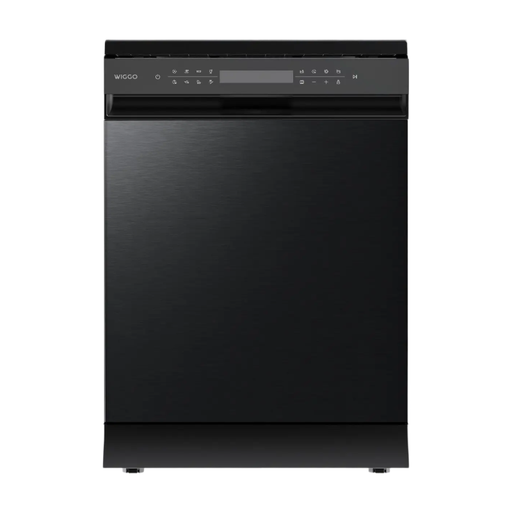 No image available
A full-size freestanding model for kitchens without a built-in door panel. Check that the basket layout suits the plates, pans and dishes you use regularly.
The product name specifies a width of 60 cm and energy rating B.
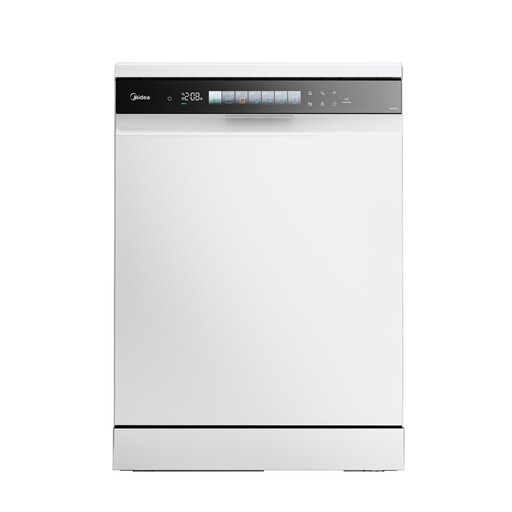 No image available
A freestanding model for a kitchen without a suitable built-in door panel. Check the capacity and basket layout of this model against the dishes you usually have after a meal.
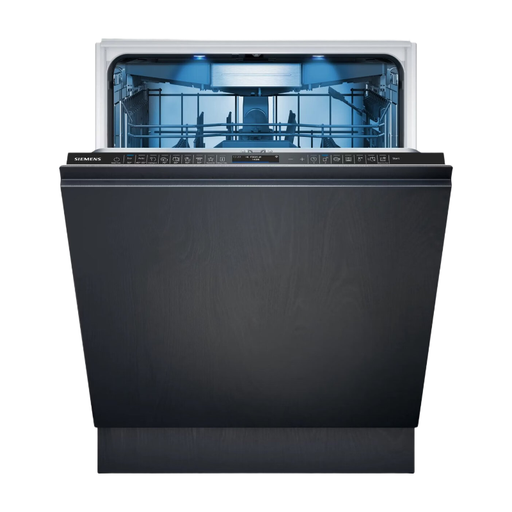 No image available
A built-in model for a kitchen with a suitable space and door panel. Check the installation dimensions and hinge system for this exact model.
The product name specifies 13 place settings.
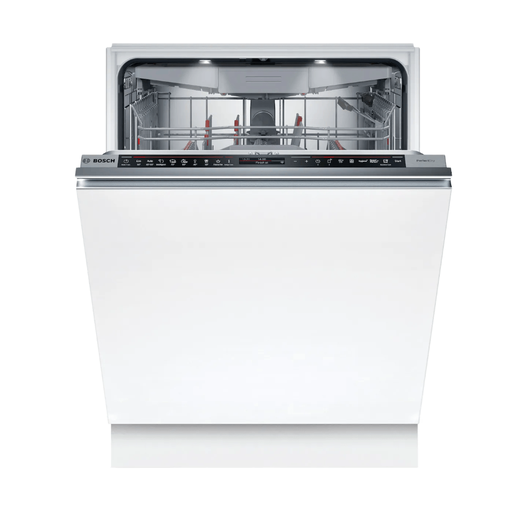 No image available
A built-in model for kitchens with a suitable space and door panel. Check the installation dimensions before choosing this model.
The product name specifies energy rating A, 42 dB, Zeolith drying, AutoDoor Opening and 8 programmes.
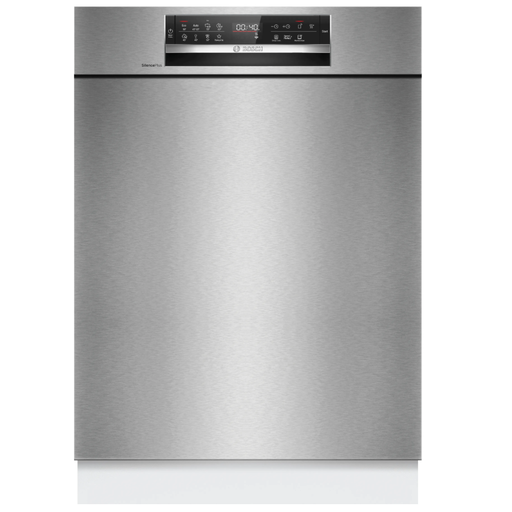 No image available
An under-counter model for a kitchen layout that can accommodate this type of installation. Check the space required and the connections for the exact model.
The product name specifies a width of 60 cm and a brushed steel finish.
No, a slimline dishwasher isn’t automatically more efficient. Milieu Centraal links the efficiency benefits of a full-size model to loading it properly. Compare the capacity and stated electricity and water use of both sizes.
Measure the available space and follow the installation manual for the exact model for positioning, water supply, drainage and electrical connection. Bosch’s connection instructions apply to the relevant models and don’t replace the manual for another brand. Have any changes to the electrical installation carried out by a qualified professional.
Since 1 March 2021, the EU has used an A to G scale for household dishwashers. According to the European Commission, the label includes information such as energy use per 100 eco cycles, water use per cycle, capacity, noise and the duration of the eco programme.
Scrape off large food scraps; rinsing under the tap is generally unnecessary. Consumentenbond recommends checking the filter regularly and cleaning it when needed. Use salt and rinse aid in line with the manual and your water hardness.
If a product is faulty, the retailer is your point of contact for a solution, such as a repair or replacement; you don’t have to contact the manufacturer alone. According to the Dutch Government, purchases made remotely from a business generally come with a 14-day cooling-off period, subject to applicable exceptions.