
People who eat together and have lots of washing-up
You want to fit mugs, plates and cutlery into one well-organised load after a meal. Capacity and how easy it is to load your dishes matter more to you than choosing the smallest possible machine.


Start by choosing a size that fits your kitchen and can hold your usual mix of mugs, plates and cutlery. A 60 cm dishwasher has room for a larger load if you regularly fill it properly; a model around 45 cm wide takes up less space, but you’ll need to pay closer attention to the layout and clearance for tall mugs. Also check that the spray arms can rotate freely, and compare programmes by their individual duration and consumption figures—not by the eco programme alone.
You want to fit mugs, plates and cutlery into one well-organised load after a meal. Capacity and how easy it is to load your dishes matter more to you than choosing the smallest possible machine.
You’re short on space and want to know how many mugs and dinner dishes will fit in a slimline or compact dishwasher.
You want to factor in how long a programme takes and how noisy the dishwasher is while it’s running in the evening.
A good fit when: you have the space and regularly wash up after a shared meal.
Bear in mind: if you often only partly fill the machine, the extra capacity won’t necessarily be an advantage.
A good fit when: kitchen width is limited or a standard model is usually too large for your washing-up.
Bear in mind: check whether tall mugs and dinner dishes fit comfortably in the racks for each model.
A good fit when: a freestanding or integrated model won’t fit and the smaller capacity is enough.
Bear in mind: it takes up worktop or cupboard space. Milieu Centraal advises against compact mini models because of their relatively high consumption and often mediocre test results.
| What to consider | What should you check? | Who should take this into account? |
|---|---|---|
| Loading mugs and dishes | Check the clearance in the racks and make sure the spray arms can rotate freely. | I want to load mugs and the rest of the dishes from a meal together, without the mugs blocking one another. Around 28% of consumers prioritise this mixed load. |
| Size and kitchen space | Measure the available width, height and depth. For an integrated model, also check the niche and door design. | If space is limited in my kitchen, I want a suitable size without losing sight of how much of my washing-up will fit. Around 22% of consumers put available space first. |
| Time after a meal | Check how long the programme you want to use takes and whether the model has a quick programme. | I want to know whether the dishes will be ready in time for the next use, even if I don’t choose the eco programme. Around 22% of consumers prioritise their evening schedule. |
| Consumption with frequent use | Compare kWh per 100 eco cycles and litres per eco cycle on the EU label, and consider how full you usually load the machine. | If the dishwasher runs frequently, I want to compare the stated consumption figures on a like-for-like basis. Around 17% of consumers prioritise consumption. |
| Noise in the evening | Compare the stated noise level in dB and the noise class on the EU label. | If the kitchen is close to the dining area, I want to know the stated noise level for the model. Around 11% of consumers prioritise a quiet dining area. |
The number of place settings doesn’t tell you exactly how many mugs of your size will fit at once. The rack layout and the clearance around the spray arms matter too.
Check the racks against the dimensions of your largest mugs and make sure the spray arms can rotate freely. You may need an extra wash if the mixed load won’t fit all at once.
The figures on the EU label are based on the eco programme and don’t automatically apply to another programme.
Compare label figures on the same basis, and check the duration and consumption of the programme you actually plan to use separately.
Milieu Centraal explains that a dishwasher uses water and energy most efficiently when it’s properly full. A larger machine won’t necessarily suit smaller, regular loads.
Think about the washing-up you usually have, not just what you’ll have after the biggest shared meal.
The available space and connections affect where the appliance can be installed. The model needs to fit the space and meet the installation requirements.
Measure the space in advance and check the installation instructions and any installation service available. ETNA notes in its installation check, for example, that hoses must not be kinked behind the appliance.
The Dutch range includes freestanding 45 cm models. The SPS4EMI17E is one specific example.
The SN23EC03ME is a 60 cm freestanding model with varioFlex racks.
The freestanding slimline VWV147SWIT is an example of a 45 cm model.
The Dutch 45 cm range includes GlassCare integrated models.
Miele describes rack layouts with space for cups on some models.
These models are aimed at mixed loads and come in a standard size of around 60 cm. For integrated models, check the space required and whether a furniture door is included.
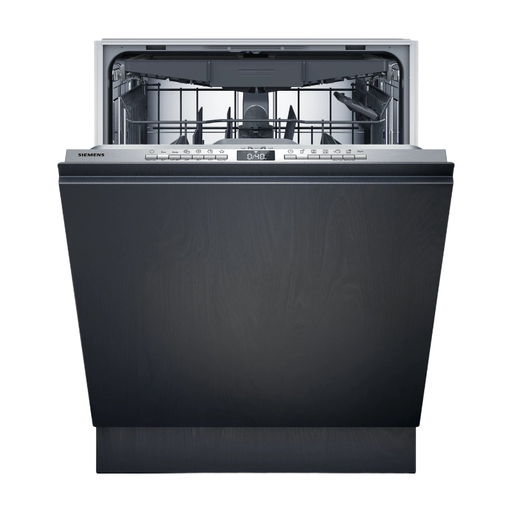 No image available
Well suited to anyone who wants to wash a mixed meal load in an integrated model.
14 place settings; varioFlex racks; adjustable upper rack; short cycle and varioSpeed Plus. The front panel is not included.
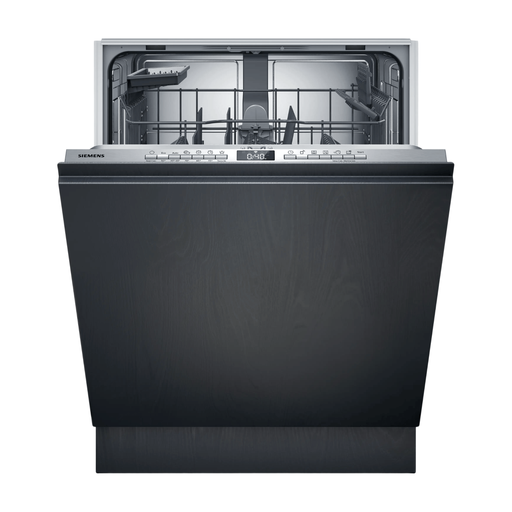 No image available
Well suited to anyone looking for adjustable racks and cup holders alongside a quick programme.
60 cm fully integrated model; adjustable upper rack; cup holders; Fast Program and varioSpeed Plus. A furniture door weighing 4.5–11 kg is specified for installation.
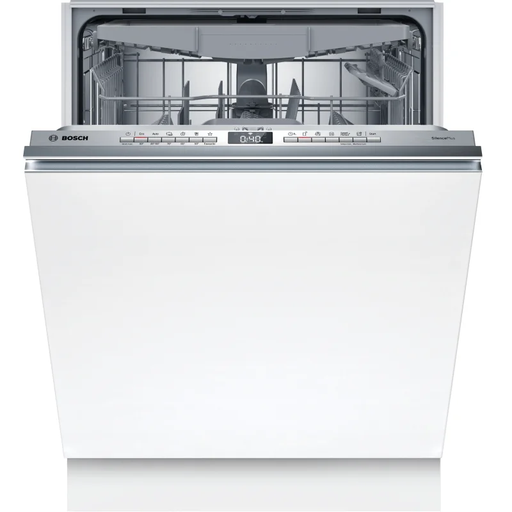 No image available
Well suited to anyone looking for an integrated model with adjustable racks for a mixed load.
14 place settings; adjustable upper rack; SpeedPerfect. A separate furniture door is specified for installation.
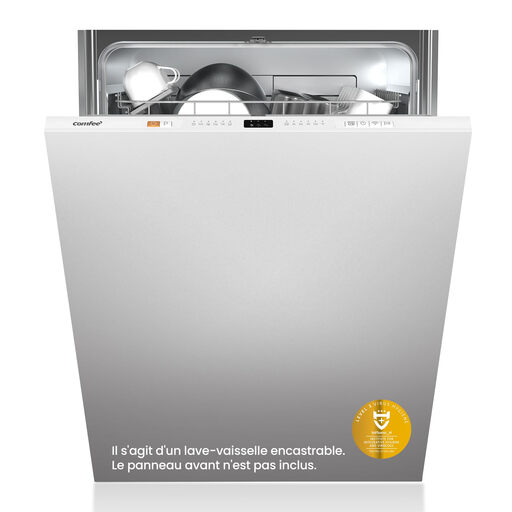 No image available
Well suited to anyone who wants to wash a mixed load and have the option of using a half-load function.
12 place settings; adjustable upper rack; 30-minute Rapid programme; half-load function. The front panel is not included.
 No image available
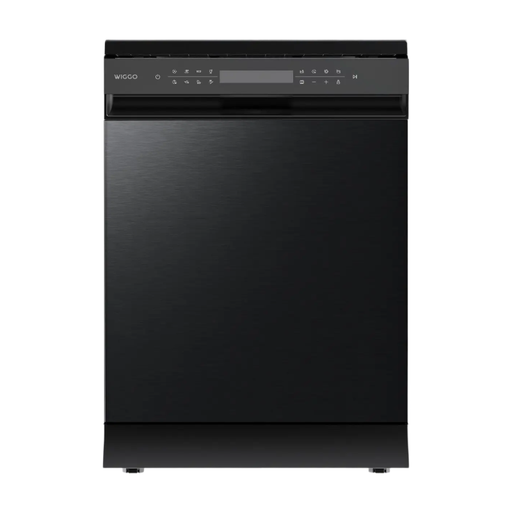
Well suited to anyone looking for a freestanding model for a meal load with a mix of dishes.
14 place settings; eight programmes, including Glass and Hygiene 72°C; delayed start from 1–24 hours.
No, the label doesn’t mean that every spot in the machine is suitable. Check that the mug is stable, that water can reach the inside and that the spray arms can rotate freely. If it has a print or special finish, also follow the care instructions for that particular mug.
Measure the space or niche and follow the installation instructions for the model you’ve chosen. In its installation check, ETNA notes, for example, that hoses must not be kinked behind the dishwasher. For other models, check their own requirements.
The EU label includes figures such as energy consumption for 100 eco cycles and water consumption per cycle. Compare models on the same label basis, and bear in mind that these figures don’t automatically reflect consumption on another programme or for your own load of mugs.
Yes. ACM ConsuWijzer explains that your statutory warranty rights exist alongside a manufacturer’s or seller’s warranty. If a product breaks during normal use sooner than you could reasonably expect, the seller is responsible for providing an appropriate solution free of charge. There isn’t one fixed statutory warranty period that applies to every dishwasher.
No, they’re different programmes, and the eco label figures don’t automatically describe the consumption of a quick programme. Check the model specifications to see which programmes are available, and compare their durations and consumption figures separately.