What should you consider when choosing?
Standard freestanding
Choose this if: you have a suitable freestanding space with the right connections and regularly build up a full load, even after having people over.
Consider: the appliance has its own exterior, so measure the space carefully: not every model fits under a worktop.
Standard integrated
Choose this if: you want the dishwasher hidden behind a suitable kitchen door panel.
Consider: check the niche, door panel and door system. Installation requires more careful measuring than simply placing a freestanding model.
Built-under
Choose this if: the appliance will sit under a continuous worktop while keeping its own visible front.
Consider: a built-under model is not the same as an integrated model with a kitchen door panel. Check there’s also enough room for the connections.
Slimline model
Choose this if: space is limited or you rarely fill a standard-size model.
Consider: the smaller racks may mean you need to run a second load when there are extra dishes after a get-together.
When choosing a dishwasher for everyday washing-up and extra crockery after a weekend lunch, the main consideration depends on what matters most to you:
| What to consider |
What should you check? |
Who is this most relevant to? |
| Capacity and rack layout |
Compare the number of place settings and check that your plates, tall glasses, cutlery and serving dishes fit in the racks. |
If I have extra crockery to wash after people have visited, I want to know whether my larger plates and serving dishes will fit. Around 36% of consumers put usable space for that lunch load first. |
| Installation type and fitting |
Choose freestanding, built-under or integrated. For an integrated model, measure the niche and check the door panel, door system and connections. |
I want an appliance that genuinely fits the space in my kitchen and works with the door panel and connections. For around 29% of consumers, getting the fit right is the top priority. |
| Energy and water use |
Compare kWh per 100 eco cycles and litres per eco cycle on the same basis. Also consider whether you can usually fill a larger model. |
If the dishwasher runs often, I want to compare the consumption figures like for like, without assuming they apply to every programme. Around 21% of consumers give everyday running costs top priority. |
| Time, drying and noise |
Check how long the programme you want to use takes and compare washing and drying results separately. Also check the noise level. |
I want to know whether the dishes will be ready when I need them again and whether the appliance will be too noisy during lunch. Around 14% of consumers prioritise having clean, dry dishes on time or choosing a quieter appliance. |
The percentages are a general indication of what consumers prioritise when choosing a dishwasher for this situation. Milieu Centraal recommends filling a standard-size model properly. The EU energy label includes information such as energy use per 100 eco cycles, water use per eco cycle, capacity, programme duration and noise level. These figures do not automatically indicate the consumption or duration of a quick programme.
Dishwashers at Joybuy
This selection includes freestanding and fully integrated models for everyday washing-up and extra crockery after people have visited.
 No image available
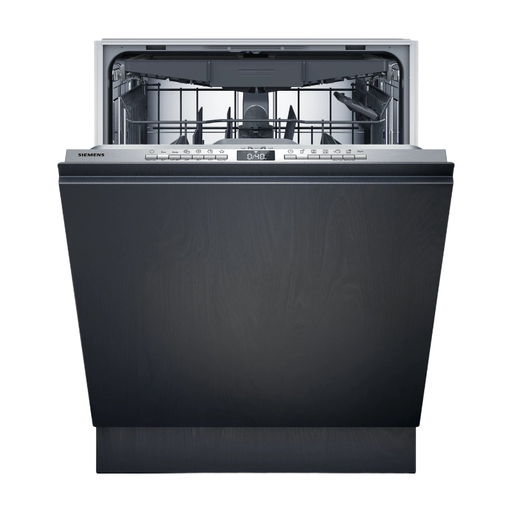
Siemens SN63EX06VE fully integrated dishwasher
An option to consider if you want to fit extra dishes behind a matching kitchen door panel.
14 place settings, extra cutlery drawer, adjustable upper rack, half-load and speed options. The front panel is not included; check that the niche and door panel are compatible.
View at Joybuy
 No image available
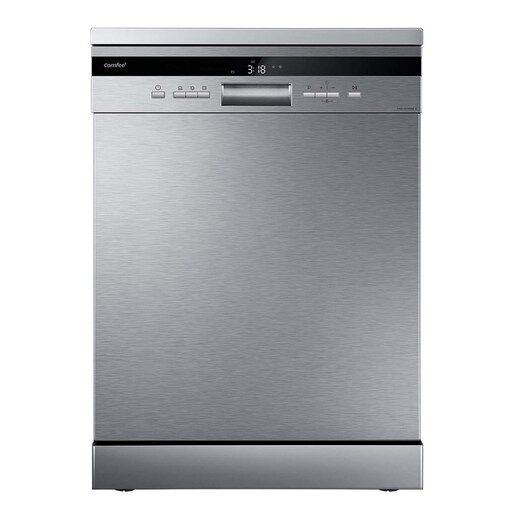
COMFEE' FD1435E-X freestanding dishwasher
A freestanding option to consider if you have space for a separate appliance and need room for extra crockery.
14 place settings, 44 dB and energy class D according to the product name. The description mentions a half-load function and a removable cutlery basket. Not designed for fully integrated installation behind a kitchen door panel.
View at Joybuy
 No image available
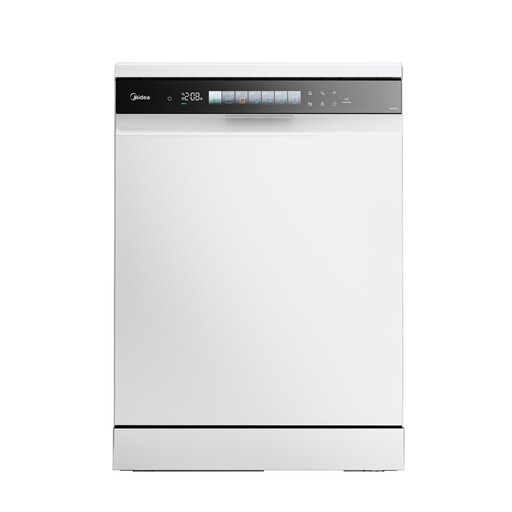
Midea MDWEF1433GW-W freestanding dishwasher
A freestanding model to consider if you want room for extra crockery and have a separate space for it.
The product description lists 14 place settings, three racks including a cutlery drawer, an adjustable upper rack, and eco and quick programmes. Check the available space; this model is not designed for fully integrated installation behind a kitchen door panel.
View at Joybuy
 No image available
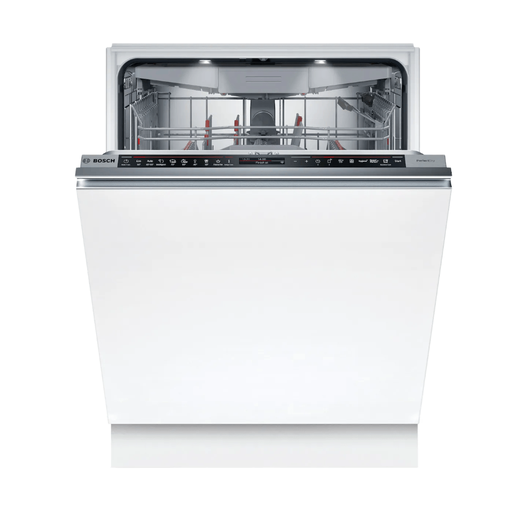
Bosch SMD8TCX04E integrated dishwasher
A model to consider if you’re looking for an integrated dishwasher to fit behind a matching kitchen door panel.
According to the product name: 14 place settings, energy class A, 42 dB and 8 programmes. Check that the niche and kitchen door panel are compatible.
View at Joybuy
 No image available
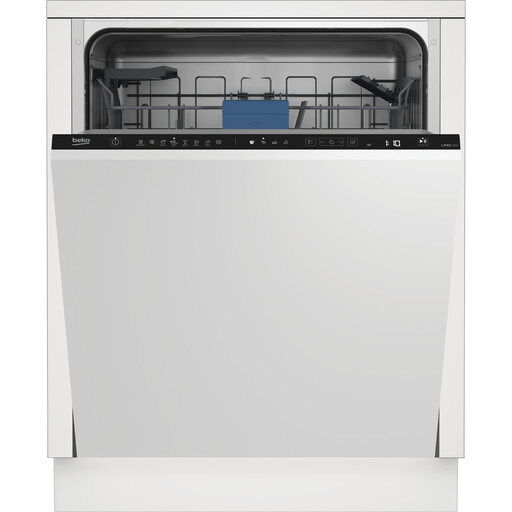
Beko BDIN38460 integrated dishwasher
An integrated option to consider if you want to fit extra crockery behind a matching kitchen door panel.
The product description lists 14 place settings, a cutlery drawer, an adjustable upper rack and a half-load function. Check that the niche and door panel are compatible.
View at Joybuy
Frequently asked questions
Should I rinse plates under the tap first?
Usually not. Scrape off any large food scraps and clean the filter regularly. Choose a programme to suit how dirty the dishes are.
What should I check before connecting the dishwasher?
Check the space, water tap, drain and a suitable earthed power socket, following the installation instructions for your chosen model. For an integrated model, the niche, door panel and door system must also be compatible.
What do the consumption figures on the energy label mean?
The EU label includes information such as energy use per 100 eco cycles, water use per eco cycle, capacity, eco programme duration and noise level. These figures do not automatically tell you how much a quick programme will use or how long it will take.
Who should I contact if my dishwasher turns out to be faulty?
According to the Dutch government, you should contact the retailer first: they must supply a product that works properly and cannot simply send you to the manufacturer. Depending on the problem, you may be entitled to a free repair or replacement; there is no single fixed warranty period that applies to every dishwasher.
Can I return my old dishwasher when I buy a new one?
According to the Dutch government, for a private purchase the retailer must take back an old, similar appliance free of charge under the old-for-new scheme, including for online purchases. Arrange the practical details of handing it over at delivery in advance.


