
Households that eat together
You want to fit your breakfast bowls and the everyday dishes from a shared meal into one practical load. So, don’t just look at capacity: check the basket layout and the space available for larger serving dishes too.


First, choose a dishwasher with an installation type and basket layout that work for both your breakfast bowls and your evening dishes. Then check whether the programme duration fits the time you need the bowls back. If you have enough time, a well-loaded eco cycle could be a good option; if you’re starting later, compare the duration and results of a suitable short programme. A slimmer model takes up less space, but it won’t necessarily use less energy and water for the amount of washing-up you need to do, as Milieu Centraal and the Consumers’ Association also explain.
You want to fit your breakfast bowls and the everyday dishes from a shared meal into one practical load. So, don’t just look at capacity: check the basket layout and the space available for larger serving dishes too.
You need your bowls back before dinner. The time you can start the dishwasher will determine whether a long eco cycle is suitable or whether you’ll also need a shorter programme.
Start by checking the available space, connections and, if applicable, the housing dimensions. Then make sure the capacity and basket layout can handle both your bowls and the dishes from your shared evening meal.
Start with the fit and usable loading space. Then compare programme durations and consumption based on the programmes you actually expect to use.
| What to consider | What should you check? | Who is this important for? |
|---|---|---|
| Space for the shared load | Check the capacity, adjustable baskets and space for your bowls and larger serving dishes. | If I want to wash the bowls with the dinner plates, everything needs to fit comfortably in the baskets. Around 29% of consumers prioritise usable loading space. |
| Clean bowls in time | Compare the duration of the eco programme with that of the short programme you plan to use. | If I can only start the dishwasher later in the day, I want to know whether the bowls will be ready before dinner. Around 23% of consumers prioritise having the dishes ready by mealtime. |
| Suitable size and installation type | Measure the space or housing and check the dimensions and connection requirements for the model you’ve chosen. | If there’s little space in my kitchen, the appliance needs to fit without making it awkward to load the dishes. Around 18% of consumers let the space available in their kitchen guide their choice. |
| Consumption with everyday use | Using the same label basis, compare electricity consumption per 100 eco cycles, water consumption per eco cycle and capacity. | If I wash dishes frequently, I want to weigh up consumption against how well I can fill the machine. Around 18% of consumers prioritise running costs. |
| Noise during dinner | Compare the noise level in dB(A) and the noise class, and consider where the appliance will be placed. | In an open-plan kitchen or near the dining table, I want to know how audible a cycle might be. Around 12% of consumers prioritise quiet operation in this situation. |
The stated number of place settings doesn’t necessarily tell you whether your bowls and larger serving dishes will fit in the baskets together.
Check the available height and adjustability of the baskets against the dimensions of your own dishes.
The label figures apply to the eco programme, which usually takes longer. They don’t automatically tell you how much a short programme uses or how it will wash and dry your dishes.
Compare the duration and, where available, the washing and drying ratings for the programmes you actually plan to use.
A smaller appliance offers less loading space and won’t necessarily use less for the amount of washing-up you have. A less full load could also mean you need to run the dishwasher more often.
Choose a size that suits both your kitchen and the dishes you usually want to wash together. Then compare consumption and how often you’ll need to run a cycle.
The housing, front panel, connections and installation method must also be suitable for the exact model.
Measure the space for the integrated appliance and check the installation instructions for your chosen model before ordering.
Worth considering if you want to compare a 60 cm freestanding model for capacity and basket layout. The VWV640ZWA is one specific example.
Worth considering if you want to assess a 60 cm freestanding model with a short programme. The SN23EW28AE is one example.
Worth considering if you’re looking at a freestanding slimline dishwasher. The BDFS26046XQ is an example of this narrower size.
Worth considering when comparing 60 cm freestanding models and basket layouts. The SMS4HTW00E is one example.
This selection includes standard-size freestanding and integrated dishwashers for anyone weighing up loading space, programme duration and the room available in their kitchen.
 No image available
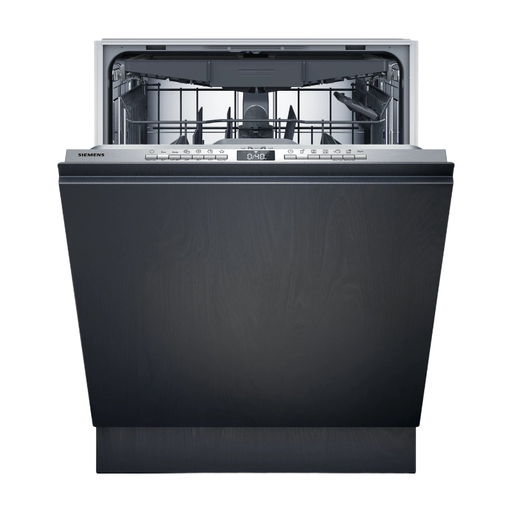
Worth considering if you’re looking for an integrated model with room for a shared load and a short programme.
The stated housing dimensions are 815–875 × 600 × 550 mm. The product description lists an adjustable upper basket, an extra cutlery drawer, a 235-minute eco programme, a short programme and varioSpeed Plus.
 No image available
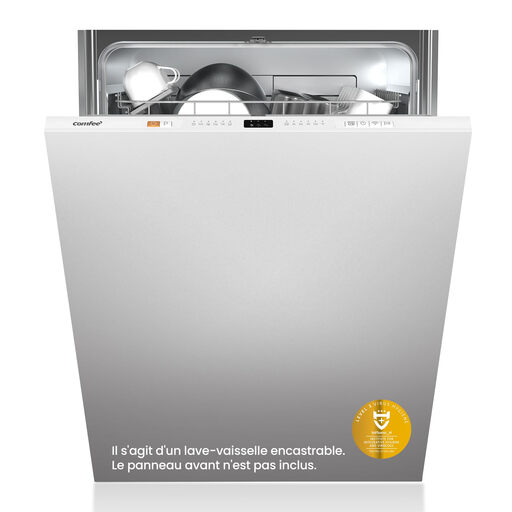
Worth considering if 12 place settings and a quick cycle for lightly soiled dishes are important to you.
The product description lists a 30-minute Rapid programme, a delay-start function and an adjustable upper basket. A separate front panel is required for integrated installation; it isn’t included.
 No image available
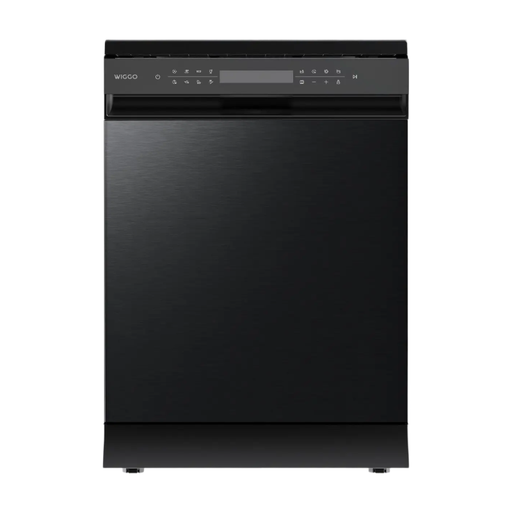
Worth considering if you’re looking for a freestanding model with 14 place settings and want the option of a short programme or delay start.
The product description lists dimensions of 60 × 60 × 85 cm, an adjustable upper basket, three racks, energy rating B and water consumption of 9,8 litres per cycle. It also lists a short programme and a delay start of 1–24 hours.
 No image available
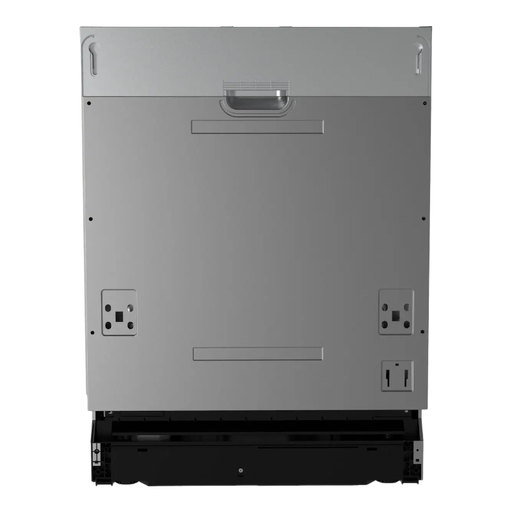
Worth considering if you’re looking for an integrated model with 12 place settings and your available housing matches the stated dimensions.
The product description lists housing dimensions of 60 × 58 × 81,5 cm, energy rating E and 11 litres of water per cycle. The standard cycle lasts 220 minutes; intensive, eco and automatic programmes, as well as a delay-start function, are also listed.
 No image available
Worth considering if you want to compare a freestanding model with 14 place settings and a range of programmes.
The product description lists nine programmes, including Quick Wash and Eco, as well as a night programme at 38 dB. The stated dimensions are 845 × 598 × 600 mm.
You usually don’t need to rinse them by hand first: wipe or scrape off any food. Hand-rinsing uses extra water and energy; for stubborn, baked-on residue, check which programme is suitable for your dishes.
Measure the available space or housing and follow the installation instructions for the exact model. Also check the water supply, drain and installation method; ETNA says installation varies depending on the type of dishwasher.
Remove food residue from your dishes and clean the filter according to your model’s instructions. Bosch explains how to remove and rinse the filter in its dishwashers; check the instructions for your own make and model before following these steps.
No. In the Netherlands, statutory consumer rights apply alongside any manufacturer’s warranty. If a product doesn’t perform as you could reasonably expect under normal use, the seller is responsible for providing an appropriate solution. What’s reasonable depends on the product and circumstances; there isn’t one fixed statutory warranty period for every dishwasher, as ACM ConsuWijzer explains.
The EU energy label includes information such as energy consumption per 100 eco cycles, water consumption per eco cycle, capacity and noise. These figures are based on specific label test conditions; they don’t guarantee the duration or results of every other programme.