
If you wash cutlery every day
If you want to wash cutlery alongside plates and glasses, compare a removable basket with a cutlery drawer. The Consumentenbond explains how they differ in terms of space and ease of unloading.


First, choose a size that fits your kitchen and that you can fill with your usual load of washing up. A slimline dishwasher generally offers more capacity than a tabletop model. Milieu Centraal strongly recommends choosing a standard-size model only if you can fill it properly. Then decide between a removable cutlery basket and a cutlery drawer: according to the Consumentenbond, a drawer can free up space in the lower rack for other crockery, while a basket is easy to remove.
If you want to wash cutlery alongside plates and glasses, compare a removable basket with a cutlery drawer. The Consumentenbond explains how they differ in terms of space and ease of unloading.
A tabletop model takes up worktop space, while a slimline freestanding model needs floor or alcove space. Measure the area and check the connections, as well as the clearance needed to open the door.
Milieu Centraal recommends a standard-size model on the condition that you fill it properly. So think about how much washing up you produce and how often you can run a full load.
Choose this if: a floor-standing model will not fit and you have enough worktop space.
Consider: the space available for dishes and cutlery, as well as the water supply and drainage. Milieu Centraal warns that a mini dishwasher is not automatically the most energy-efficient choice.
Choose this if: you have around 45 cm of floor width available and want to wash cutlery with your daily load. The Consumentenbond says slimline models generally hold 9 to 10 place settings.
Consider: layouts vary by model. A drawer can free up space in the lower rack, while a removable basket is handy when unloading.
Choose this if: you have the space and can regularly fill the machine with your daily washing up.
Consider: the extra capacity is no benefit if you often run half-full loads. Milieu Centraal’s preference for standard-size models depends on filling them properly.
| What to consider | What should you check? | Who should pay particular attention? |
|---|---|---|
| Cutlery layout | Check whether the exact model has a basket or drawer, and whether the cutlery fits alongside the rest of the load. | If I want to load cutlery with my everyday washing up, I look at the layout and the space left for everything else; around 29% of consumers prioritise the cutlery arrangement. |
| Size and location | Measure the width, height and depth, as well as the door clearance; also compare the capacity with your usual load. | If I have limited space, I want to know whether the appliance will fit on the worktop, on the floor or in an alcove; around 29% of consumers prioritise the space available. |
| Energy use and load size | Compare the energy label, kWh per 100 eco cycles and water per eco cycle, taking your expected load size into account. | If I want to weigh energy use against how often I do the washing up, I compare the eco figures with my usual load; around 24% of consumers look at this first. |
| Connections | Read the installation instructions and check the water supply, drainage, power supply and clearance at the chosen location. | If I can only place the appliance in one part of the kitchen, I want to know in advance whether it can be connected there; around 18% of consumers prioritise this. |
Milieu Centraal prefers a standard machine that is properly filled and generally advises against mini models on the grounds of energy use and ease of use.
Compare the energy label and the amount of washing up you can do per load; do not choose on size alone.
According to Beko, the Beko BDFS26046XQ has a cutlery drawer, while ETNA says the ETNA VWV147SWIT has a cutlery basket.
Check the cutlery arrangement for the full model number and see how much space is left for other crockery.
A slimline freestanding appliance also needs a suitable location for the water supply and drainage; a tabletop model takes up worktop space.
Check the depth, height, door clearance and installation instructions for the exact model.
An unsuitable connection or location may require extra installation work.
For the Bosch SPS4EMI17E, the Joybuy product title states 13 place settings, while a Bosch specification sheet lists 10.
Do not base your purchase on that capacity until the retailer’s information and the official product information sheet match for the exact model.
The VVW5520 is a tabletop option if you are looking for a removable cutlery basket.
The slimline, freestanding BDFS26046XQ has a cutlery drawer as an alternative to a basket.
The slimline freestanding SPS4EMI17E is an option to compare if you are looking for a cutlery drawer and stated eco figures.
The VWV147SWIT is a slimline freestanding model with a cutlery basket; the larger VWV144WIT is another option to compare.
The manufacturer describes Bob as a mini dishwasher for the worktop, worth considering if a floor-standing appliance will not fit.
This Joybuy selection includes tabletop models for compact spaces, as well as larger freestanding and integrated options. Check the capacity, layout and installation requirements of each model to make sure they suit your kitchen and everyday washing up.
 No image available
A tabletop option if this type of setup suits the space you have available.
The product title lists 5+1 wash cycles, a built-in 5-litre water tank and a double tempered-glass door.
When using the tank, the product information says wastewater must be drained through a hose into a drain or collection container.
 No image available
A worktop model to compare if you are looking for a compact setup.
The product title lists a 5-litre water tank, nine programmes, dimensions of 37 × 50 cm and energy class D.
According to the product information, an adapter may be needed to connect it to a tap.
 No image available
A compact option if you want to wash a small load at a time.
The product title lists three place settings, seven programmes, a 24-hour delay start, a noise level of 56,3 dB and energy class C.
If a removable cutlery basket is important to you, check that it comes with the model you choose.
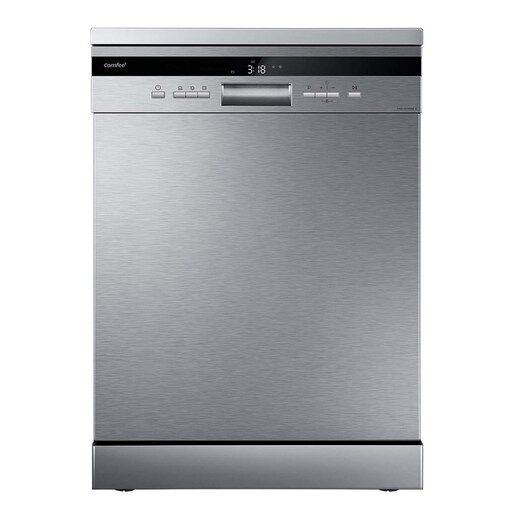 No image available
A standard-size option to consider if you can regularly fill the machine with your usual washing up.
The product title lists 14 place settings, 44 dB, a half-load function and energy class D.
Compare the eco energy use with your expected load size before counting the capacity as a benefit.
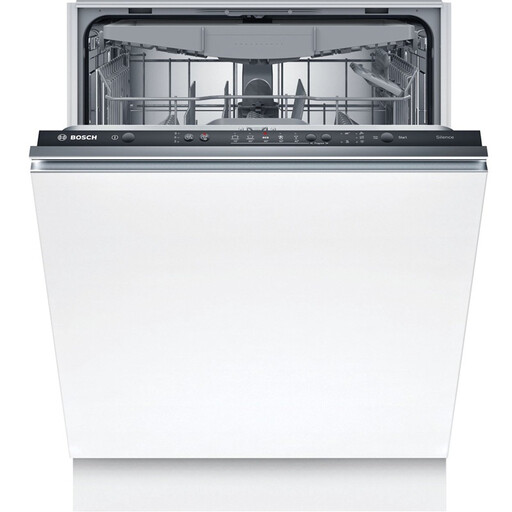 No image available
An integrated option if you have a suitable alcove and are looking for a built-in model.
The product title lists 13 place settings, six programmes, VarioSpeed and AquaStop.
An integrated model needs a suitable housing space; check the installation dimensions for the exact model.
No, it depends on how you load the dishwasher. According to the Consumentenbond, a cutlery drawer leaves space in the lower rack for other crockery, while a basket is easy to take out of the dishwasher.
Compare the energy label, energy use per eco cycle and how much washing up you can do per load. Energielabel.nl explains how to compare energy use per 100 cycles, while Milieu Centraal links choosing a standard-size model to filling it properly.
Milieu Centraal recommends removing food scraps, but generally advises against rinsing dishes by hand before loading them. Choose a suitable programme for your usual washing up and follow the appliance’s instructions.
Check that there is enough worktop space at the chosen location and what the exact model needs for its water supply and drainage. Read the installation instructions before deciding where to put it.
No, a smaller size does not guarantee lower energy use. Milieu Centraal generally advises against mini models on the grounds of energy use and ease of use, and recommends a standard-size model only if you can fill it properly.