Start by measuring the space available, then check whether your plates, glasses, cutlery and, if needed, pans will fit neatly into the racks. A standard 60 cm model is worth considering if you can regularly fill it properly. Then compare washing and drying performance, eco-programme consumption and noise separately. Milieu Centraal recommends a standard-size model mainly when it is fully loaded, while the Consumentenbond assesses dishwashers on factors including ease of use, cleaning, drying and consumption.
Which dishwasher is right for you?
Family with lots of washing-up after dinner
You want to fit as many plates, glasses and items of cutlery as possible into one well-organised load after a family meal. A standard-size model makes most sense if you can regularly fill it properly. Milieu Centraal recommends a standard-size model on that basis.
Buyer with a fixed kitchen space
Your choice starts with the existing recess, kitchen front or available width. The appliance type, dimensions and door movement all help determine which model will suit your kitchen. The Consumentenbond points out that the door panel may catch on a low plinth.
Regular user looking to save energy
You use your dishwasher often and want to weigh up the energy-label figures against how much of its capacity you actually use. The EU label includes energy and water consumption for the eco programme, among other details.
What should you look for when buying?
Standard size, freestanding
Suitable for a space without a kitchen front and a household that regularly builds up a full load.
Consider Milieu Centraal says a standard-size model is most energy-efficient when properly loaded. Check that its external dimensions and connections suit the space available.
Standard size, built-in
Suitable for a kitchen where you want the dishwasher hidden behind a front panel.
Consider Check the recess, front panel, plinth and hinge system. According to the Consumentenbond, the front panel may catch when opening if the plinth is low.
Slimline model
Suitable for a kitchen where a standard-size model will not fit, or a household that rarely has enough washing-up to fill a 60 cm model properly.
Consider Milieu Centraal recommends a 45 cm model as an alternative if you cannot fully load a standard-size one. Check that your own plates and pans fit in the racks.
Milieu Centraal recommends a standard-size model if you can fill it properly. The EU energy label provides a consistent basis for comparing factors such as eco-programme consumption, capacity and noise.
| What to consider |
What to look for |
Who is this important for? |
| Space for washing-up after a meal |
Check the number of place settings, whether the upper rack is adjustable, the cutlery layout and the space between the plate holders. Compare the layout with your own plates and pans. |
After a family meal, I want to fit the plates, glasses and cutlery in at once if possible. Around 31% of consumers prioritise fitting a full meal’s washing-up into one load. |
| Kitchen fit and door |
Measure the recess and check the appliance type, height, width, depth, front-panel dimensions, plinth and hinge system for the exact model. |
If my kitchen space or existing front panel determines my choice, I want to be sure the machine will fit and the door can open freely. Around 25% of consumers prioritise fitting the dishwasher into their kitchen. |
| Electricity and water consumption |
Compare the energy class, kWh per 100 eco cycles, litres per eco cycle and programme duration on the energy label. Weigh these up against how often you run a full load on eco. |
If I use the machine regularly, I want to take consumption into account without choosing one that often runs half-empty. Around 19% of consumers focus mainly on everyday consumption. |
| Washing and drying performance |
Where available, compare independent washing and drying test results, and check the programmes and drying features of the exact model. |
I want the dishes to come out as clean and dry as I need them after a meal. Extra capacity or a good energy label alone cannot guarantee that. Around 13% of consumers prioritise performance. |
| Noise in your living space |
Compare the noise level and noise class on the label of the exact models, alongside the layout and washing and drying results. |
If the machine is running while I’m in the same room, I want to take its stated noise level into account without overlooking other factors. Around 12% of consumers prioritise a quieter living space. |
Common buying mistakes
-
Choosing based only on the number of place settings
The number of place settings does not tell you whether your plates, serving dishes and pans will fit neatly into the racks together. A layout that does not suit your needs could mean running extra loads.
Compare the rack layout with the dishes you usually use for meals, and check there is room for larger items.
-
Choosing a built-in model without checking the front panel
If the plinth is low, the door panel may catch when you open it. The hinge system and dimensions of the front panel are therefore important.
Measure the recess, plinth and front panel, and check the door movement against the installation specifications for the exact model. Allow for any adjustments needed to the installation or kitchen front.
-
Assuming the energy label shows consumption for every programme
The label figures are based on the eco programme, so they do not show how much energy or water a quick or intensive programme will use.
Compare labels on a like-for-like basis, and also consider which programmes you are likely to use. The European Commission explains the information shown on the EU dishwasher label.
Brands to compare
Inventum
Worth comparing if you are looking at freestanding and built-in family models, such as the VVW6060AB and IVW6060A.
- Inventum lists 14 place settings and energy class A for the VVW6060AB; the Consumentenbond confirms these specifications for this model.
- These specifications are not an independent assessment of washing or drying performance, and do not automatically apply to other Inventum models.
ETNA
An option to compare if you are looking for a fully integrated model for an existing kitchen.
- ETNA says the VW740NC has a door-on-door hinge and space for 14 place settings.
- ETNA lists energy class B and 40 dB(A) for this model. Check that the hinge and dimensions are suitable for your kitchen front.
Bosch
Worth considering for built-in models if you have specific requirements for the rack layout or drying options; compare the features of each model.
- Bosch lists Max Flex Pro racks and a recess height of 81,5 to 87,5 cm for the SMV6ZB806E.
- A drying claim made by Bosch is the manufacturer's statement about the technology in question, not an independently confirmed advantage of the brand as a whole.
Siemens
Offers fully integrated models, including the SN63EX04TE, which may be worth considering if this appliance type suits your kitchen.
- The manufacturer describes the SN63EX04TE as a fully integrated 60 cm model.
- The appliance type and model name alone do not show that this model washes or dries better than alternatives.
Beko
Offers freestanding models if you do not need a dishwasher hidden behind a kitchen front.
- Beko lists the BDFN26440WP as a freestanding model with space for 14 place settings.
- The capacity is stated by the manufacturer; a claim about spray arms is not proof of independently verified cleaning benefits.
Dishwashers at Joybuy
This selection includes fully integrated and freestanding dishwashers with a range of capacities. Compare the layout, the dimensions required for your kitchen and the energy-label details for the exact model.
 No image available
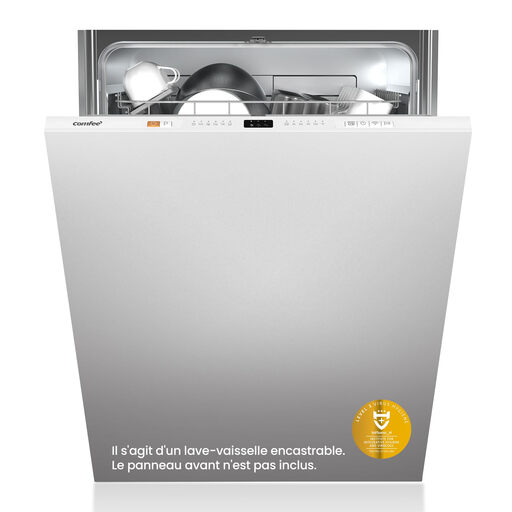
Comfee' CDWPB1215PB-EU, fully integrated dishwasher
Its capacity and layout are designed for a meal-time load. Check that the front panel and racks suit your kitchen and your dishes.
12 place settings; suitable for plates up to 300 mm; 8 programmes; extra drying and half-load option. The front panel is not included and must be supplied separately.
Joybuy
 No image available
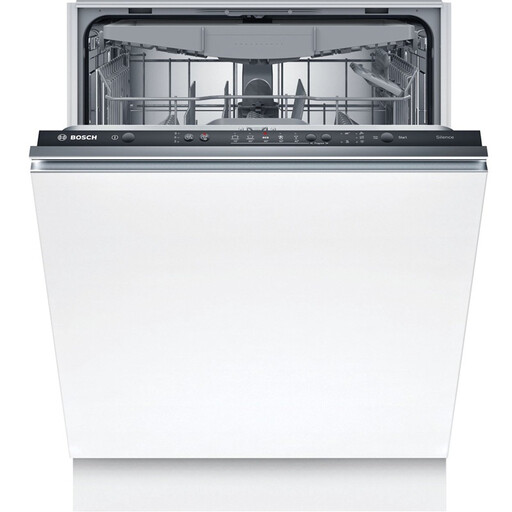
Bosch SMV25EX02E, integrated dishwasher
An integrated model to compare if you want to install the dishwasher behind a kitchen front.
13 place settings; energy class E; 9,5 litres of water per cycle; cutlery drawer and flexible layout. The stated minimum recess height is 82 cm.
Joybuy
 No image available
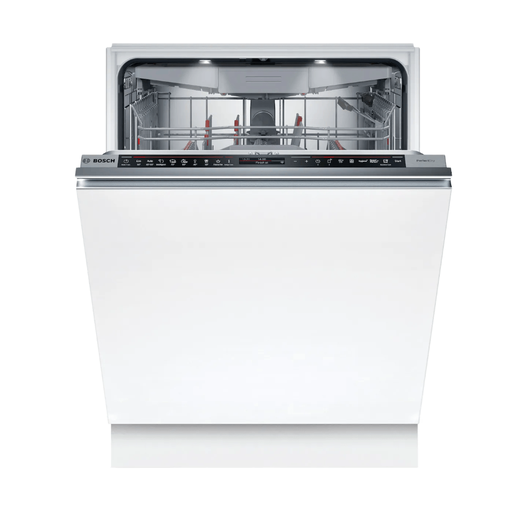
Bosch SMD8TCX04E, integrated dishwasher
The stated capacity may suit a larger family load; also check that the layout works for the dishes you use.
14 place settings; energy class A; 42 dB; 9,5 litres of water per cycle. The product information lists flexible racks and an Extra Clean Zone.
Joybuy
 No image available
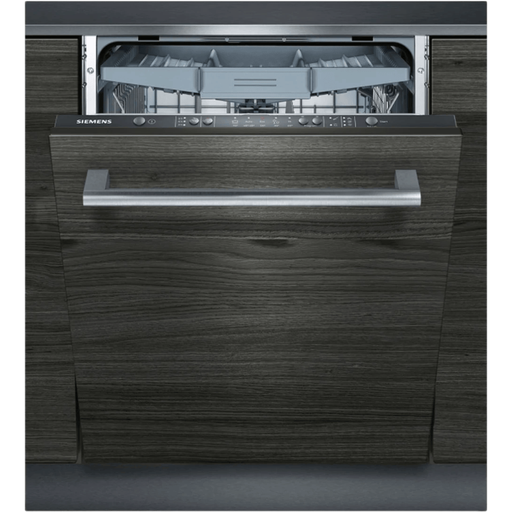
Siemens SN615X03EE, fully integrated dishwasher
An integrated model to assess against the available recess dimensions and the layout you need.
13 place settings; 60 cm wide; energy class E; 46 dB. The product information lists a cutlery drawer, a load sensor and a shorter wash-time function.
Joybuy
 No image available
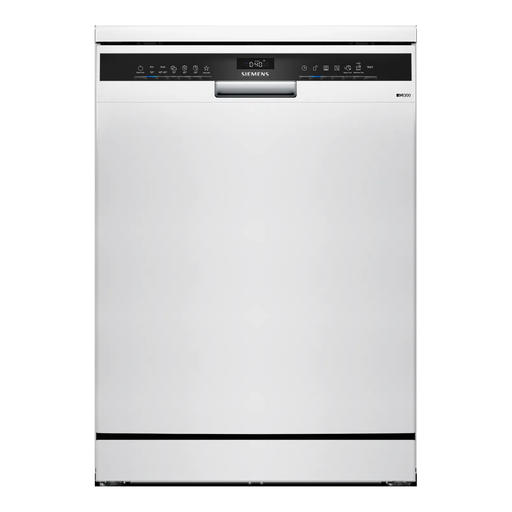
Siemens SN23EW03ME iQ300, freestanding dishwasher
A freestanding model to compare if you do not need a kitchen front for your dishwasher.
14 place settings; 60 cm wide; energy class B; 42 dB; 65 kWh per 100 cycles and 9 litres of water per cycle. The stated dimensions are 845 × 600 × 600 mm.
Joybuy
Frequently asked questions
Is a dishwasher with more place settings automatically better for a family?
No. The number of place settings alone does not tell you whether your dishes from a meal will fit into the racks. Check the layout with your own plates and pans, and choose a standard-size model mainly if you can usually fill it properly. That is also the advice from Milieu Centraal.
Should I rinse plates under the tap first?
Usually not: rinsing under the tap wastes water and energy. The Consumentenbond recommends choosing a programme to suit how dirty the dishes are and cleaning the filter regularly.
What does a dishwasher's energy label tell me?
The EU label shows details including the energy class, electricity consumption per 100 eco cycles, water consumption per eco cycle, capacity and noise level. Use these figures to compare models on a like-for-like basis; they do not show the consumption of every individual programme.
What should I check before installing a built-in dishwasher?
Measure the recess and check the dimensions of the kitchen front, plinth and hinge system for the exact model. The Consumentenbond warns that the front panel may catch when opening if the plinth is low, so check the door movement too.


