
Vandaag of morgen in huis

Kwaliteit gegarandeerd

Welkomstaanbiedingen ontgrendelen: GRATIS bezorging | Tot 80% korting | Gratis 30 dagen JoyPlus-proefperiode
Download de app
Buying a dishwasher seems straightforward until you discover how much models can differ in size, noise level, capacity and drying technology. A model may look spacious but not fit in your aperture. A cheap machine may cost less to buy, yet prove more expensive to run because of inefficient energy use.
The main pitfalls are usually:
A 60 cm dishwasher generally offers more space for families or households that wash large loads at once. Models with 12 to 14 place settings are suitable for larger daily loads. In addition to the width, check the height, depth, door movement and space for the water and drainage hoses.
A slimline 45 cm dishwasher is more practical in a smaller kitchen. The Bosch SPS4HKW49E, for example, is a freestanding model measuring 45 cm wide, with a noise level of 44 dB. The Bosch SPS4EMI17E is also 45 cm wide and lists 10 place settings, energy class B and water consumption of 8.7 litres per cycle.
A compact dishwasher or countertop dishwasher is suitable if you do not want or cannot install a permanent connection. Pay close attention to the dimensions and how water is supplied. Some models have a built-in tank, while others require a connection to the tap.
On the European energy label, the scale runs from A to G. Also check consumption in kWh per 100 cycles and water consumption per cycle. This gives you a better overview than looking at the energy class alone.
For example, according to the product specifications, a model using 64 kWh per 100 cycles consumes less electricity than one using 92 kWh per 100 cycles when both are used under similar conditions. The actual cost depends on your electricity tariff, programme and frequency of use.
An energy-efficient dishwasher often has a longer eco programme. This is not a fault, but a way of washing at lower temperatures while using less energy. If you often run small loads, a half-load function may be more useful than a large drum.
A quiet dishwasher is particularly useful in an open-plan kitchen, flat or home where the machine runs in the evening. The specifications of the selected models range from 38 dB on Midea’s night programme to 49 dB for the integrated Wiggo.
Also look for:
Features such as Wi-Fi and app control are useful if you want to start programmes remotely or receive notifications. They are less relevant if you always operate the machine manually anyway. For smart features, also check the stated software support and the app required.
The recommendations below are based on verifiable information from the supplied product details. Brand claims about cleaning or hygiene performance have not been included as independently proven results.

Why it suits this profile: This freestanding 60cm model is suitable for households looking for plenty of space without installing an integrated solution. The stated capacity is 14 place settings.
The specifications list 42 dB, 9.8 litres of water per cycle and energy class B. This allows you to assess size, noise and consumption side by side.
14 place settings, automatic door opening, adjustable upper basket and a delay-start function from 1 to 24 hours.
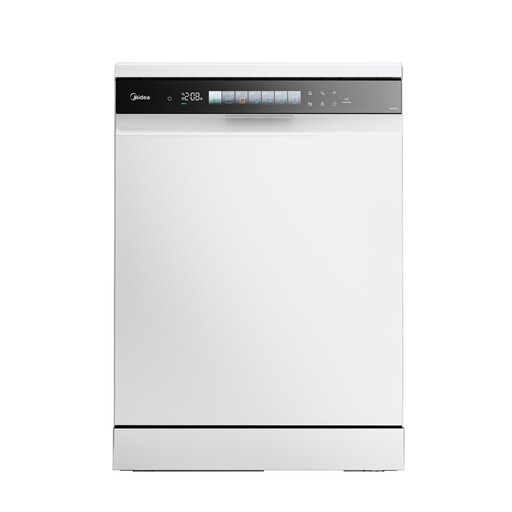
Why it suits this profile: This model is aimed at larger households that value low noise levels, generous capacity and additional control options.
The stated figures make the choice easy to verify: 14 place settings, 9.8 litres per cycle, energy class B and 40 dB, or 38 dB on the night programme.
Automatic door opening, nine programmes, app control and interior lighting according to the product information.

Why it suits this profile: This countertop dishwasher is intended for small households, student rooms, flats or kitchens without a permanent water connection.
The built-in 5-litre water tank means a permanent tap connection is not always required. However, check the available worktop space: the model measures 42 × 43.5 × 43.5 cm.
Six programmes, three additional functions, an extra-drying option and a choice between manual filling or a tap connection.
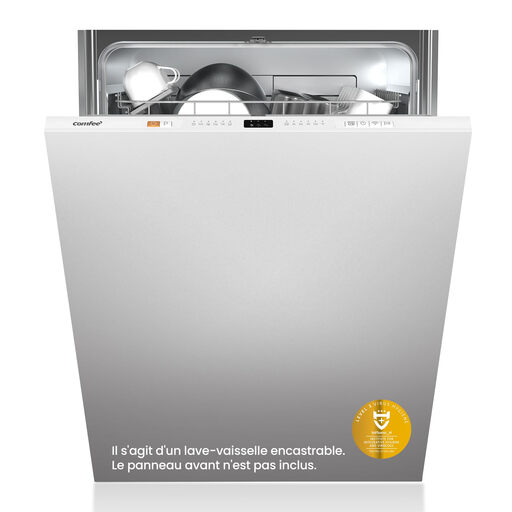
Why it suits this profile: This integrated dishwasher is suitable for anyone who wants a seamless kitchen front and has space for an aperture approximately 60 cm wide.
The product information explicitly states that the front panel is not included. This avoids creating the wrong expectations during installation.
12 place settings, adjustable upper basket, half-load function, extra-drying function and app control according to the product description.
We have put together a complete, up-to-date list of products that fully meet these strict selection criteria and the applicable European safety regulations.
Before buying, check that the connections are suitable for the machine you have chosen. Use an earthed socket and avoid extension leads where the manual does not permit them. For an integrated dishwasher, the aperture must be measured precisely. A freestanding model needs sufficient ventilation and a stable, level surface.
Use only dishwasher detergent, rinse aid and, where necessary, dishwasher salt. Washing-up liquid can produce a great deal of foam and cause faults or leaks. Clean the filter regularly, load crockery with the dirty side facing the spray arms and check that they can rotate freely.
If you want to identify water leaks more quickly, consider using a suitable leak tray. A leak tray is not a substitute for correct installation or repairs, but it can make moisture on the floor visible sooner.
Its lifespan depends on the brand, frequency of use, water hardness, maintenance and repair options. Regular filter maintenance, using the correct amount of dishwasher detergent and not overloading the baskets can help reduce wear and tear. Always check the seller’s statutory guarantee and any additional guarantee terms.
Use the energy label as your starting point. Divide the stated consumption per 100 cycles by 100, then multiply it by the number of washes per year. Next, multiply the result by your current electricity tariff. A model using 64 kWh per 100 cycles will consume approximately 128 kWh over 200 cycles, excluding any differences between programmes.
That depends on your priorities. A dishwasher with automatic door opening allows moisture to escape and can support the drying process, particularly for glass and ceramic items. Plastic may still need to be dried by hand. Always compare this feature with the stated drying options, programme duration and energy class.
