What should you look for in a dishwasher for breakfast bowls?
Mini dishwasher with a fixed connection
Choose this option if: you regularly have a small load, have worktop space available and can connect the water supply and drain.
Bear in mind: it will take up worktop space permanently, and the door needs room to open.
Mini dishwasher with a water tank
Choose this option if: there's no fixed water supply, but you can safely drain the wastewater.
Bear in mind: you'll need to fill it by hand and drain the water; a tank doesn't mean the appliance needs no connections.
Slimline freestanding dishwasher
Choose this option if: you want to wash more of your everyday dishes as well as breakfast bowls, and have a suitable spot on the floor.
Bear in mind: it needs floor space and connections; this type of model won't solve a shortage of cupboard space if you need to remove a cupboard to fit it.
Washing up by hand in a washing-up bowl
Choose this option if: you usually only have a few bowls to wash, or don't have a suitable space for an appliance.
Bear in mind: you'll be doing the washing-up yourself. Milieu Centraal says washing up by hand is generally better for the environment if you use little hot water and turn off the hot tap.
First measure the space and your bowls, then work out what water supply and drainage options are practical. Only then compare how much washing-up you want to do in each load.
| What to consider |
What should you check? |
Who should consider this? |
| Kitchen space |
Measure the space and allow for the door, hoses and nearby drawers or cupboards. |
If I don't want to give up a cupboard, I'll weigh up worktop space against a suitable spot on the floor. Around 36% of consumers prioritise keeping their kitchen space. |
| Whether your bowls fit |
Measure their diameter and height, then compare these with the rack and interior height of the model. |
I want to know whether my own deep or wide bowls will fit at the same time; the number of place settings doesn't tell me that. Around 29% of consumers prioritise whether their bowls will fit. |
| Water supply and drainage |
Check the manual for details on the water supply, wastewater drainage, power supply and positioning. |
If there's no fixed water supply, I still need a way to drain the water and position the appliance safely. Around 21% of consumers make their choice based on the available connections. |
| Consumption for small loads |
Compare kWh per 100 eco cycles, litres per eco cycle, capacity and programme duration on the EU energy label. |
If I often only wash a few bowls, I want to weigh up a machine's consumption against washing up by hand. Around 14% of consumers focus mainly on consumption for small loads. |
Dishwashers at Joybuy
This selection includes tabletop dishwashers for small loads, including models with a water tank, as well as a slimline freestanding dishwasher. For each model, check that its bowl capacity, required space and connections suit your kitchen.
 No image available
AIRMSEN tabletop dishwasher with built-in water tank
A tabletop model for small loads; the product information specifies a capacity of up to 4 place settings and a built-in 5-litre tank.
Without a fixed water supply, wastewater needs to be carried via a hose to a container. The safety instructions require an earthed socket and prohibit the use of extension leads.
View at Joybuy
 No image available
AIRMSEN tabletop dishwasher with water tank, 37 × 50 cm
The product information specifies a capacity of up to 4 place settings, a 5-litre water tank and a width of 37 cm.
According to the product information, the water can be supplied from the tank or a tap. Check the height and shape of your bowls; the stated capacity doesn't confirm how many will fit. The safety instructions require an earthed, dedicated power supply and prohibit the use of extension leads.
View at Joybuy
 No image available
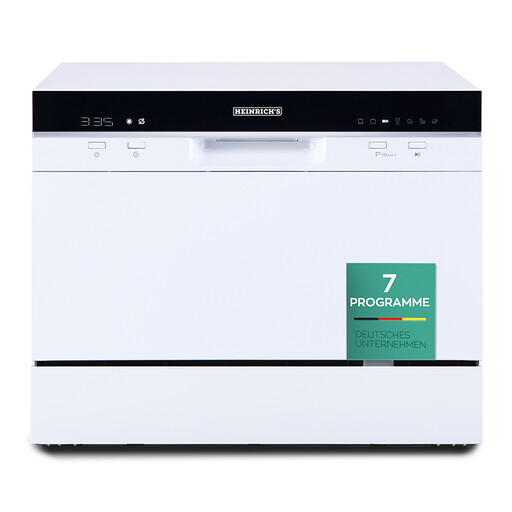
Heinrich's HTG 8840
This tabletop model is listed as holding 6 place settings and comes with water inlet and drain hoses; check that your chosen location can accommodate these connections.
The product information lists 7 programmes and a maximum water consumption of 6,5 litres per wash. This figure isn't a prediction of consumption for every cycle you choose.
View at Joybuy
 No image available
Bosch SPS4EMI17E, 45 cm
A slimline freestanding model for anyone who wants to wash more than just breakfast bowls; the product information lists a capacity of 13 place settings.
The model needs a suitable spot on the floor and access to the required connections. The product information specifies an adjustable upper rack.
View at Joybuy
 No image available
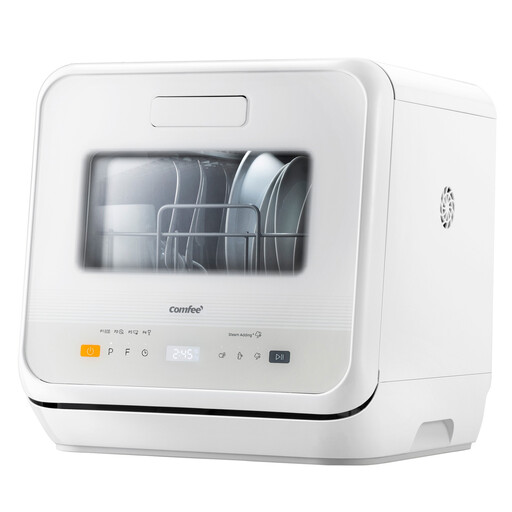
Comfee' CDWMTO201D(W)
According to the product information, this tabletop model has a built-in 5-litre tank and can also be connected to a tap.
The product information specifies crockery up to 250 mm in diameter and capacity for 2–3 people. Check the height and shape of your bowls separately. The safety instructions require an earthed 220–240 V socket and prohibit the use of extension leads.
View at Joybuy
Frequently asked questions
How can I check whether my breakfast bowls will fit in a mini dishwasher?
Measure the diameter and height of your bowls, then check the rack layout and interior space of the exact model you're considering. A place setting is a standard quantity of crockery and cutlery for one person; it doesn't tell you how many deep bowls will fit at once.
Can you use a dishwasher with a water tank without a drain?
No. The tank replaces the fixed water supply, not the need to drain used water. Before positioning the appliance, check the model's drainage instructions and make sure you have a suitable electrical connection.
How can I use a dishwasher economically for breakfast dishes?
Milieu Centraal recommends running the machine with a full load and using the eco programme. If you only have a few bowls, compare this with washing them by hand in a washing-up bowl using little hot water; the result depends on how you wash up.
What should I look for on the energy label?
Compare models using the same label basis and look at energy consumption per 100 eco cycles, water consumption per eco cycle, capacity and programme duration. The European Commission explains this information on the EU energy label for household dishwashers.
Who should I contact in the Netherlands if a dishwasher doesn't meet expectations?
According to the Dutch government, the seller is your point of contact if a product is faulty. There is no fixed statutory two-year guarantee period in the Netherlands; your statutory rights depend on what you can reasonably expect from the product.


