
Vandaag of morgen in huis

Kwaliteit gegarandeerd

Welkomstaanbiedingen ontgrendelen: GRATIS bezorging | Tot 80% korting | Gratis 30 dagen JoyPlus-proefperiode
Download de app
A dish rack may seem simple, but you’ll soon notice if you’ve chosen the wrong one. It might not fit next to the sink, the drip tray could hold water, or plates may topple over as soon as you add a couple of pans. Terms such as ‘large capacity’ aren’t very helpful without dimensions and details of the layout.
For households, students, small kitchens and campers, there are three main pitfalls to watch out for:
Measure the available worktop space before ordering a dish rack. Look out for obstacles such as the tap, windowsill and wall cupboards. If you have a small worktop, a sink dish rack can be a handy choice. The water drains straight into the sink, leaving you with more worktop space.
An extendable model may be useful if you need to accommodate sinks of different widths. Check that its minimum and maximum lengths will fit your sink. If you’re placing it over the sink, make sure it has a flat, stable support.
A metal dish rack is generally sturdy, but its finish affects how well it stands up to moisture. Check whether the product is described as steel, chrome-plated steel or stainless steel. According to the product information, the MAXCOOK model for use in the sink is made from 304 stainless steel and adjusts in length from 29 to 44 cm.
A plastic dish rack is lightweight and easy to move. That makes it a good fit for students, caravans and camping kitchens. For plastic racks, check the cleaning instructions, drainage outlet and any warnings about heat. Plastic parts aren’t automatically suitable for boiling water or dishwashers.
A well-designed layout stops plates, glasses and cutlery from touching one another. Check whether the rack has a separate plate rack, glass holder or cutlery holder. If your household gets through a lot of crockery every day, a second tier can save space, while a compact single-tier model is easier to store.
Also check how the water drains:
Clean the rack regularly with a mild cleaning product and dry the parts thoroughly. This helps prevent limescale, odours and dirt build-up. Always follow the manufacturer’s care instructions.
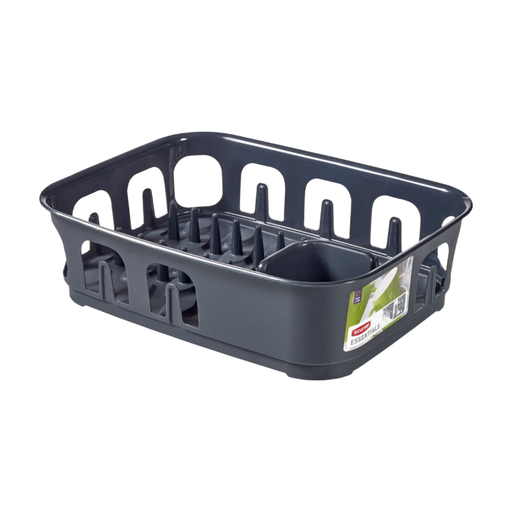
Why it suits this profile: This plastic dish rack is a good choice if you’re looking for a simple model for everyday use. According to the product information, it holds up to 12 plates and has an integrated cutlery holder and hooks for cups.
Its rectangular shape and stated capacity make it easier to work out in advance whether it will suit your crockery. The built-in drainage plug is designed to let water run out of the base.
Plastic construction, space for up to 12 plates, external cup hooks and an integrated cutlery holder.

Why it suits this profile: This single-tier dish rack is designed to sit in a permanent spot on the worktop. The product information lists stainless steel, a removable PP drip tray and a drainage outlet to channel away excess water.
According to the product description, the drip tray can be removed and emptied. This means you don’t have to move the whole rack to get rid of the water.
Stainless steel rack, measuring approximately 42 × 29 × 12,7 cm, with a removable PP drip tray. No assembly required.

Why it suits this profile: This sink dish rack is a good option for small kitchens, busy washing-up sessions and campers who want to keep the worktop clear. The model adjusts from 29 to 44 cm.
As the water drains straight into the sink, there’s no need for a separate drip tray on the worktop. Be sure to measure the inside of your sink first.
According to the product information, the rack is made from 304 stainless steel, is adjustable and can also be used as a colander.
We’ve put together a complete, up-to-date list of products that meet these strict selection criteria and comply with current European safety regulations.
Place your kitchen dish rack on a level surface and distribute heavy items evenly. Put plates in the slots provided and place knives point-down in the cutlery holder. If you have a two-tier dish rack, check that the top tier is securely in place before putting crockery on it.
Empty a dish rack with a drip tray regularly. Rinse off limescale and soap residue with a mild cleaner, and dry metal parts after cleaning. Check plastic trays, coatings and joints for cracks or loose parts. A product with no visible damage won’t necessarily last indefinitely; frequency of use, load and care all affect its practical lifespan.
A spot right next to the sink usually works well, as it’s easy to put your crockery away there. In a small kitchen, a sink dish rack can save space. Measure your sink beforehand and check that the tap and drain remain accessible.
It depends on how you’ll use it. Metal or stainless steel may be a good choice for a permanent rack that holds lots of crockery. Plastic is lighter and often easy to move, for example in student accommodation, a caravan or a camping kitchen. Always check the care and heat instructions for the model you choose.
Choose a rack with a removable drip tray, drainage plug or spout that directs the water away. Make sure the rack is level and empty the tray regularly. A dish rack with a cutlery holder should also be positioned so that water doesn’t run back onto the worktop.
