
Vandaag of morgen in huis

Kwaliteit gegarandeerd

Welkomstaanbiedingen ontgrendelen: GRATIS bezorging | Tot 80% korting | Gratis 30 dagen JoyPlus-proefperiode
Download de app
A dish rack may seem simple, but you’ll soon notice if you choose the wrong one. Plates may topple over, water may collect on the worktop or the rack may take up more space than expected. Every centimetre counts, especially in compact Dutch kitchens, student rooms, campervans and homes without a dishwasher.
So don’t focus only on the colour or an attractive product photo. The dimensions, drainage, layout and load capacity all determine whether a dish rack is practical for everyday use.
A small dish rack saves worktop space, but it may be impractical if there’s no room for cups, cutlery and several plates. Check how much crockery the product information says the rack can hold. A model with a separate cutlery holder or an extra tier makes better use of the space available.
A dish rack with a drip tray catches water at first, but the tray needs to be emptied and cleaned regularly. Some models also have a drainage plug or system that lets water flow into the sink. Check that the position of the rack and its drainage system will work with your sink.
A plastic dish rack is generally lightweight and easy to move. That can be useful in a student room, caravan or camping kitchen. A metal dish rack may have a different look and construction, but check the finish and dry it if water is left on it for a long time. Whatever the material, place the rack on a flat surface and avoid overloading it.
First, measure the space available next to the sink. Check the following:
For example, a rack measuring 40 × 23,6 × 28,7 cm makes good use of vertical space. It could suit a household with lots of crockery and limited worktop space, provided it fits beneath the cupboards.
A dish rack for plates and cutlery is easier to use when the items are kept separate. Look for:
A cutlery holder also keeps knives and forks from being left loose on the worktop. For safety, place sharp knives with the handles facing upwards, following the product’s safety instructions.
A drip tray stops water from going straight onto the worktop. Empty it regularly and clean it with warm water and a mild detergent. For models with a drainage plug, make sure the water can flow to a suitable drain. Also check whether the parts can be removed, as this makes cleaning easier.
A dish rack only dries crockery properly if it isn’t overloaded. Don’t leave dishes in standing water for long periods, and check plastic or metal parts regularly for cracks, rust or damage.
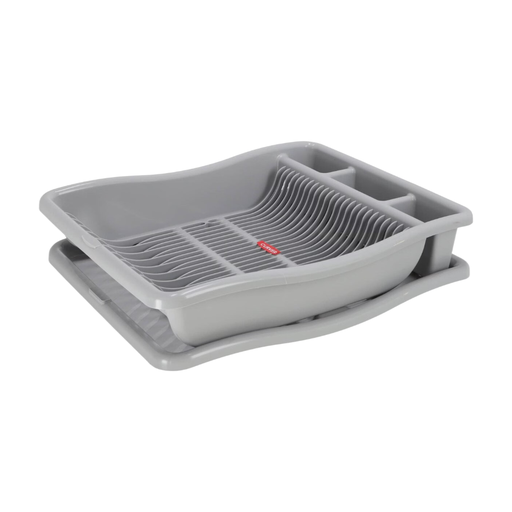
Why it suits this type of buyer: The lightweight plastic design is easy to move and suitable for everyday use, a student room or a camping kitchen. The integrated shelf provides extra space for smaller items.
The open design and included drip tray help keep crockery separate and stop water from getting onto the worktop. The tray does need to be emptied regularly.
Durable plastic construction, an integrated shelf and a lightweight design; according to the product specifications, it’s suitable for plates, glasses, cutlery and kitchen utensils.
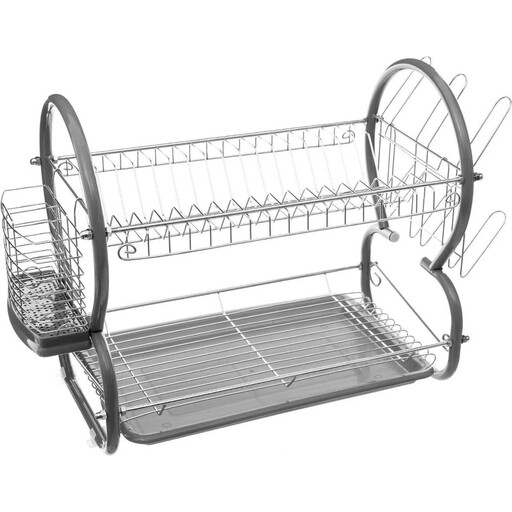
Why it suits this type of buyer: This 2-tier dish rack is designed for households that want to organise different types of crockery at the same time. The combination of chrome-plated steel, a powder-coated finish and plastic parts clearly distinguishes the materials used.
The separate cutlery basket and glass holders reduce the need to stack items and give each type of crockery its own place. According to the specifications, the rack should be placed on a stable, flat surface.
2 tiers, with space for up to 17 plates, bowls, mugs, glasses and cutlery items; measures approximately 44 × 24 × 38 cm.
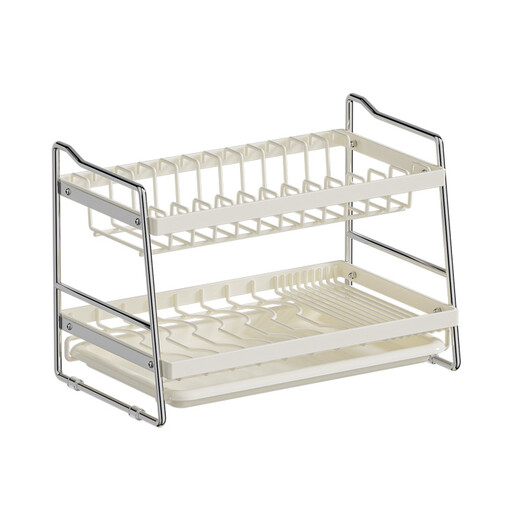
Why it suits this type of buyer: The two tiers are suitable for families or situations where lots of crockery needs to dry at once. The freestanding design can be placed next to the sink without needing to be fixed to a wall.
The integrated drainboards are designed to direct water into the sink or a collection area. Assembly is required, so check the parts and instructions beforehand.
2 tiers, measures approximately 40 × 23,6 × 28,7 cm and has a freestanding design with drainage boards.
We’ve put together a complete, up-to-date list of products that meet these strict selection criteria and the applicable European safety requirements.
Choose a dish rack with a well-fitting drip tray or drainage plug. Place it close to the sink and check that water can flow into it. Empty the drip tray regularly and dry the surface underneath.
Its lifespan depends on the material, how heavily it’s loaded and how well it’s cared for. Don’t overload the rack, leave water standing on it for long periods or ignore the cleaning instructions. Check plastic parts for cracks and metal parts for damage to the finish.
It can be, as long as it fits under the kitchen cupboards. A 2-tier model uses less worktop space per item, but needs to be placed somewhere stable. So measure the length, width and height before you order.
